Anthropic Agrees to $3.4B Caterpillar Power Deal for 1.7GW
Anthropic agreed to acquire approximately 1.7 gigawatts of heavy-duty gas-generation equipment for roughly $3.4 billion by taking over an existing Caterpillar order, highlighting how power availability, manufacturing queues and long-term infrastructure commitments are shaping the AI industry.
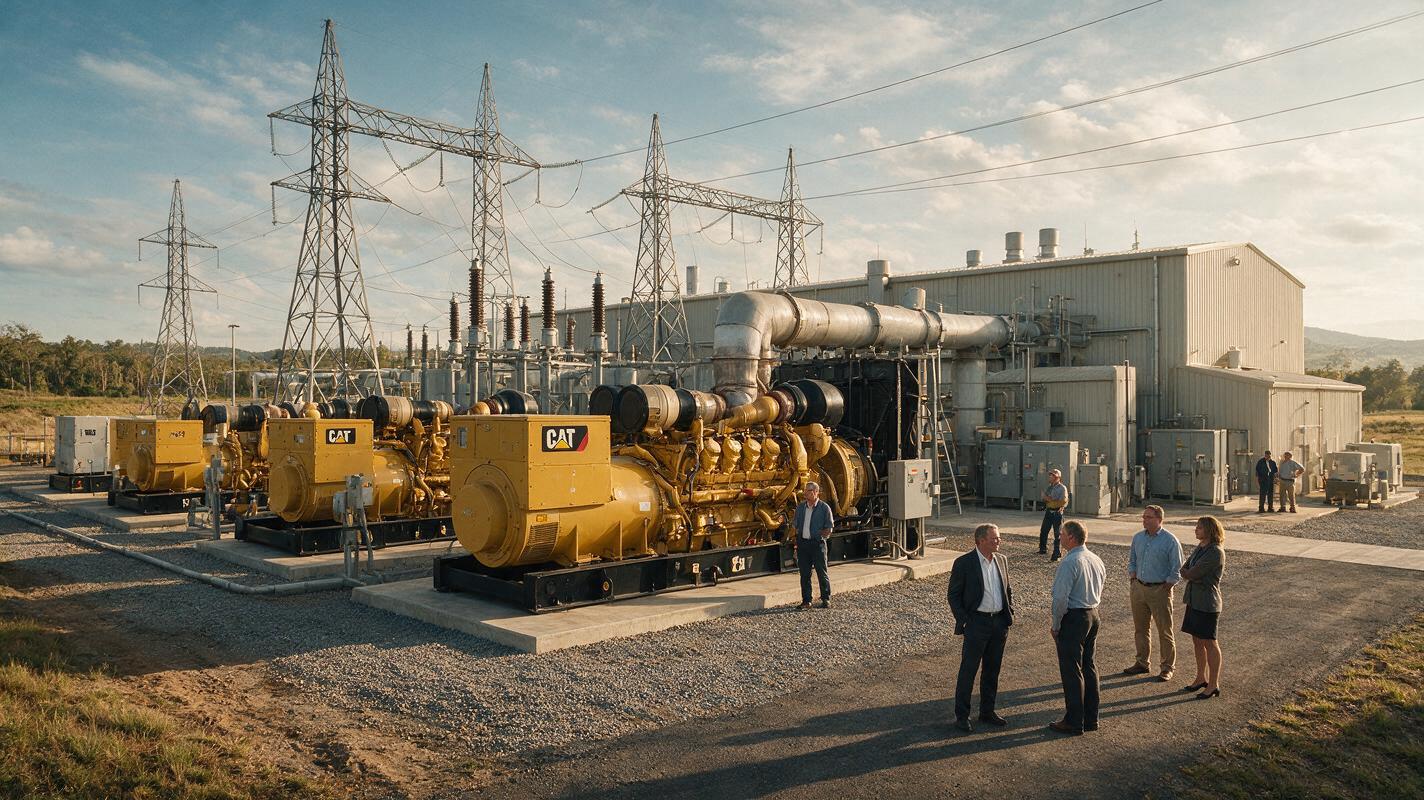
Table of contents
AI infrastructure
Anthropic Agrees to $3.4B Caterpillar Power Deal for 1.7GWThe unusually large equipment commitment shows how electricity supply is becoming a strategic constraint for the AI industry.
Anthropic agreed on November 10 to buy approximately 1.7 gigawatts of heavy-duty gas generation equipment for roughly $3.4 billion. The transaction is described as the largest known single purchase of power equipment by an AI laboratory, putting energy infrastructure—not only chips and data centers—at the center of the company’s expansion plans.
Anthropic is obtaining the equipment by taking over an order that supplier OnePWR Solutions placed with Caterpillar about two years earlier. The transaction is an equipment-order transfer rather than an acquisition of OnePWR Solutions. That distinction matters because it indicates Anthropic is securing an existing place in a constrained manufacturing queue instead of waiting for an entirely new order.
The agreement arrives as Caterpillar’s power-generation business reports strong demand. Its power-generation sales rose 30% to $3.421 billion in the third quarter, while the company’s total backlog reached a record $78 billion. Available gas-turbine delivery slots reportedly extend into the early 2030s, illustrating why an order already in the pipeline can carry strategic value.
Anthropic’s broader commitments are also substantial. Its S-1 shows $895.4 billion in purchase and lease commitments running through 2045, along with payments of $1.25 billion per month to xAI through May 2029. Meanwhile, Goldman raised its forecast for global data-center capacity in 2030 from 217GW to 273GW.
For content teams, the immediate lesson is not that every production decision should be reduced to power markets. It is that the availability and cost of AI creation increasingly depend on a capital-intensive infrastructure chain extending from generation equipment to model access.
Why Anthropic Is Taking Over an Existing Caterpillar Order
The structure of the transaction is one of its most revealing features. OnePWR Solutions placed the Caterpillar order about two years ago, and Anthropic is now assuming that position rather than purchasing the supplier itself. With gas-turbine delivery availability extending into the early 2030s, an established order can offer something that new capital alone may not immediately secure: earlier access to scarce equipment.
This turns procurement timing into a competitive issue. AI laboratories may have funding and ambitious capacity plans, but generation equipment remains subject to manufacturing schedules. The Anthropic agreement therefore highlights a wider shift in AI capital expenditure, where long-term access to physical infrastructure can be as consequential as spending on computing hardware.
The defining constraint for large-scale AI is expanding beyond computing components. Power-generation capacity, delivery queues and long-term commitments are becoming part of the competitive landscape.
The Numbers Reveal the Scale of the AI Infrastructure Race
The $3.4 billion purchase is significant on its own, but it becomes more striking when placed beside the other figures in the same report. Caterpillar’s 30% increase in quarterly power-generation sales and its $78 billion backlog point to demand extending well beyond a single buyer.
Goldman’s forecast revision provides another measure of the change. Raising expected 2030 global data-center capacity from 217GW to 273GW adds 56GW to the outlook. That adjustment suggests the infrastructure buildout supporting the AI industry is being reassessed upward even as turbine supply remains constrained.
| Indicator | Reported figure | What it signals |
|---|---|---|
| Anthropic generation purchase | About 1.7GW for roughly $3.4B | Power equipment has become a major AI capital commitment |
| Caterpillar Q3 power-generation sales | $3.421B, up 30% | Demand for generation hardware is rising |
| Caterpillar backlog | Record $78B | Equipment supply is committed far in advance |
| Goldman 2030 capacity forecast | 273GW, up from 217GW | Expected global data-center expansion has increased |
Long-Term Commitments Are Reshaping AI Economics
Anthropic’s reported purchase and lease commitments of $895.4 billion through 2045 demonstrate how long the planning horizon has become. The reported $1.25 billion monthly payment to xAI through May 2029 adds another large recurring obligation to the picture.
These figures put current conversations about AI funding into a broader context. Capital is not flowing only toward model development. It is also being committed to leases, equipment, energy and other capacity required to keep AI services operating at scale.
That distinction matters when assessing the economics of creative AI. The apparent price of an output from an ai image generator or an ai video generator sits above a much larger infrastructure stack. Changes in capacity, procurement and vendor strategy can eventually influence availability, production limits and AI video cost.
What the Power Deal Means for Content Teams
Creative teams do not need to forecast turbine queues, but they should recognize that model access is connected to physical infrastructure. A model may be attractive for its output quality, yet its practical value also depends on reliable availability and a cost structure that works for repeat production.
The Anthropic agreement supports three useful conclusions for AI-assisted production:
- Infrastructure is part of model reliability. Large energy commitments show how much physical capacity is required behind widely available AI services.
- Vendor economics can affect production planning. Long-term purchase, lease and payment obligations make cost discipline important across the AI market.
- Workflow flexibility reduces concentration risk. A content pipeline tied entirely to one provider can become harder to adapt when availability or economics change.
For teams producing images, videos, scripts and campaign assets, the practical response is to evaluate models as part of a portfolio rather than as permanent single-vendor choices. Output quality remains essential, but consistency, turnaround time, access and budget predictability deserve equal attention.
MagicBoat Provides a Flexible Creation Layer
MagicBoat gives content teams a stable, one-account environment for working across AI creation options. That approach helps separate the creative workflow from the infrastructure race taking place among individual AI vendors.
A multi-model production layer is especially useful when teams need to compare outputs, preserve momentum across campaigns or adjust their tool selection as the AI industry changes. Instead of making every infrastructure development a workflow disruption, teams can focus on choosing the right creation option for the asset in front of them.
The Anthropic-Caterpillar agreement is a reminder that large-scale AI rests on real equipment, long delivery schedules and enormous capital commitments. For working content teams, flexibility at the application layer is a practical counterweight to that complexity.
Keep Your AI Production Options Open
Explore image, video and other creative workflows in one place. Visit MagicBoat to try these models for free and compare options according to the needs of each project.
Primary keyword: Anthropic power deal
Related keywords: Anthropic Caterpillar deal, AI capital expenditure, AI funding, data-center capacity, AI infrastructure, AI industry, AI video cost