Nvidia Loses $470B Market Cap in Two Sessions Amid CEO Probe
Nvidia shed 5.6% to 6.5% of its value on November 10, 2026, pushing its two-session market capitalization loss past $470 billion amid a widening CEO-related internal investigation, a hot US inflation report lifting rate-hike expectations, and complications with an Ohio data-center project. A new shareholder class action accuses the chipmaker and CEO Jensen Huang of failing to disclose a personal relationship with individuals tied to chip customer Megaspeed and making misleading statements. The selloff highlights growing volatility in the AI infrastructure supply chain, with implications for creators relying on AI tools for content production.
Table of contents
The Nov 10 Nvidia Selloff: Full Details
On November 10, 2026, Nvidia’s stock fell 5.6% to 6.5% in a single trading session, pushing the chipmaker’s two-session market capitalization loss past $470 billion. The sharp decline was driven by a confluence of factors: a hotter-than-expected US inflation report that lifted expectations of future interest rate hikes, a widening internal investigation related to CEO Jensen Huang, and growing complications around an Ohio data-center project tied to the company’s AI infrastructure expansion.
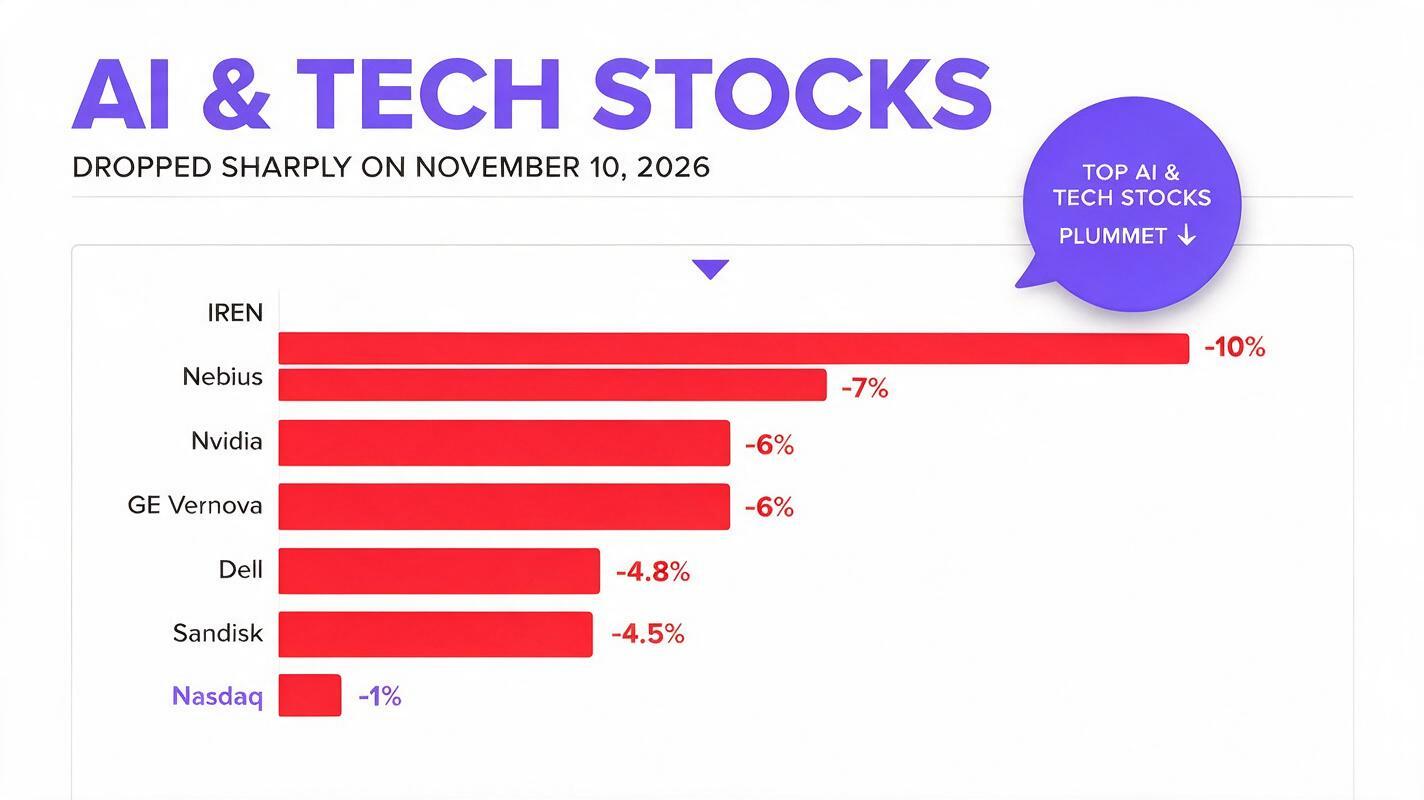
The selloff rippled across the broader AI and tech ecosystem. The Nasdaq composite fell 1% on the same day, with fellow AI infrastructure and hardware names taking even steeper hits: Dell dropped 4.8%, Sandisk 4.5%, IREN 10%, Nebius 7%, and GE Vernova 6%. The latter decline came after SoftBank revised its US data-center equipment procurement plans, signaling potential shifts in AI infrastructure spending patterns.
Shareholder Class Action and CEO Probe Details
A new shareholder class action filed against Nvidia and CEO Jensen Huang added to the pressure on the stock. The suit alleges the company and Huang failed to disclose a personal relationship between Huang and individuals tied to Megaspeed, a major Nvidia chip customer, and made misleading statements to investors. The claim period for the class action runs from October 9, 2025 to November 8, 2026, with damages yet to be determined.
This marks the first derivative litigation filed since Nvidia’s board opened an independent investigation into the matter on November 8, led by independent directors with outside counsel. In a public statement, Nvidia said it has no reason to believe US national security or company secrets were compromised, and Huang remains in his role as CEO.
Analyst Sentiment and Upcoming Catalysts
Despite the steep selloff, most analysts quoted by Reuters framed the decline as a buying opportunity, pointing to still-robust demand for AI chips across data center, consumer, and enterprise markets. Investors are now looking ahead to two key catalysts in mid-November that could shift the stock’s trajectory.
The first is Nvidia’s FY27 Q3 earnings report, scheduled for release after market close on November 17, which will offer fresh data on AI chip demand, order backlogs, and guidance for future quarters. The second is Anthropic’s highly anticipated IPO on November 19, which is widely seen as a bellwether for AI infrastructure valuations and demand for high-performance compute.
What This Means for AI Content Creators
Nvidia’s GPUs power the vast majority of AI compute behind the tools creators rely on every day, from ai image generator platforms to advanced video editing and automation workflows. While the selloff itself does not immediately disrupt AI tool access, it highlights the broader volatility building in the AI infrastructure supply chain — from chip production to data center buildouts — that can eventually trickle down to creator tools in the form of price hikes, waitlists, or performance dips.
For creators who rely on a single AI tool or model provider, this kind of infrastructure uncertainty can derail production schedules and eat into budgets. A diversified ai video generator and content workflow that spans multiple models and providers creates a buffer against single-point failures, letting you switch tools seamlessly if one provider faces supply or performance issues.
MagicBoat’s all-in-one AI creation platform eliminates the need to manage multiple accounts or subscriptions across different providers. You can explore a full suite of AI creation tools and try these models for free on MagicBoat, with no long-term commitments and seamless switching between models and use cases.

Key Takeaways
- Nvidia fell 5.6% to 6.5% on November 10, 2026, pushing its two-session market cap loss past $470 billion amid inflation fears, a widening CEO probe, and data-center project complications.
- A new shareholder class action accuses the company and Jensen Huang of failing to disclose a personal relationship with Megaspeed-linked individuals and making misleading statements.
- Most analysts view the selloff as a buying opportunity, with key catalysts coming from Nvidia’s Q3 earnings on November 17 and Anthropic’s IPO on November 19.
- AI content creators can mitigate infrastructure volatility by using multi-model platforms that offer flexibility across tools and providers.
Keywords
nvidia, ai compute, ai infrastructure, ai workflow, ai agent, ai automation, anthropic ipo