Nvidia Board Weighs Removing Jensen Huang: WSJ Bloomberg Report
Late on November 11, 2026 ET, WSJ and Bloomberg reported that Nvidia's board was preparing to remove founder-CEO Jensen Huang, with a potential decision as early as a November 12 meeting. The unconfirmed reports include a second internal relationship allegation and an 86% Polymarket probability of Huang's departure by end-November, sending Nvidia shares down more than 9% in after-hours trading and adding uncertainty to the AI hardware supply chain.
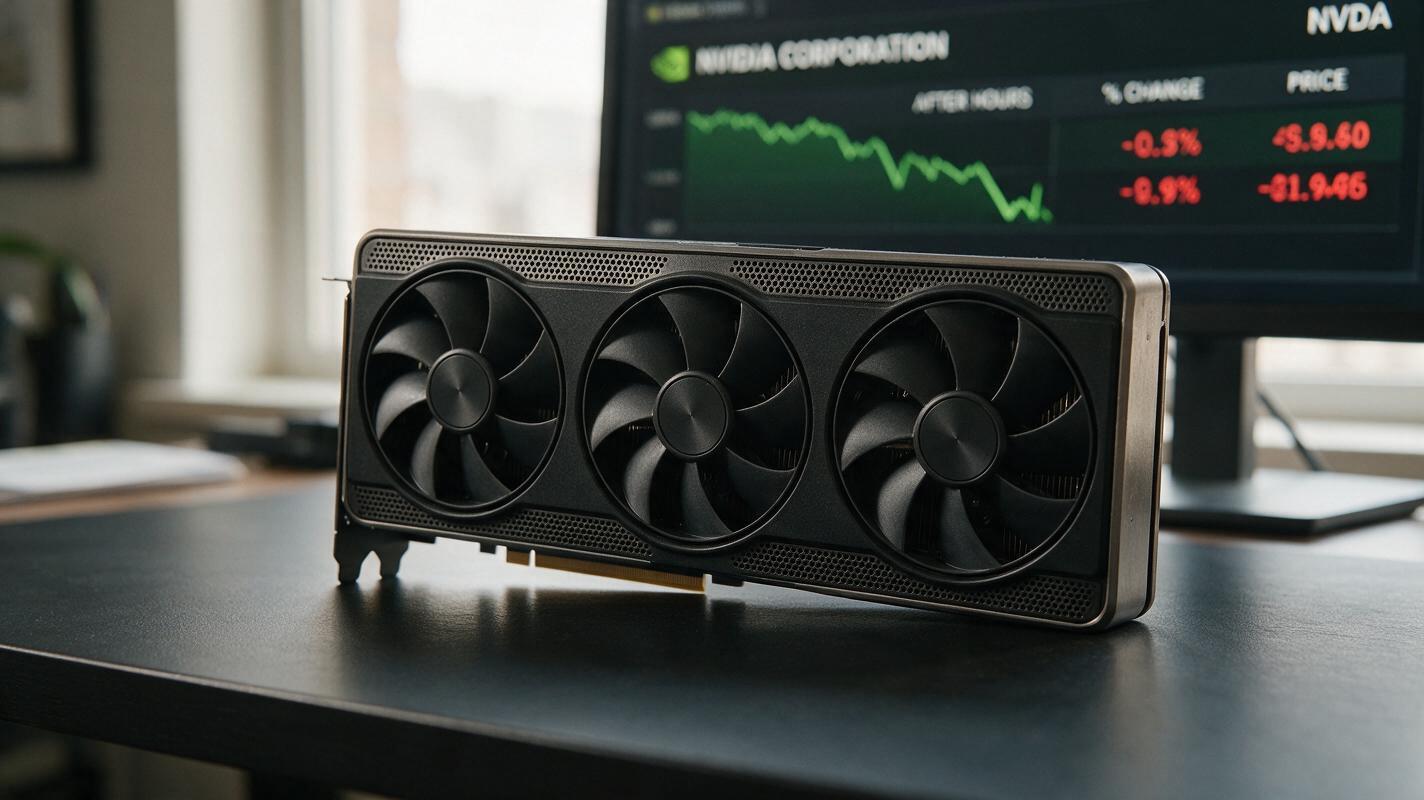
Table of contents
Late-night reports from WSJ and Bloomberg sent Nvidia shares tumbling after hours as word spread that the company’s board was weighing removing its iconic founder-CEO.
What the Reports Say About Nvidia’s Leadership
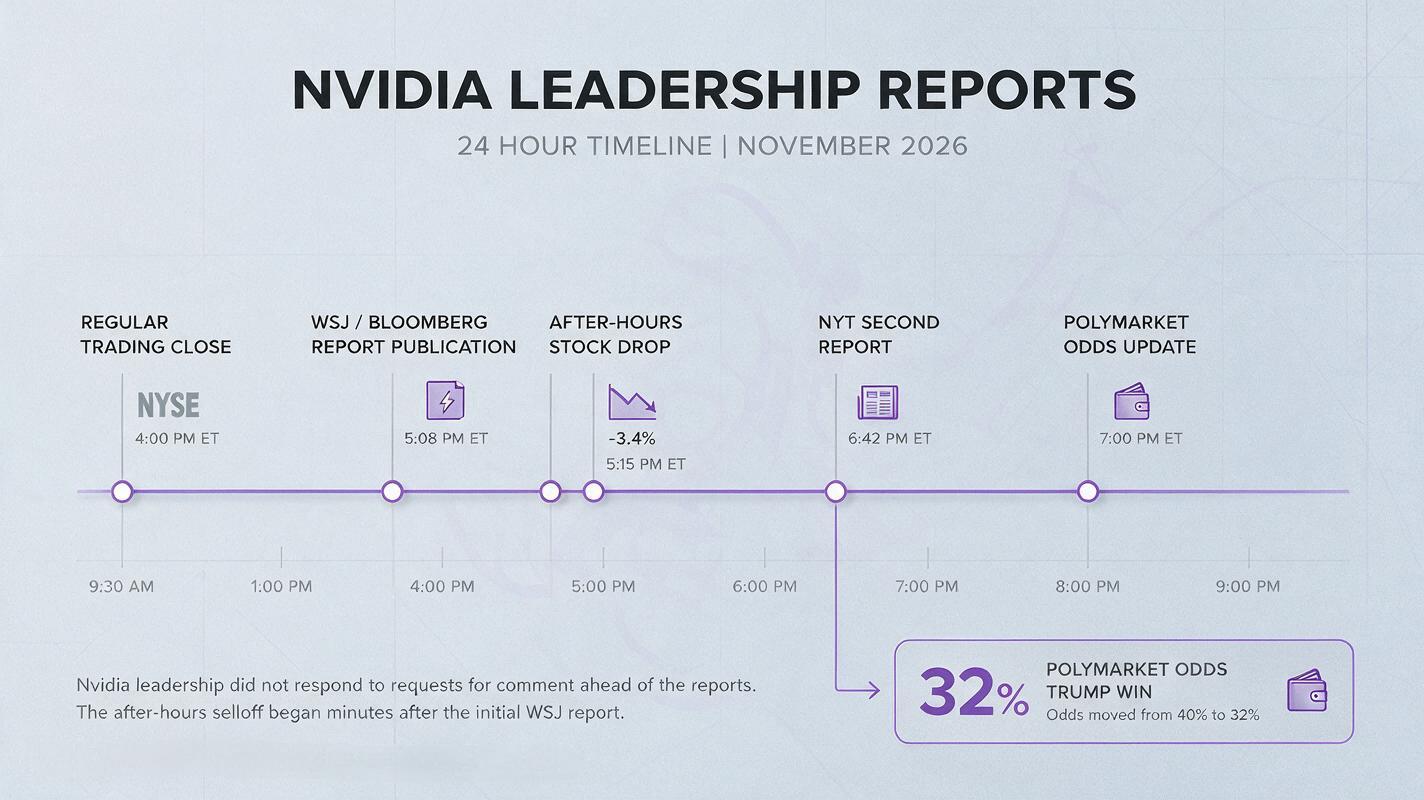
On the evening of November 11, 2026 ET, Wall Street Journal and Bloomberg published separate reports citing anonymous sources close to Nvidia’s board, stating that directors were preparing to remove co-founder and CEO Jensen Huang from his post. The reports indicated a decision could come as early as a board meeting scheduled for November 12, and that the board had retained an outside executive search firm to evaluate options, including an interim CEO appointment.
Prior to the news, Nvidia shares had closed the regular trading session up 2.87% at $173.73. In after-hours trading, the stock fell more than 9%, and by 08:50 Beijing time on November 12, it remained down 8.79%.
The same evening, New York Times reported a second internal relationship allegation involving Huang and Kimberly Powell, a healthcare vice president who reports directly to him. The report referenced an incident at the March GTC conference and said witnesses had been asked to sign non-disclosure agreements about the matter. Prediction market Polymarket priced an 86% chance that Huang would depart Nvidia before the end of November 2026.
As of the time of the reports, Nvidia had not officially confirmed any of the claims. Governance scholars quoted by Fortune noted that a scenario where Huang retained his role with reduced authority was also considered likely by some experts.
Why Nvidia Leadership Uncertainty Ripples Through AI
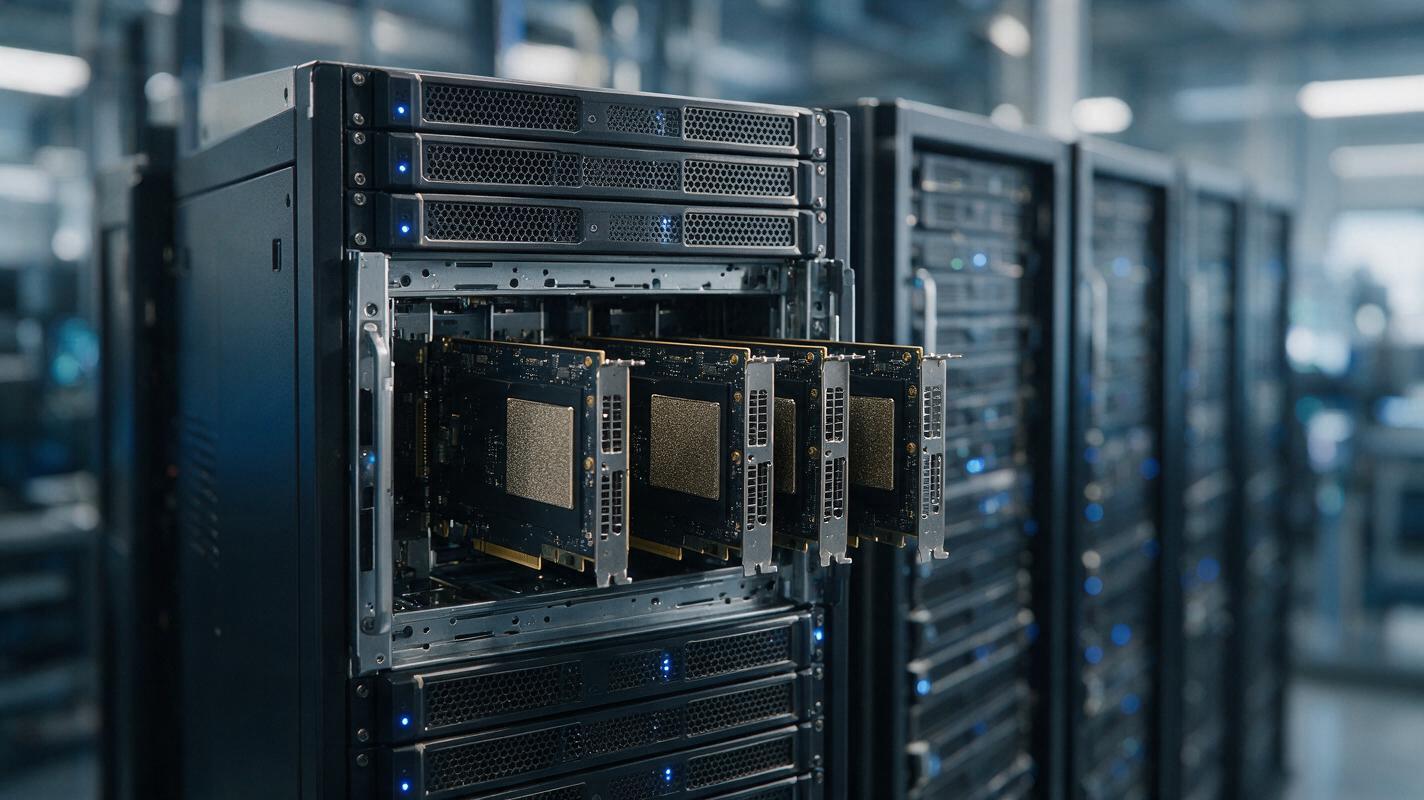
Nvidia’s dominance in AI accelerator hardware makes it a linchpin of the entire generative AI ecosystem. Its GPUs power the vast majority of frontier model training and inference workloads, from ai image generator tools to large language models used for coding and content creation. Any disruption to the company’s leadership roadmap could have cascading effects on GPU supply, pricing, and the pace of hardware innovation.
For months, AI demand has outstripped GPU supply, leading to long lead times and elevated prices for both cloud providers and end users. A period of leadership uncertainty at Nvidia could slow decision-making around production capacity, new product launches, and customer commitments — all of which would trickle down to the tools creators rely on every day.
What This Means for AI Content Creators
For creators building content with AI, the Nvidia news underscores a broader risk: overreliance on a single hardware or model provider can leave workflows vulnerable to unexpected disruptions. If GPU supply tightens further or prices rise, access to popular AI tools could become more expensive or less reliable, potentially delaying projects and raising production costs for everything from social media content to short films.
This is particularly true for teams running resource-intensive ai video generator pipelines, which depend on high-volume GPU compute to render clips, generate animations, and process voiceovers or dubbing. A supply shock could lead to longer queue times or higher per-credit costs on single-provider platforms.
Building Resilient Creative AI Workflows
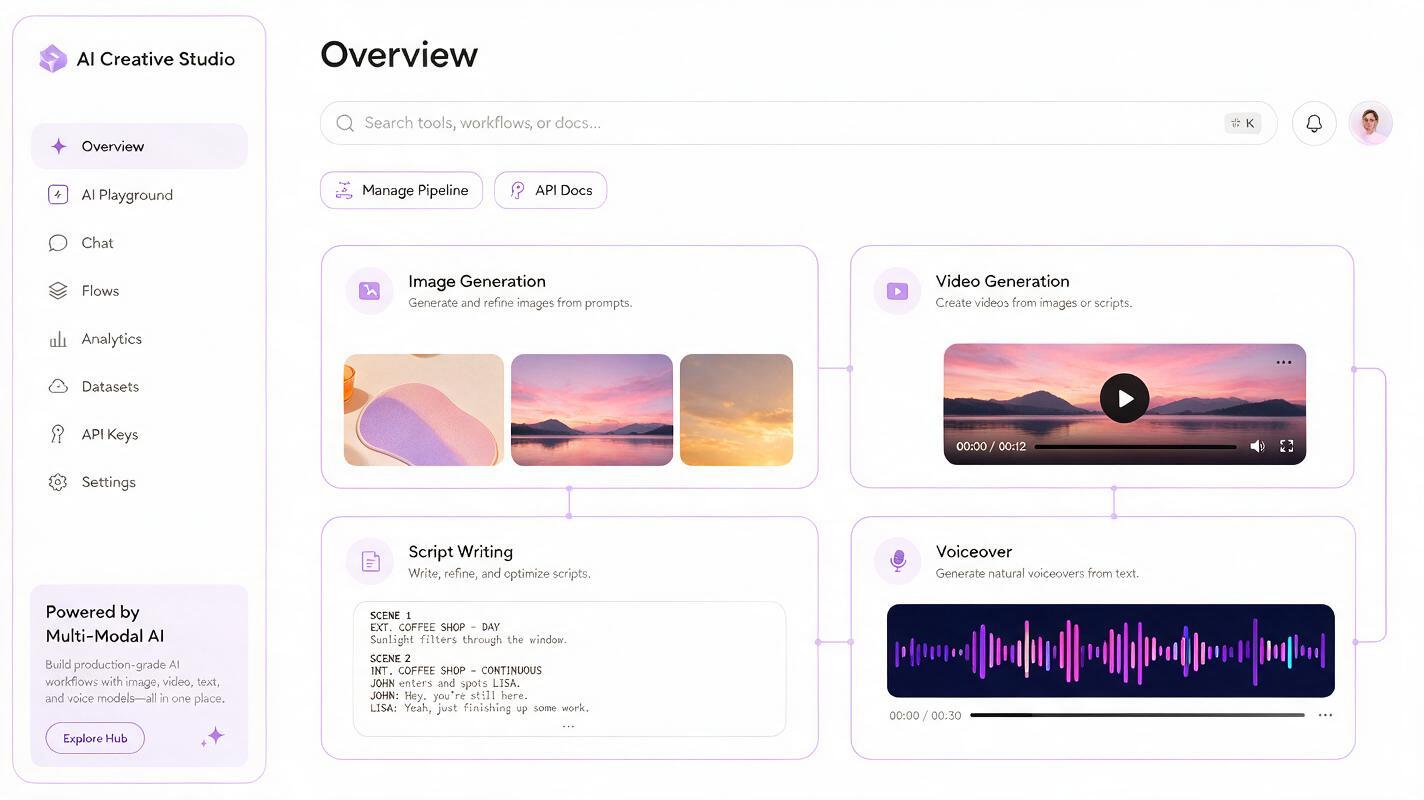
The good news is that creators can mitigate these risks by designing flexible, multi-provider workflows that don’t depend on a single hardware vendor or model family. Platforms like MagicBoat offer access to dozens of AI models across different categories, all under one account, so creators can switch between tools if one provider experiences downtime or pricing changes.
Diversifying your toolstack also unlocks creative flexibility: different models excel at different tasks, from photorealistic image generation to scriptwriting to lip-syncing. A multi-model platform lets you pick the best tool for each part of your project, rather than being locked into a single provider’s strengths and weaknesses.
For teams managing ongoing content pipelines, this resilience directly translates to more predictable timelines and costs. You won’t have to pause work or renegotiate contracts if one provider faces supply issues, leadership changes, or service disruptions.
Key Takeaways
- WSJ and Bloomberg reported late November 11 ET that Nvidia’s board was preparing to remove CEO Jensen Huang, with a potential decision as early as November 12; the reports remain unconfirmed by Nvidia.
- Nvidia shares fell more than 9% in after-hours trading following the news, with a second internal relationship allegation and 86% Polymarket departure odds adding to the uncertainty.
- Nvidia’s central role in AI hardware means leadership turmoil could affect GPU supply, pricing, and the availability of AI tools creators rely on.
- Building workflows on multi-model platforms reduces single-vendor risk and gives creators more flexibility to adapt to market changes.
- You can try these models for free on MagicBoat to build a resilient, multi-tool creative pipeline.
Keywords
nvidia, jensen huang, ai hardware, ai infrastructure, ai workflow, ai agent, ai video workflow