Nvidia CEO Jensen Huang Admits Affair, Board Launches Probe, Stock Drops
Nvidia CEO Jensen Huang admitted an extramarital affair in a November 8 staff letter and will cooperate with an independent board probe launched after reports he was targeted by a foreign intelligence operation linked to AI chip export control evasion. The company’s stock fell 4.27% on November 9, making it the only mega-cap decliner as the Nasdaq and semiconductor index posted strong gains. For AI video and image creators, the leadership turmoil and export control scrutiny raise questions about the stability of GPU supply that powers most major AI creation tools.
Table of contents
Nvidia CEO Jensen Huang has admitted an extramarital affair in a November 8 staff letter, triggering an independent board probe and a sharp stock drop amid reports linking the situation to foreign intelligence targeting and AI chip export control evasion.
The news sent shockwaves through the tech industry on November 9, as Nvidia — the dominant supplier of GPUs for AI training and inference — saw its shares fall sharply while the broader tech and semiconductor markets rallied. For AI video and image creators who rely on Nvidia-powered tools for everything from script drafting to final renders, the leadership turmoil and regulatory scrutiny raise important questions about supply chain stability and long-term compute pricing.
What Happened: Full Breakdown of the Nvidia News
According to a November 8 internal staff letter, Huang admitted to an extramarital affair, apologized to employees, and stated he will fully cooperate with an investigation while remaining in his role as CEO. The Nvidia board of directors has launched an independent probe led by independent directors with outside legal counsel, following reports that Huang was targeted by a foreign intelligence operation.
A New York Times report links Huang to Alice Huang, a former executive at Megaspeed, a firm suspected of evading U.S. AI chip export limits. The connection has raised questions about whether the intelligence targeting is tied to efforts to circumvent export controls on high-end Nvidia GPUs, which are critical for advanced AI development.
The market reaction was swift and severe. On November 9, Nvidia shares closed down 4.27% at $178.67, after dropping as much as 8.8% during intraday trading. Nvidia was the only mega-cap stock to decline that day, standing in stark contrast to broad market gains.
| Index / Stock | Nov 9, 2026 Performance | Key Details |
|---|---|---|
| Nvidia (NVDA) | -4.27% | Only mega-cap decliner; 8.8% intraday drop, closed at $178.67 |
| Nasdaq Composite | +2.74% | Broad tech sector rally |
| PHLX Semiconductor Index (SOX) | +6.85% | Semiconductor stocks outperform broadly |
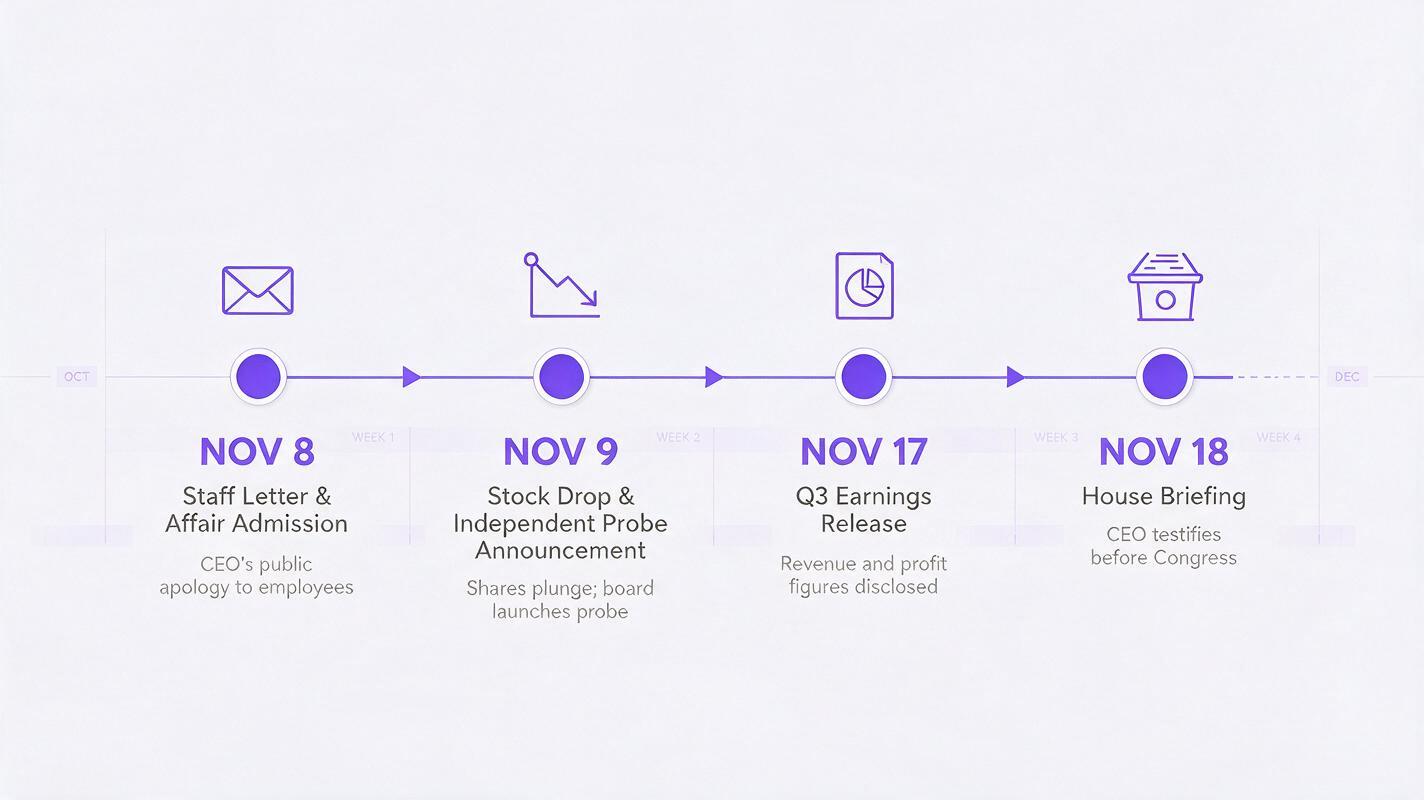
Over the past month, Nvidia shares have fallen roughly 22-23%, underperforming the semiconductor sector by a significant margin. Investors are looking ahead to two key upcoming events: the company's Q3 FY2027 earnings results on November 17, and a closed House briefing with Huang scheduled for November 18, where export control issues are expected to be a central topic.
Why This Ripples Through the AI Creator Ecosystem
Nvidia is far more than just a chip company for AI creators. Its GPUs power the vast majority of advanced AI models, including ai video generator tools, image generation models, and large language models like GPT-6 and Claude Opus that creators use for scripting, ideation, and post-production. Any disruption to Nvidia's leadership, product roadmap, or supply chain can have cascading effects across the entire AI creation ecosystem.
Leadership uncertainty at the top of Nvidia could delay the rollout of next-generation GPUs designed for AI workloads, which in turn could slow the release of more powerful and affordable AI creative tools. Tighter export controls resulting from the ongoing scrutiny could also limit the supply of high-end GPUs available for cloud inference, potentially driving up the cost of AI compute for both tool providers and end users.
For creators who rely on cloud-based AI tools, these risks may not be immediately visible, but they can translate to higher subscription prices, longer generation times, or delayed feature rollouts if compute costs rise or supply tightens.
What This Means for Your AI Creative Workflow
In the short term, there is no immediate disruption to most AI creative tools, including ai image generator platforms and video generation services. Most major AI tool providers have diversified their infrastructure partnerships and maintain sufficient GPU capacity to support current user demand.
Over the medium to long term, however, creators should be aware of potential risks. If export controls are tightened or Nvidia's product roadmap faces delays, the cost of high-end AI compute could rise, and the pace of new model releases may slow. This could affect everything from the resolution of AI-generated video to the speed of image editing workflows.
The most effective way to mitigate these risks is to build a flexible, multi-model creative workflow that does not rely on a single AI tool or hardware provider. Platforms like MagicBoat give creators access to a wide range of AI models and tools from different providers, all through a single account, so you can switch between options if one service experiences disruptions or price increases.
Diversifying your AI tool stack across multiple models and providers is the simplest way to protect your creative workflow from vendor-specific disruptions, whether they stem from hardware supply issues, regulatory changes, or leadership shifts.
Whether you're working on text to video projects, image to video animations, or static AI art, using a platform that aggregates multiple tools ensures you can keep creating even if individual providers face challenges.
Key Takeaways
- Nvidia CEO Jensen Huang admitted an extramarital affair in a November 8 staff letter and is cooperating with an independent board probe launched amid reports of foreign intelligence targeting and AI chip export control scrutiny.
- Nvidia stock fell 4.27% on November 9, making it the only mega-cap decliner as the Nasdaq rose 2.74% and the semiconductor index gained 6.85%; shares are down 22-23% over the past month.
- For AI creators, the biggest potential impacts are higher compute costs, delayed model rollouts, and supply chain disruptions if leadership turmoil or export restrictions escalate.
- Multi-model platforms like MagicBoat help reduce vendor risk by providing access to a diverse set of AI creative tools through a single account.
- You can try these models for free to build a more resilient creative workflow today.
Keywords
nvidia ceo jensen huang, ai chip export controls, gpu supply, gpt-6, claude opus, ai video model, stock drop