NVIDIA Unveils Nemotron 3.5 Super VL and Bolt Local-Agent Models
On October 19, 2026, NVIDIA announced two new models in its Nemotron 3.5 lineup: Nemotron 3.5 Super VL and Bolt, a local-agent model. While full specifications and availability details have not been confirmed, the release signals growing interest in local AI tools and vision-language capabilities across creative and enterprise use cases. For content creators, the announcement underscores the value of flexible, multi-model AI workflows that can adapt to new cloud and local tools as they emerge.
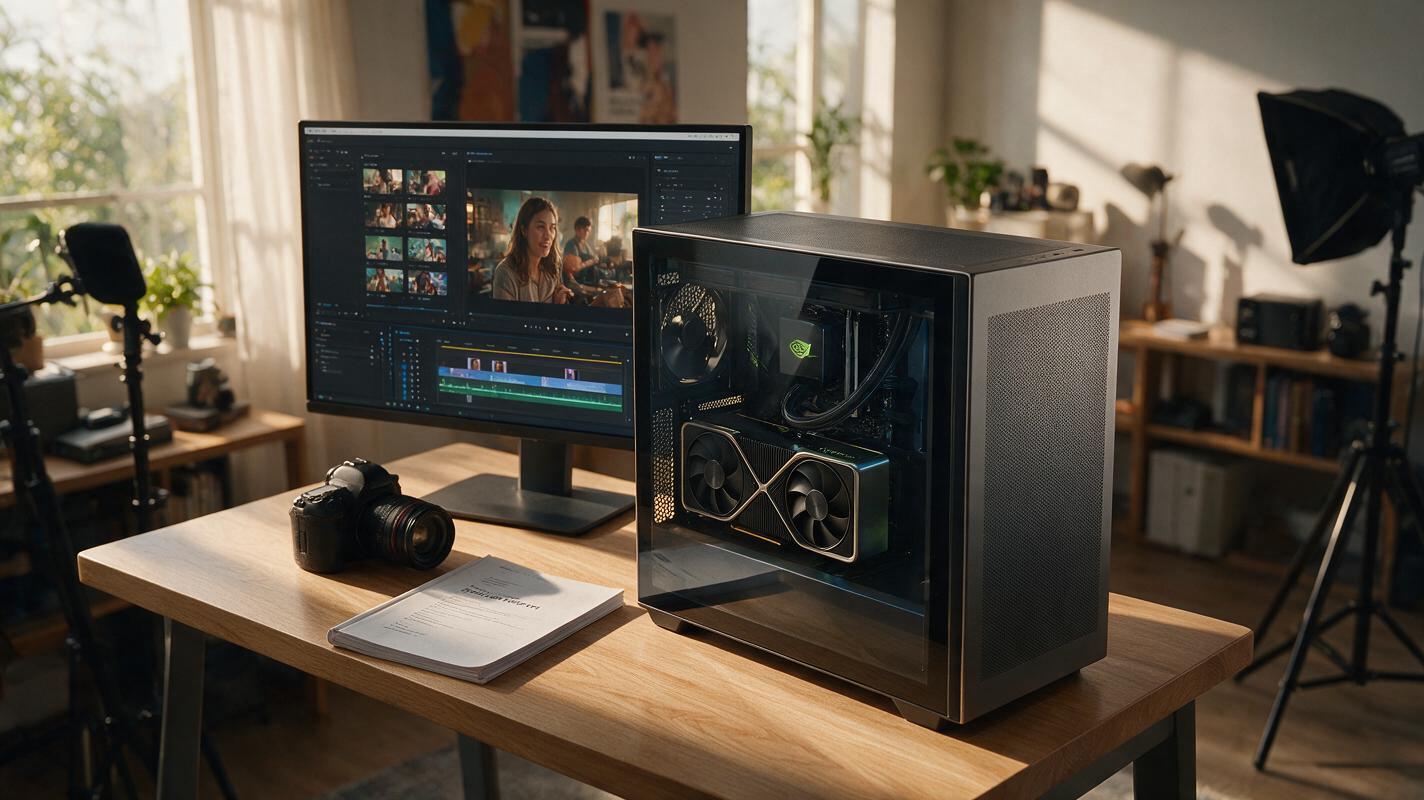
Table of contents
NVIDIA Nemotron 3.5: New Super VL and Bolt Models Revealed
On October 19, 2026, NVIDIA unveiled two new additions to its Nemotron 3.5 model family: Nemotron 3.5 Super VL and Bolt, a local-agent model. The announcement marks NVIDIA’s latest entry into the fast-growing generative AI model space, with one model positioned for vision-language use cases and another built to run agentic workflows directly on local hardware.
As of the initial announcement, full details about both models remain limited. NVIDIA has not yet shared parameter counts, performance benchmarks, availability timelines, pricing, or minimum hardware requirements for either model. The "Super VL" naming convention suggests a vision-language focus, while Bolt is explicitly framed as a local-agent model, meaning it is designed to operate on local devices rather than relying on cloud-based API calls.
For content creators and AI tool users, the announcement is another sign of how quickly the generative AI landscape is evolving, with new model releases from major providers arriving on a near-weekly basis. Keeping up with these launches—and evaluating which ones are worth integrating into production workflows—has become a core challenge for creative teams of all sizes.
What Local-Agent Models Bring to Creative Workflows
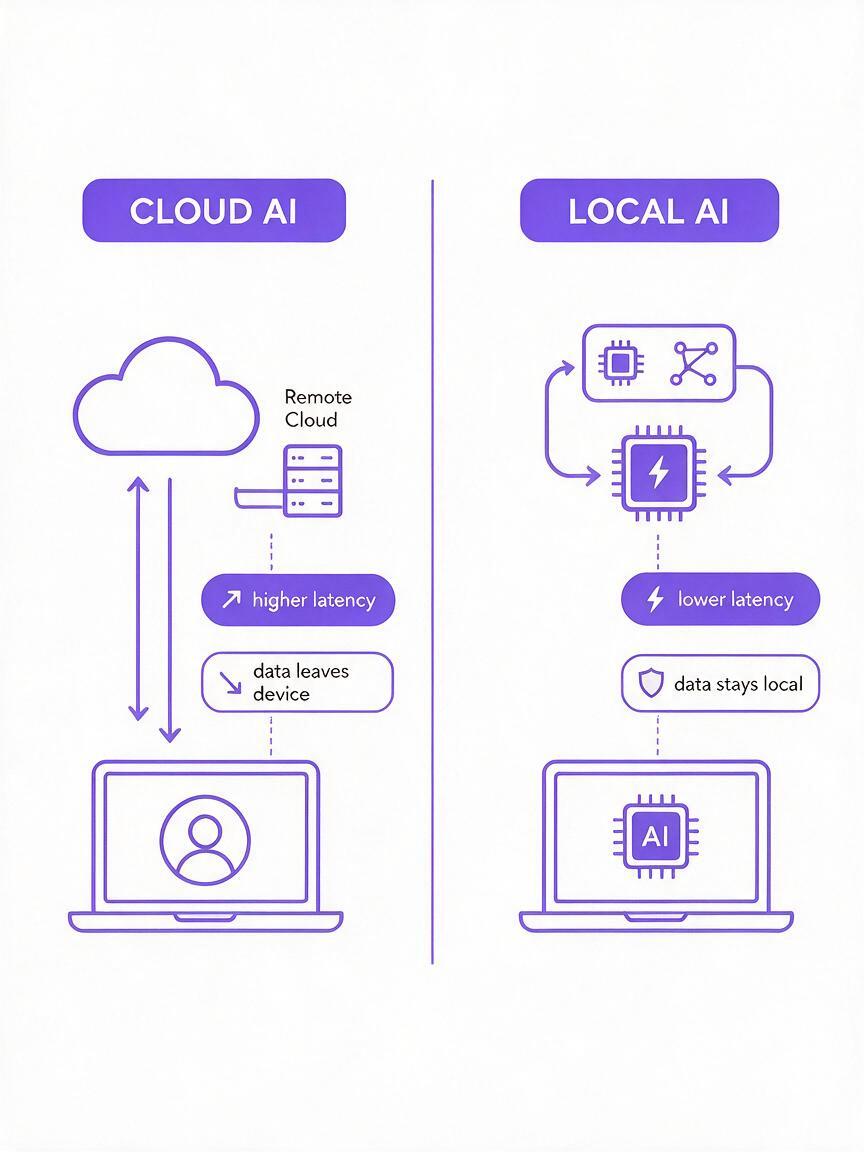
Bolt’s positioning as a local-agent model is particularly notable for creators who prioritize speed, privacy, and control over their AI tools. Local AI models run directly on a user’s own hardware, rather than sending data to remote cloud servers for processing. This architecture comes with several potential benefits for content teams, though it also carries important tradeoffs.
Potential Benefits of Local-Agent Models
- Lower latency: Without the need to send data back and forth to a cloud server, local models can often generate results faster, which speeds up iterative work like script drafting, image generation, or video clip editing.
- Enhanced data privacy: Unreleased scripts, brand assets, confidential project details, and personal data never leave a user’s device, reducing the risk of data leaks or unauthorized access to sensitive creative work.
- Predictable long-term costs: While local models require upfront investment in compatible hardware, they avoid recurring per-token or per-generation API fees, which can add up quickly for high-volume creative teams.
- Offline access: Creators can work on projects without an internet connection, which is useful for on-location work, travel, or teams operating in areas with unreliable internet service.
Key Tradeoffs to Consider
- Hardware requirements: High-performance local AI models typically require powerful, dedicated GPUs with large amounts of VRAM, which can be prohibitively expensive for individual creators or small teams.
- Setup and maintenance: Local models often require manual installation, configuration, and updates, which takes time and technical expertise that many creative teams don’t have in-house.
- Performance gaps: Local models may not match the raw capability or output quality of top-tier cloud-based frontier models, especially for complex tasks like high-resolution video generation or long-form script writing.
It’s important to evaluate any new model—local or cloud—on real-world creative tasks, not just marketing claims or benchmark scores. What works well for one use case may fall short for another.
How New Model Launches Impact AI Content Creation
The steady stream of new AI model releases from providers like NVIDIA, OpenAI, Anthropic, Google, and Meta is both an opportunity and a challenge for content creators. On one hand, more options mean creators can find tools that are better tailored to their specific needs, whether that’s faster generation, lower cost, better visual quality, or stronger privacy controls.
On the other hand, the rapid pace of launch can make it hard to keep up. Teams that build their entire workflow around a single model or provider risk being left behind when a better option comes out, or facing disruption if their primary tool changes pricing, features, or availability.
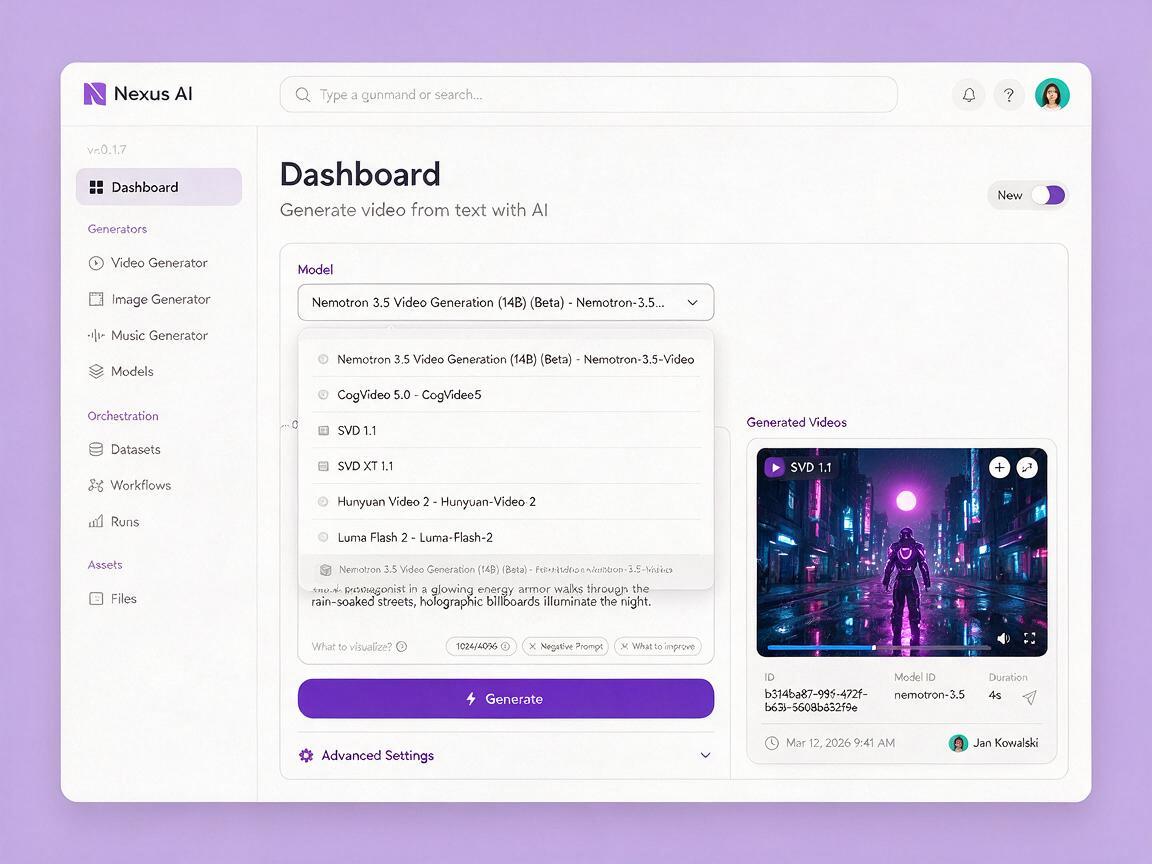
For teams working with visual content, an ai video generator that integrates multiple model backends solves this problem by letting creators test new tools as they become available, without having to rebuild their entire production pipeline from scratch. This flexibility makes it easy to compare output quality, speed, and cost across different models and pick the best one for each individual project.
Similarly, teams that rely on text to video workflows don’t have to rewrite their prompts, rework their templates, or retrain their team every time a new model hits the market. A unified platform lets teams switch between models with a few clicks, preserving their existing assets, prompts, and workflow structures.
Why Multi-Model Platforms Reduce Risk for Creative Teams
As the AI landscape continues to fragment, with new models launching every week from a growing number of providers, working with a single provider or model is becoming increasingly risky. A model that’s state-of-the-art today might be outdated in six months, or a provider might change its pricing, terms of service, or feature set in ways that disrupt your workflow.
Multi-model platforms like MagicBoat address this risk by giving creators access to a wide range of leading AI tools from a single account. Instead of managing multiple subscriptions, learning different interfaces, and porting assets between different services, teams can work in one unified environment while still taking advantage of the latest model releases.
This approach also makes it easier to test new models like the Nemotron 3.5 lineup as they become available. You can run side-by-side comparisons with your existing go-to tools, test output quality on your actual project work, and decide whether the new model is worth adopting—all without disrupting your current workflow or investing in new hardware upfront.
You can explore a curated selection of top-tier creative AI tools, test new models as they become available, and build flexible, future-proof workflows all in one place when you try these models for free on MagicBoat.
Key Takeaways
- NVIDIA announced two new Nemotron 3.5 models on October 19, 2026: Super VL and Bolt, a local-agent model, with full technical and availability details still unconfirmed.
- Local-agent models offer potential benefits like lower latency, enhanced data privacy, predictable long-term costs, and offline access, but they also come with hardware requirements and maintenance tradeoffs.
- The rapid pace of AI model launches makes flexible, multi-model workflows essential for creative teams that want to stay competitive without constant disruption.
- Unified AI platforms let creators test new tools as they launch, compare performance across models, and switch between options without rebuilding their entire pipeline.
- Always evaluate new models on real-world creative tasks relevant to your work, rather than relying solely on marketing claims or benchmark scores.

Keywords
nvidia nemotron 3.5, ai news, ai tools, ai video generator, local ai models, ai agents, ai roundup, text to video