NVIDIA Launches Nemotron 3.5 Super VL and Bolt Model Family
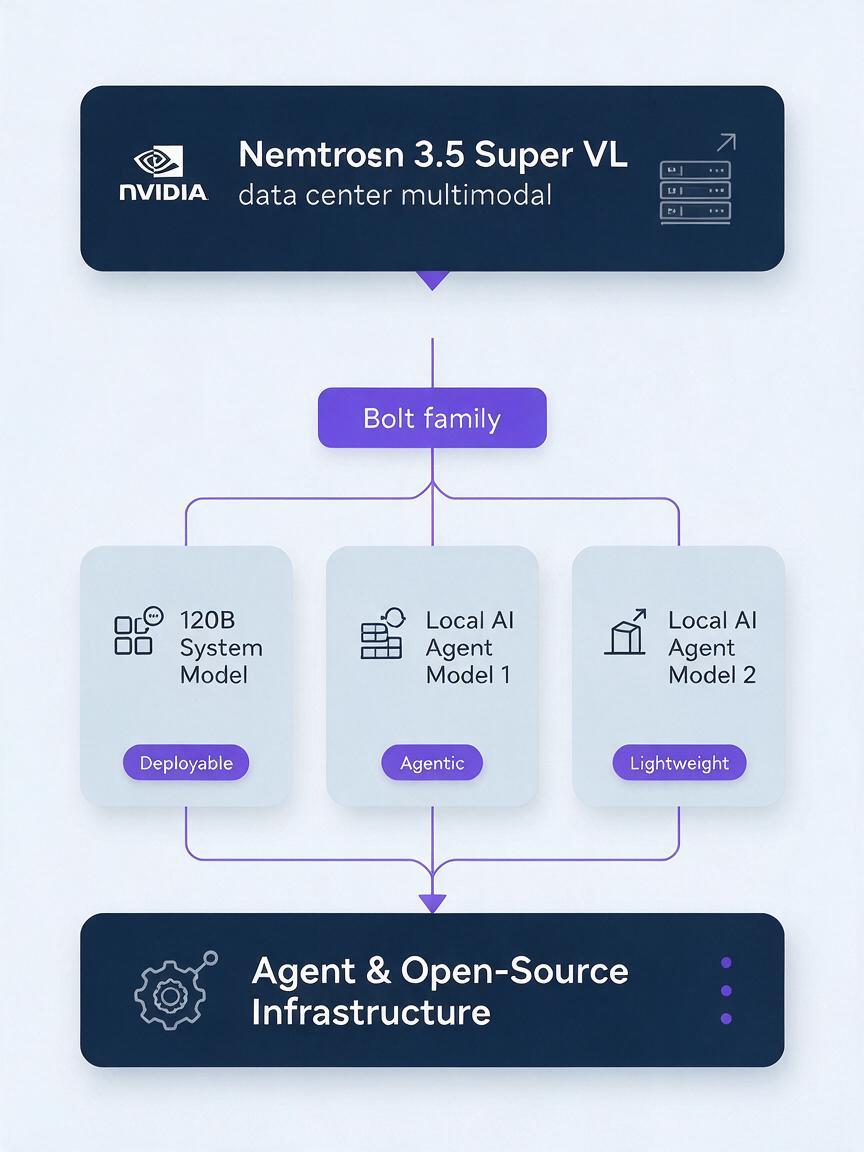
NVIDIA has launched the Nemotron 3.5 Super VL, an efficient data-center multimodal model, alongside the Bolt model family featuring three new models: a 120B system and two local AI-agent models, plus supporting agent and open-source infrastructure updates. The release expands NVIDIA’s AI ecosystem across data center and edge deployments, with potential ripple effects for multimodal AI tools used by content creators. This article breaks down the key launch details and their practical implications for AI video and image creation workflows.

Table of contents
What to Know About NVIDIA’s October 2026 AI Model Launch
On October 19, 2026, NVIDIA unveiled a major expansion of its AI model and infrastructure portfolio, headlined by two new model lines and supporting tooling. The release includes the Nemotron 3.5 Super VL, an efficient data-center multimodal model, and the Bolt family, a set of three new models spanning data center and local edge use cases. NVIDIA also rolled out updates to its agent development tools and open-source AI infrastructure alongside the new models.
The announcement comes amid a wave of frontier and open-weight model releases from major AI labs, as competition intensifies across data center, cloud, and on-device AI deployments. For creators working with AI-powered video and image tools, the launch signals growing investment in multimodal and agent-based AI systems that could power the next generation of creative workflows.
Breakdown of the New NVIDIA Model Lineup
Nemotron 3.5 Super VL
The flagship data-center release in the announcement is Nemotron 3.5 Super VL, positioned as an efficient multimodal model for data center deployments. NVIDIA has framed the model as optimized for performance per watt in data center environments, a key priority for cloud providers and enterprises running large-scale AI workloads. As a multimodal model, it is designed to process and generate multiple types of data, though full details on supported modalities, benchmark scores, and pricing have not been publicly released as part of the initial announcement.
Bolt Model Family
Alongside Nemotron 3.5 Super VL, NVIDIA introduced the Bolt family, a collection of three new AI models tailored for different use cases. The lineup includes a 120B-parameter system model, likely targeted at high-performance data center workloads, plus two local AI-agent models built to run on edge devices or local hardware rather than cloud data centers. The local agent models are designed to power AI agent workflows directly on user devices, which could reduce latency and improve data privacy for tasks that don’t require cloud-scale compute.
Agent and Open-Source Infrastructure Updates
Complementing the new model releases, NVIDIA also rolled out updates to its agent development tools and open-source AI infrastructure. These updates are designed to make it easier for developers to build, deploy, and manage AI agents using NVIDIA’s model ecosystem, with support for open-source frameworks that reduce vendor lock-in. The infrastructure updates aim to streamline the process of integrating NVIDIA models into existing workflows, including creative tools for video and image production.
What This Means for AI Video and Image Creators
While NVIDIA has not yet shared detailed creative use cases for Nemotron 3.5 Super VL or the Bolt family, the launch has several potential implications for AI video and image creators.
First, efficient data-center multimodal models like Nemotron 3.5 Super VL could lead to faster, more affordable access to advanced text to video and image generation tools down the line. As data center models become more power-efficient, cloud providers can run more workloads at lower cost, which often translates to lower pricing and faster generation speeds for end users of creative AI tools.
Second, local AI-agent models from the Bolt family could unlock new on-device creative workflows that don’t rely on constant cloud connectivity. For creators working on location or with sensitive source material, local AI agents could handle tasks like batch image editing, script breakdowns, or storyboard organization directly on a workstation, without uploading assets to cloud servers. This would improve both speed and privacy for sensitive creative projects.
Third, improved agent infrastructure could make it easier for creative tool developers to build AI-assisted workflows that automate repetitive tasks. For example, AI agents could handle tasks like sorting footage, generating alt text for social media assets, or syncing voiceover to video clips, freeing creators to focus on higher-level creative decisions.
It’s important to note that these are potential use cases based on the stated positioning of the new models; NVIDIA has not confirmed specific creative features, pricing, or availability for end-user creative tools built on these models as of the initial announcement.
Why a Multi-Model Creative Platform Adds Stability
The rapid pace of AI model releases from NVIDIA, OpenAI, Anthropic, Google, and Meta can make it hard for creators to keep up with the latest tools and choose the right model for each project. Relying on a single provider’s ecosystem also carries risks: model pricing can change, access can be restricted, or a model that works well for one task may underperform for another.
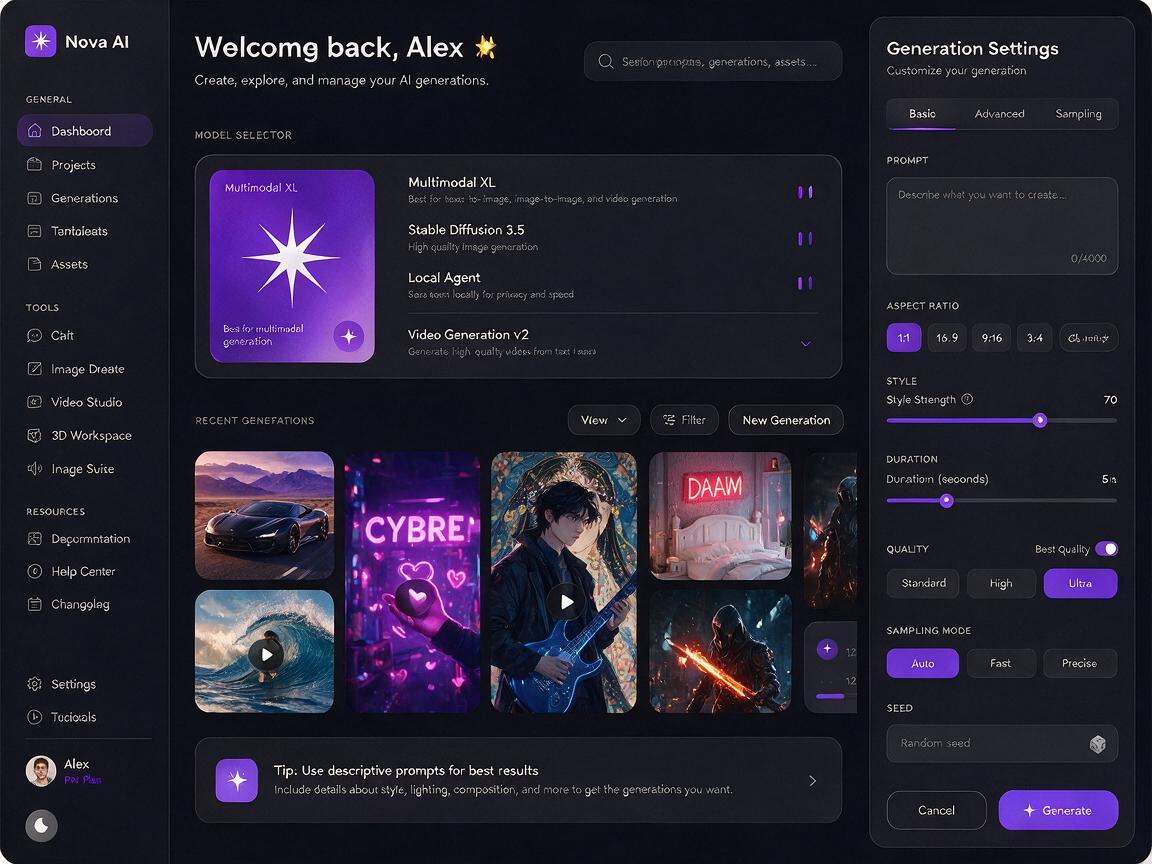
A multi-model creative platform like MagicBoat solves these problems by bringing dozens of leading AI tools under one roof, so creators can pick the best model for each task without managing multiple subscriptions or accounts. Whether you need a high-quality ai image generator for concept art, a fast text-to-video tool for short-form content, or AI-powered scriptwriting support, you can access all of it from a single dashboard.
Multi-model platforms also provide workflow resilience: if one model experiences downtime, pricing hikes, or policy changes, you can switch to an alternative in seconds without disrupting your project timeline. This is especially valuable for professional creators who rely on consistent, reliable AI tools to meet client deadlines.

Key Takeaways
- NVIDIA launched Nemotron 3.5 Super VL, an efficient data-center multimodal model, and the three-model Bolt family (including a 120B system and two local AI-agent models) on October 19, 2026, alongside agent and open-source infrastructure updates.
- Efficient data-center multimodal models could lead to faster, more affordable creative AI tools, while local agent models may unlock on-device creative workflows with better privacy and lower latency.
- As the AI model landscape continues to evolve rapidly, multi-model platforms give creators the flexibility to use the best tool for each task and maintain workflow stability.
- Creators can access a wide range of leading AI video, image, and audio tools in one place by using a unified platform like MagicBoat.
Get Started With AI Creative Tools
If you’re ready to explore the latest AI creative tools for video, image, and audio production, try these models for free on MagicBoat. The platform offers access to dozens of leading AI models in a single dashboard, so you can experiment, compare, and build your ideal creative workflow without multiple subscriptions.
Keywords
nvidia nemotron 3.5 super vl, bolt model family, ai model release, multimodal ai, ai agents, open-source ai, ai video model, text to video