What Is Nvidia RTX Spark? 128GB, Local AI Agents, Supply Expansion | MagicBoat
Nvidia announced its RTX Spark desktop line on November 18, 2026, with up to 128GB of unified memory designed to run local AI agents on Windows PCs, alongside expanded substrate supply agreements with Kinsus and Samsung Electro-Mechanics revealed one day earlier. The dual announcements expand both end-user local inference capacity and upstream AI hardware supply chain capabilities. For AI content creators, the news signals faster, more private on-device AI workflow options alongside a more resilient cloud AI tool ecosystem.
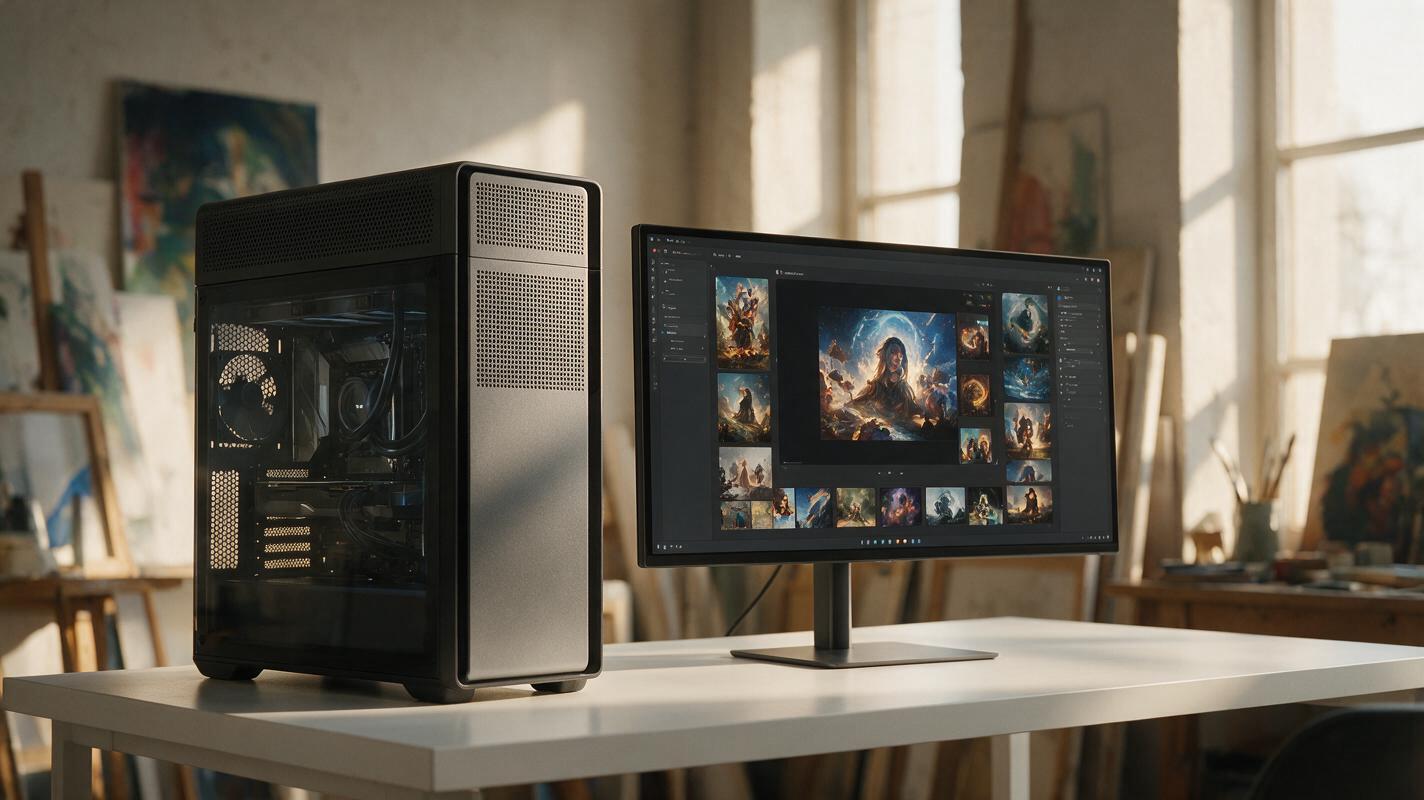
Table of contents
What Happened With Nvidia's RTX Spark and Substrate Supply Deals?
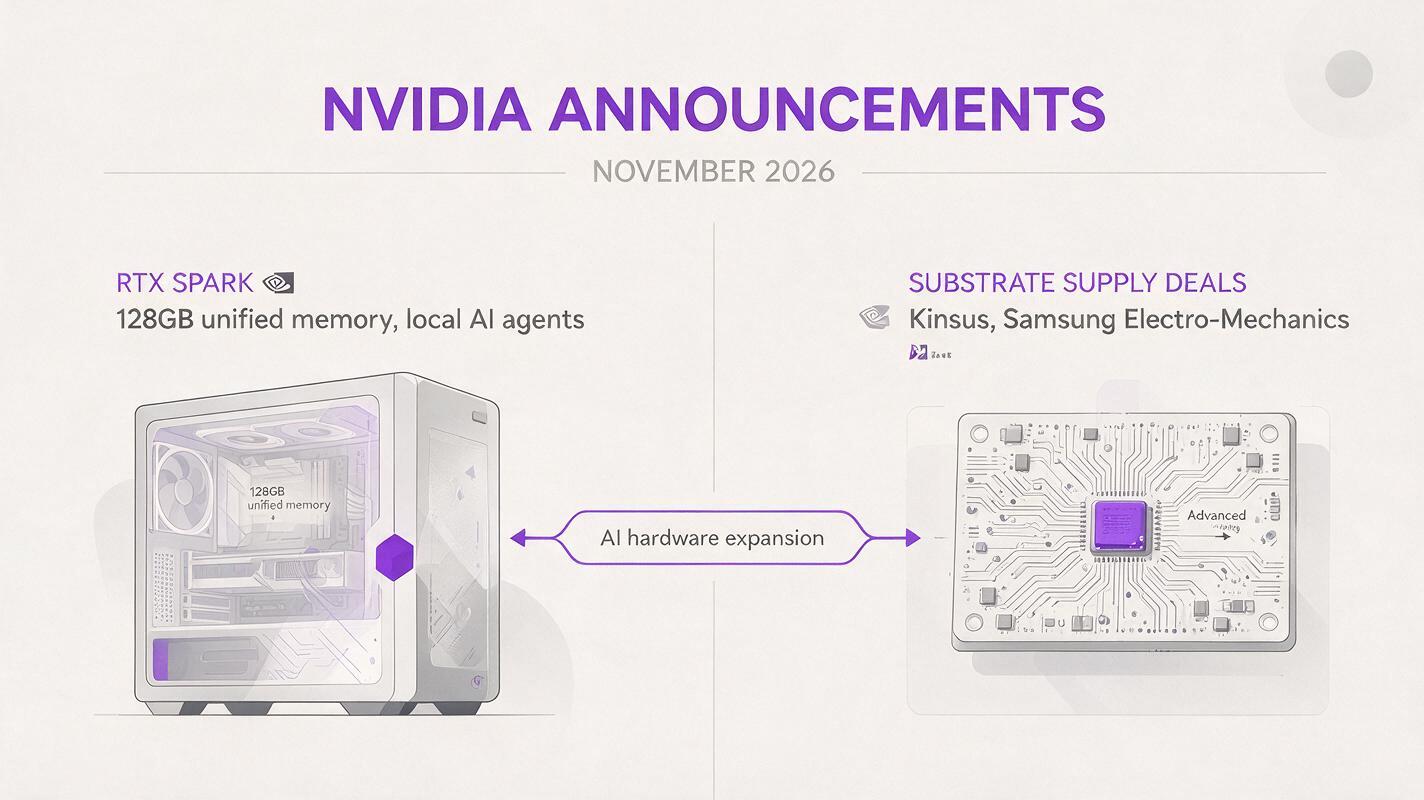
On November 18, 2026, Nvidia announced its RTX Spark line of desktop PCs designed to run local AI agents on Windows, with configurations packing up to 128GB of unified memory. The announcement came one day after Nvidia unveiled new substrate supply agreements with manufacturers Kinsus and Samsung Electro-Mechanics, widening its upstream AI hardware supply commitments. Both moves point to a dual expansion of local inference capacity for end users and broader supply chain capacity for AI hardware overall, per Nvidia’s official announcements.
RTX Spark desktops are built specifically to support AI agent workloads directly on consumer and professional Windows PCs, eliminating the need for cloud round-trips for many common AI tasks. The 128GB unified memory ceiling is a notable jump from typical consumer desktop configurations, allowing larger local AI models to run entirely in memory without slow storage swapping. Exact pricing, full SKU lineup, and general availability dates for RTX Spark desktops were not disclosed in the initial announcement.
The November 17 substrate deals with Kinsus and Samsung Electro-Mechanics target the upstream components that power Nvidia’s AI-focused GPUs and accelerators. Substrates are critical layered circuit boards that connect chips to other system components, and tight substrate supply has been a recurring bottleneck for AI hardware production. The expanded commitments are designed to increase overall output of AI hardware for both consumer and data center use cases.
Key Details for Local AI Agent Workloads
The core selling point of Nvidia’s RTX Spark desktops is their high unified memory capacity, which directly enables more capable local AI agents. Unified memory shares a single pool of fast memory across the CPU, GPU, and AI accelerators, reducing overhead and allowing larger AI models to run locally without splitting weights across multiple discrete memory pools.
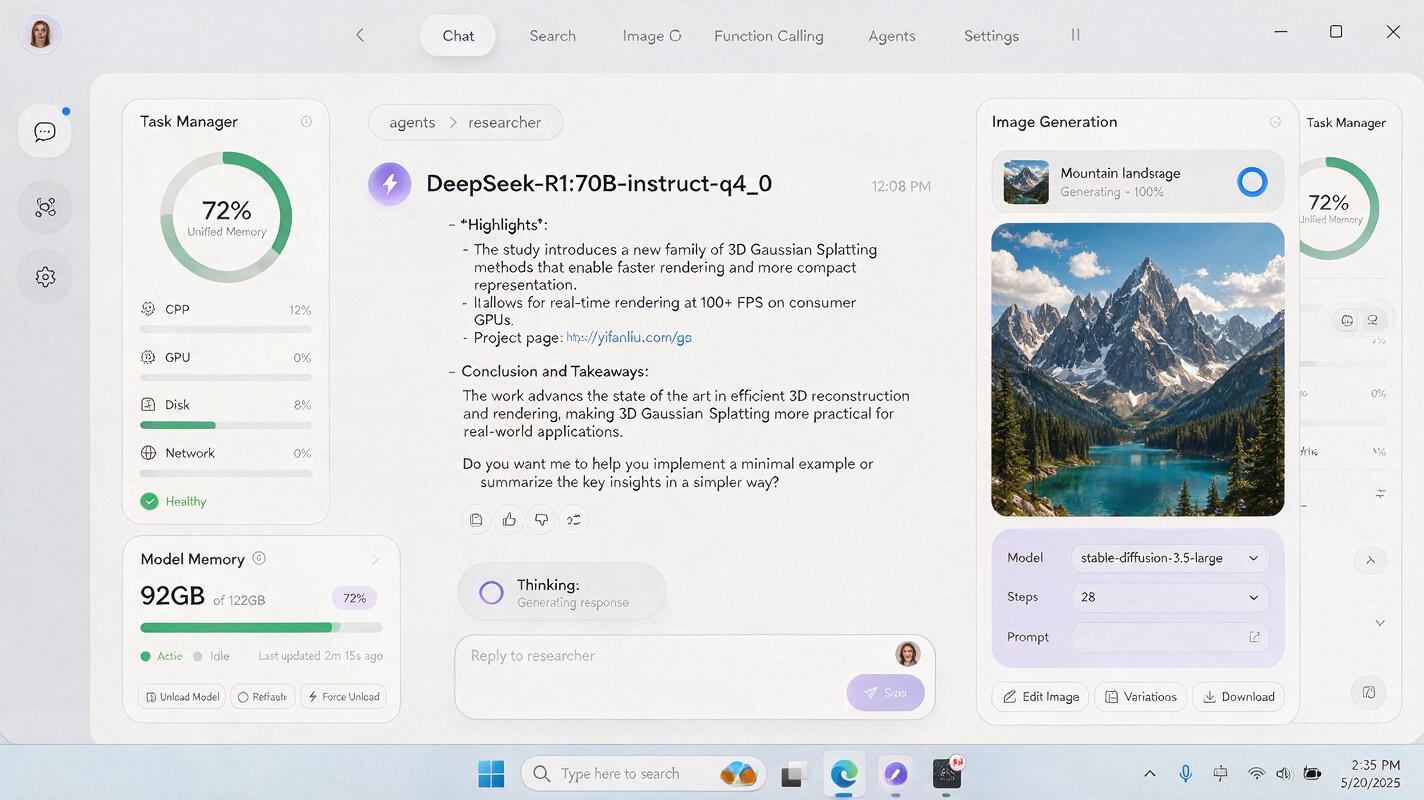
For local AI agent use cases, 128GB of unified memory supports running mid-to-large size language models, image generation models, and even lightweight video models entirely on-device, without sending data to cloud servers. This offers two key benefits: lower latency for interactive AI workflow tasks, and greater privacy for sensitive data that creators do not want to upload to third-party cloud platforms.
Nvidia has not yet published benchmark figures, specific model compatibility lists, or software ecosystem details for RTX Spark desktops as of the initial announcement. The systems are confirmed to run Windows and support standard AI agent frameworks, but finer-grained specifications remain not disclosed.
What the Substrate Supply Expansion Means for the AI Ecosystem
The November 17 substrate supply agreements address a key bottleneck that has constrained AI hardware availability for both consumer and data center markets. Substrate manufacturing capacity has lagged behind demand for high-end AI chips since 2024, leading to allocation constraints and extended lead times for GPU orders.
By expanding commitments with both Kinsus and Samsung Electro-Mechanics, Nvidia is locking in additional substrate volume to support production of its consumer RTX line, data center AI accelerators, and other AI-focused hardware. The expanded supply chain capacity supports both the rollout of local AI devices like RTX Spark desktops and the continued growth of cloud AI infrastructure that powers most large-scale AI services today.
The total value of the substrate supply commitments was not disclosed, nor was the exact additional capacity the deals will unlock. The announcements frame the agreements as part of Nvidia’s broader effort to expand overall AI hardware supply to meet growing global demand.

What This Means for AI Content Creators
For AI content creators, the dual announcements carry implications for both on-device and cloud-based creative workflows. On the local side, RTX Spark desktops with 128GB unified memory open up new possibilities for running AI tools directly on a creator’s main work machine, without relying on cloud connectivity. An ai image generator running locally can iterate on concept art or reference frames in seconds, with no upload wait times and full privacy for unreleased project assets.
For heavier workloads like full video renders or large language model-assisted script writing, cloud-based tools remain the most practical option for most creators — and the expanded substrate supply chain helps make those cloud services more reliable and readily available. A more resilient AI hardware supply chain means less risk of cloud AI tool outages or capacity constraints that can derail tight production deadlines for an ai video generator pipeline.
Creators do not need to choose between local and cloud AI tools: the most flexible creative workflows combine both, using local inference for fast, private iteration and cloud models for high-quality final output. Platforms like MagicBoat support this hybrid approach by offering a wide range of cloud-based AI creative tools accessible through a single account, so creators can pick the right tool for each stage of their project without managing multiple subscriptions.
try these models for free to build a flexible, hybrid AI creative workflow that fits your needs.
Key Takeaways
- Nvidia announced RTX Spark desktops on November 18, 2026, with up to 128GB of unified memory for running local AI agents on Windows PCs.
- One day prior, Nvidia expanded substrate supply commitments with Kinsus and Samsung Electro-Mechanics to widen overall AI hardware production capacity.
- RTX Spark desktops enable faster, more private local AI workloads, though pricing, full specs, and availability dates remain not disclosed.
- The supply chain expansion supports both consumer local AI devices and cloud AI infrastructure, improving reliability for all AI-powered creative tools.
- Creators can benefit from a hybrid workflow combining local AI iteration and cloud-based high-quality output, supported by multi-model platforms like MagicBoat.
Keywords
ai agent, ai workflow, nvidia rtx spark, local ai inference, ai automation, ai hardware, ai video workflow