Nvidia Vera Rubin Sweeps MLPerf v6.1 Benchmarks on Debut
Nvidia’s Vera Rubin GPU reportedly claimed first place across every MLPerf Training v6.1 benchmark in its debut announcement on November 16, delivering up to double the per-GPU performance of the GB300 NVL72 and over 10x agentic throughput-per-watt on a provisional Kimi K3 workload. The self-reported results, which remain pending MLCommons verification, point to faster AI model training cycles and improved efficiency that could translate to better, more affordable creative tools for video and image makers.
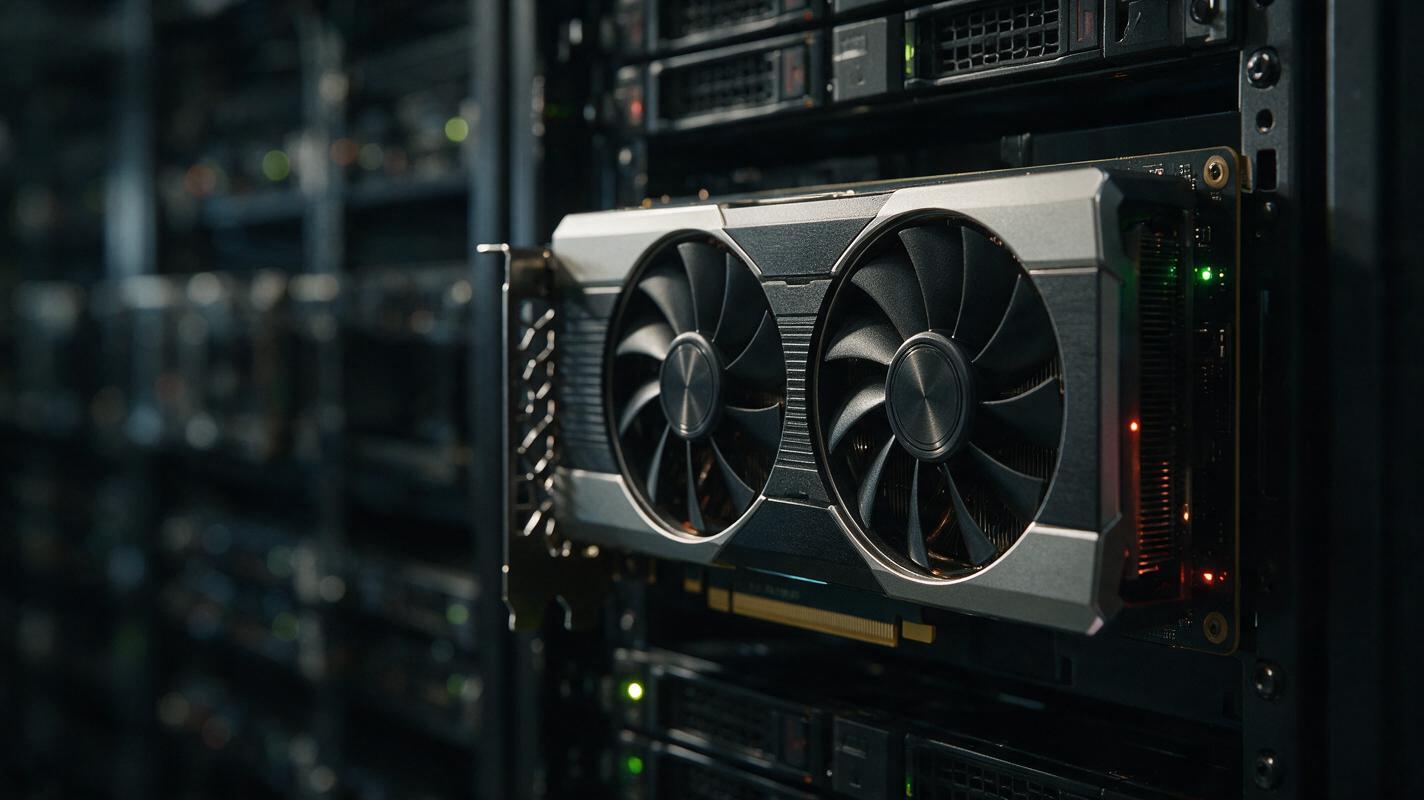
Table of contents
Nvidia Vera Rubin Debuts With Clean Sweep of MLPerf Training v6.1 Benchmarks
On November 16, Nvidia announced that its upcoming Vera Rubin GPU delivered a clean sweep of every MLPerf Training v6.1 benchmark in its debut showing, marking a major leap in AI training performance. The announcement came one day ahead of the company’s scheduled November 17 earnings release, with all results self-reported and still pending official verification from MLCommons.
According to Nvidia’s claims, Vera Rubin delivers up to 2x the performance per GPU compared to the GB300 NVL72, its previous high-end training configuration. For agentic workloads, the gains are even starker: the chip posted more than 10x the agentic throughput-per-watt on a provisional Kimi K3 workload, a metric that matters for the growing class of AI systems that run multi-step, tool-using tasks.
Scaling efficiency is another highlighted strength. On a DeepSeek-V3 training run, Vera Rubin scaled from 256 to 1,024 GPUs with roughly 97% efficiency, cutting total training time from 16 minutes down to approximately four minutes. The near-linear scaling suggests the architecture will hold up well for the massive cluster sizes used to train frontier AI models.
Industry observers have noted the timing of the announcement, which landed just 24 hours before Nvidia’s Q3 FY2027 earnings call. While the results are not yet independently verified, they signal Nvidia’s intent to maintain its lead in AI training hardware amid growing competition from custom silicon and rival chipmakers.
What These Performance Gains Mean for AI Model Development
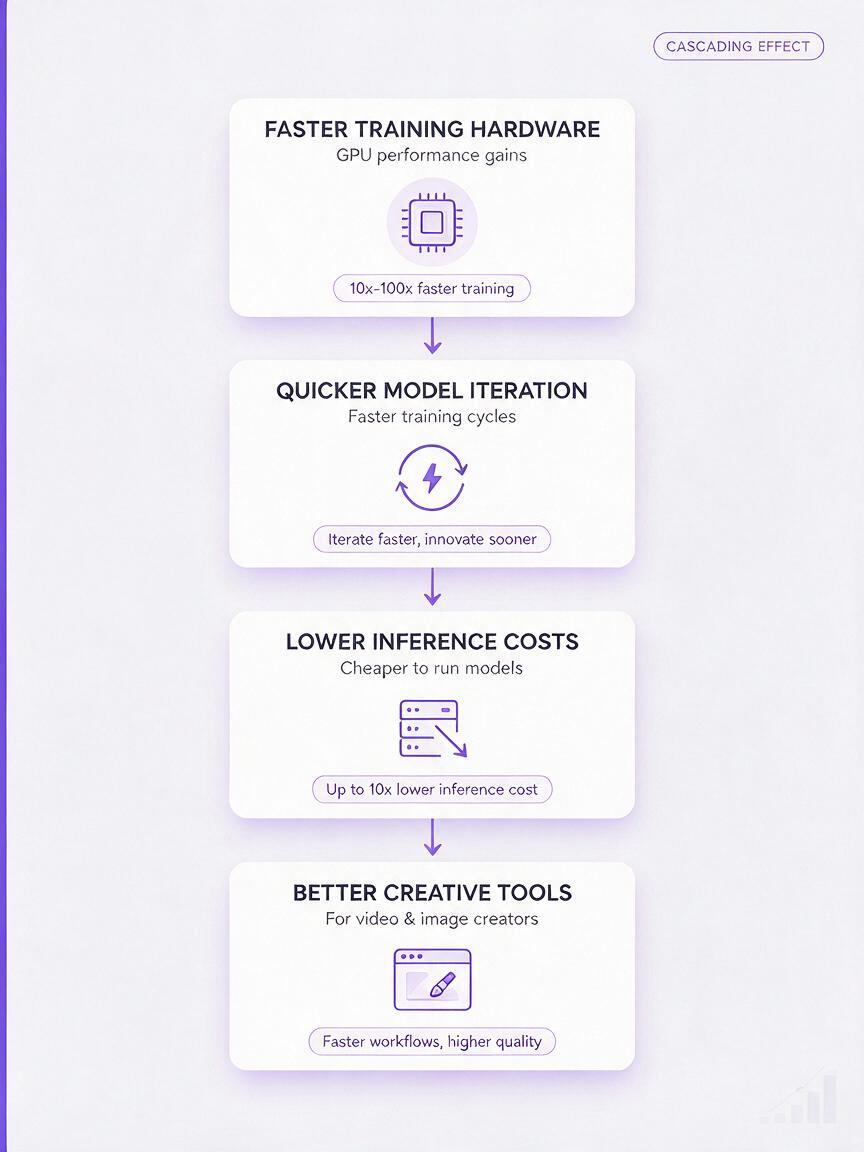
Faster, more efficient training hardware has a cascading effect across the entire AI ecosystem. For model developers, shorter training cycles mean quicker iteration on new features, faster bug fixes and more frequent model updates. What once took weeks of compute time can now be completed in days, accelerating the pace at which new capabilities reach end users.
Improved energy efficiency also translates to lower operational costs for model providers. As training and inference become cheaper per token, providers have more room to lower pricing, expand free tiers, or invest in additional research. For the text to video and image generation tools creators rely on, these savings often trickle down in the form of lower subscription costs or higher usage limits.
The strong agentic throughput numbers are particularly notable. Agentic AI systems — which can plan, use tools, and complete multi-step tasks without constant human input — are increasingly being integrated into creative workflows. Faster agent performance means tasks like generating storyboards, editing video clips, or creating multiple image variations can be completed in a fraction of the time they take today.
Implications for AI Video and Image Creators
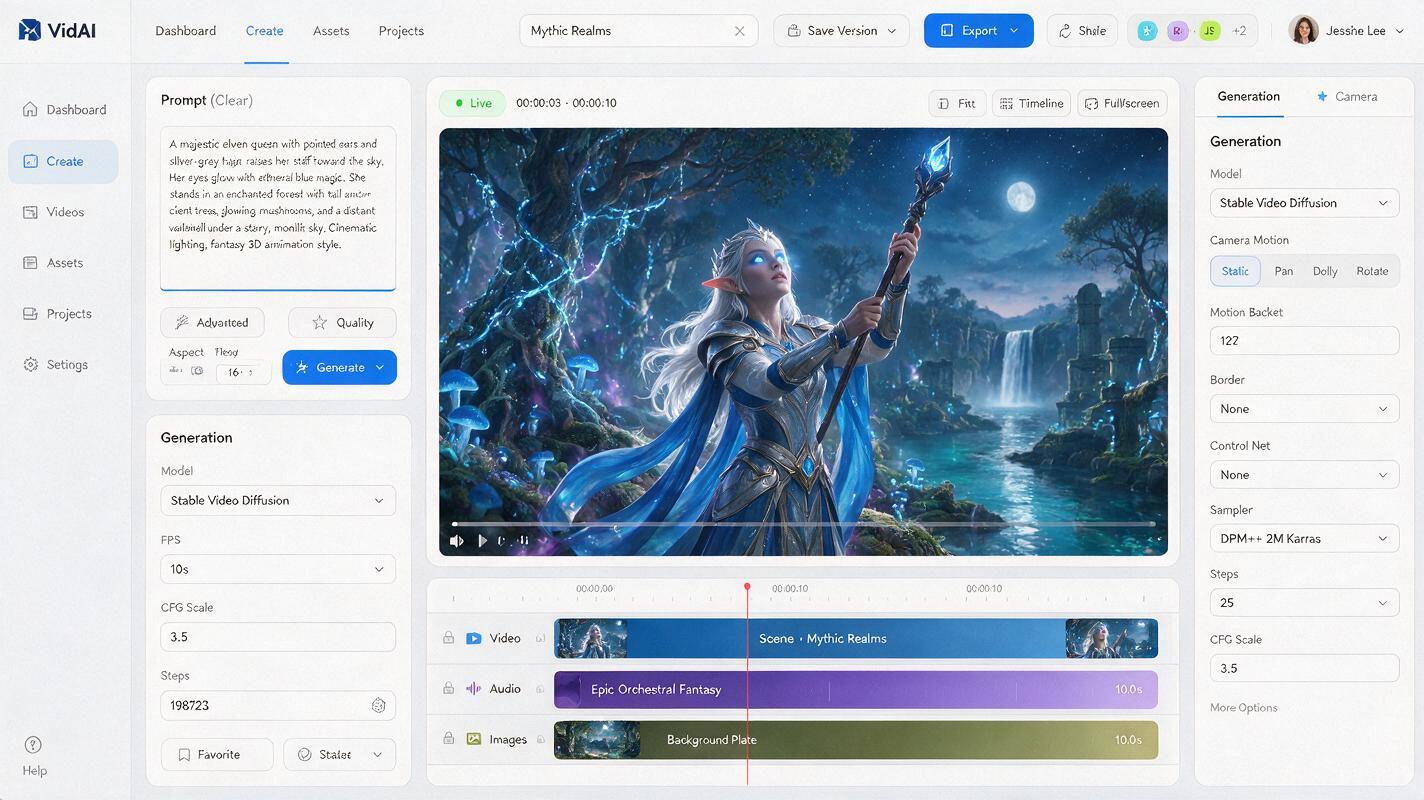
For AI video and image creators, the Vera Rubin benchmark results are a signal of what’s coming down the pipeline. As training hardware improves, ai image generator and video models will become more capable, with better visual quality, longer output lengths, and more fine-grained control. The faster iteration cycles mean new features and model updates will likely roll out more frequently than they have in previous years.
Lower infrastructure costs could also make high-end AI creative tools more accessible. Smaller studios and independent creators often operate on tight budgets, so even modest price drops for video generation or image editing tools can open up new possibilities. For creators using cloud-based AI tools, the efficiency gains may also translate to faster generation times, reducing wait times for complex renders and high-resolution outputs.
It’s important to note that these benefits will roll out gradually, as model providers upgrade their infrastructure to newer hardware. The Vera Rubin results are still preliminary, and wide-scale deployment of the chips will take time. Even so, the trajectory is clear: AI creative tools will keep getting faster, more capable, and more affordable as underlying hardware improves.
Staying Ahead With a Multi-Model Creative Platform
With new models and hardware updates launching at a rapid pace, it can be hard for creators to keep track of which tools are worth using. Juggling multiple subscriptions, learning new interfaces, and migrating workflows every time a new model launches eats into time that could be spent creating.
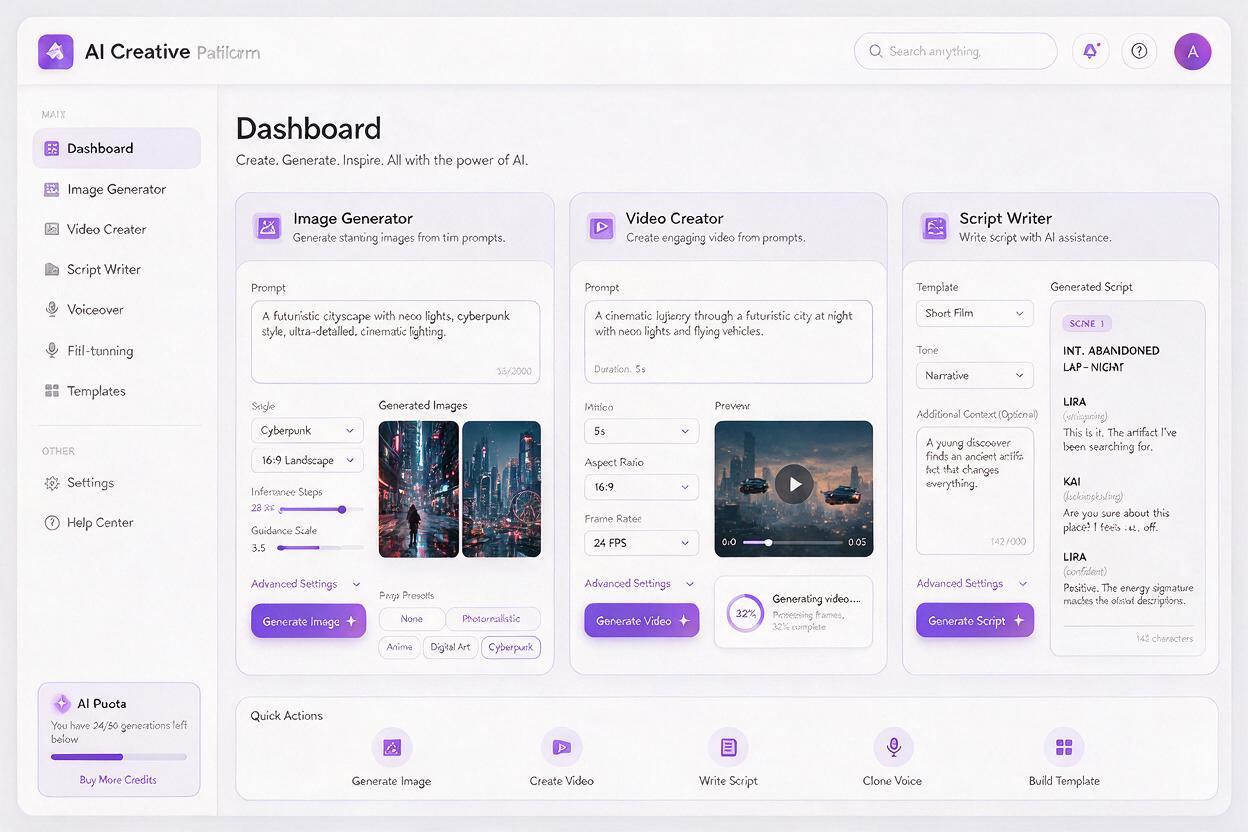
A multi-model platform like MagicBoat solves this problem by bringing together the latest AI creative tools in a single, unified interface. Instead of managing separate accounts for image generation, video creation, and script writing, creators can access everything they need from one dashboard, and take advantage of new model updates as soon as they’re available.
Whether you’re testing new video generation capabilities, generating concept art for a project, or editing a short film, a unified platform lets you pick the best tool for each task without the hassle of switching services. You can try these models for free to see how the latest AI tools fit into your creative workflow.
Key Takeaways
- Nvidia’s Vera Rubin GPU reportedly swept all MLPerf Training v6.1 benchmarks in its debut, with up to 2x per-GPU performance vs the GB300 NVL72 and 10x+ agentic throughput-per-watt on a provisional Kimi K3 workload.
- The self-reported results are pending MLCommons verification and were announced one day before Nvidia’s November 17 earnings call.
- Faster, more efficient training hardware will accelerate model development, leading to more frequent updates and potentially lower costs for AI creative tools.
- Creators can expect improvements in text to video, image generation, and agentic creative assistant capabilities as newer hardware rolls out to model providers.
- Using a multi-model platform like MagicBoat lets creators access the latest AI tools without managing multiple subscriptions or learning new interfaces.
Keywords
nvidia vera rubin, mlperf v6.1, ai video model, text to video, ai image generator, gpu performance, free ai tools