What Is Obsession? Netflix Release, Budget, Box Office, and Reviews | MagicBoat
Curry Barker’s horror film Obsession reached Netflix US on November 17, 2026, after a reported sub-$1 million production became a roughly $524.5 million worldwide hit. Its unusual theatrical growth, strong critical score, and staggered streaming path offer useful lessons for independent filmmakers and AI content creators.
Table of contents
Obsession Arrives on Netflix After an Extraordinary Theatrical Run
Curry Barker’s horror film Obsession arrived on Netflix US on November 17, 2026, after turning a reported production cost of less than $1 million into approximately $524.5 million at the worldwide box office. The scale of that reported return matters because it makes the film a striking case study in how a tightly budgeted horror concept can grow through theatrical momentum, strong reviews, and a carefully sequenced home-release strategy.
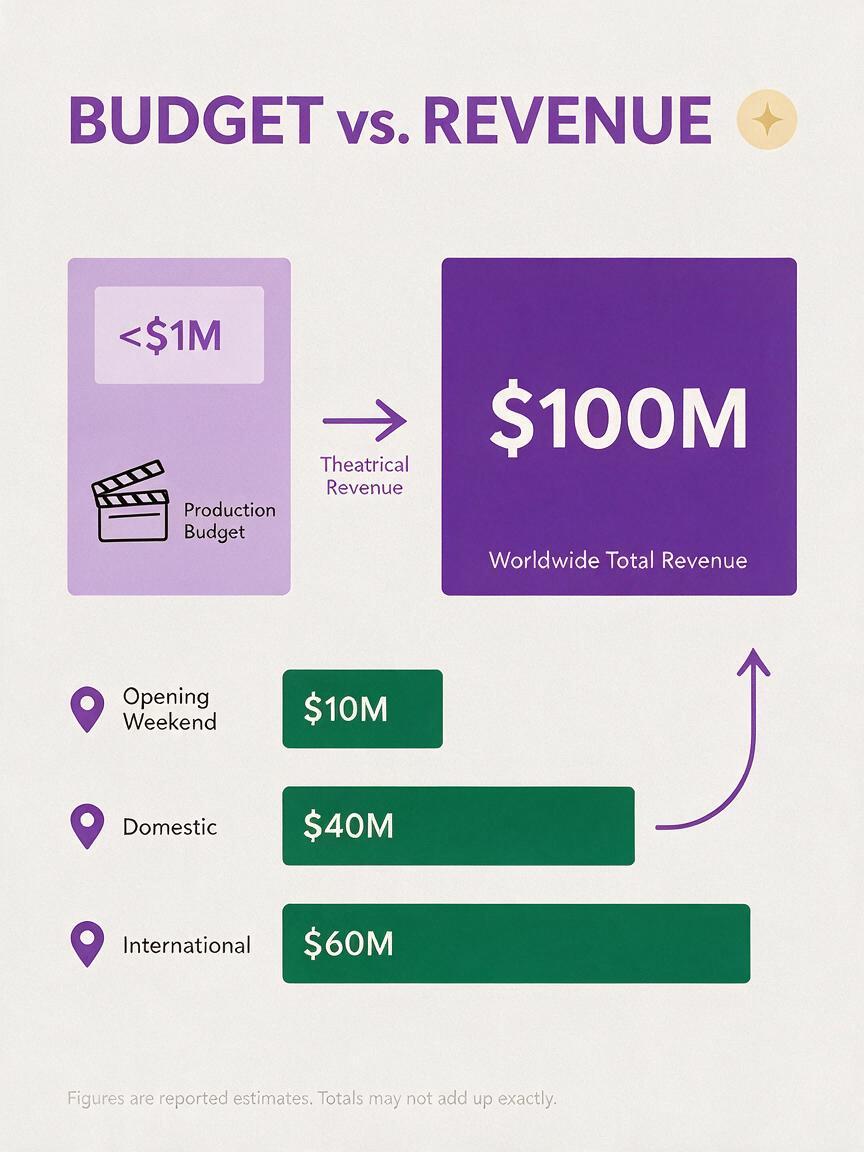
According to the November 18 trade reporting, Obsession reached Netflix after appearing on premium video on demand on June 30 and Peacock on July 17. The same reporting places its worldwide theatrical gross at about $524.5 million, divided into approximately $263.4 million domestically and $261.1 million internationally.
Those totals require context. The November 18 source material notes that published estimates vary from approximately $523 million to broader descriptions of “over $400 million.” The roughly $524.5 million figure is therefore best treated as a reported estimate rather than a single universally settled total.
For filmmakers exploring AI content creation, the larger lesson is not that technology automatically produces a breakout hit. It is that a clear genre promise, disciplined production scope, recognizable visual identity, and sustained audience conversation can matter more than sheer spending.
What Happened With Curry Barker’s Obsession
Obsession opened theatrically with approximately $17.2 million, according to trade reporting summarized on November 18, 2026. Reports then credited the film with three consecutive weekends of increasing grosses, a theatrical pattern described by the trade press as something not seen since E.T. in 1982.
That claim concerns the reported pattern of weekend growth, not an assertion that the two films had equivalent releases, audiences, or final results. Even with that qualification, consecutive increases are notable because wide theatrical films commonly lose revenue after opening weekend rather than gain it.
The central story is sustained discovery: Obsession reportedly opened to $17.2 million but continued expanding its audience instead of depending entirely on launch-week attention.
The film also carried strong critical support into its home-viewing window. Rotten Tomatoes listed Obsession at 93% from 329 critics in the November 18 reporting. That percentage records the share of qualifying reviews classified as positive; it should not be interpreted as an average score of 9.3 out of 10.
Focus Features acquired the film for approximately $14 million, according to the same trade reporting. No additional breakdown of that acquisition was disclosed in the source material, so the figure should not be treated as a production budget or as a complete account of distribution and marketing costs.
Budget and Box-Office Figures in Context
The film’s budget is one of the most widely discussed parts of its success, but the wording needs precision. Trade coverage classifies Obsession as having been made for less than $1 million, while Barker has said the cost was as high as $750,000. Barker’s figure is creator-reported and not independently verified, and the “sub-$1 million record” description is a press classification rather than an official industry designation.
| Measure | Reported figure | Source and qualification |
|---|---|---|
| Production cost | Under $1 million | Trade reporting dated November 18, 2026; press classification |
| Barker’s budget estimate | Up to $750,000 | Creator-reported, not independently verified |
| Opening gross | Approximately $17.2 million | Trade reporting dated November 18, 2026 |
| Domestic gross | Approximately $263.4 million | Trade reporting; estimates vary across publications |
| International gross | Approximately $261.1 million | Trade reporting; estimates vary across publications |
| Worldwide gross | Approximately $524.5 million | Reported estimate; other coverage ranges from $523 million to over $400 million |
| Focus Features acquisition | Approximately $14 million | Trade reporting dated November 18, 2026 |
| Rotten Tomatoes score | 93% from 329 critics | Rotten Tomatoes figure cited in November 18 reporting |
A simple division of the reported worldwide gross by the creator-reported budget would produce an eye-catching multiple, but that calculation would be misleading as a measure of profit. Box-office gross is not the same as money returned to a producer, and the source material does not disclose exhibitor shares, distribution fees, marketing expenses, participations, or other costs. The defensible conclusion is narrower: the reported theatrical revenue was exceptionally large relative to the stated production cost.
Where and When Obsession Became Available
Netflix US added Obsession on November 17, 2026, according to the November 18 availability report. That placement followed its June 30 premium video-on-demand release and its July 17 Peacock arrival.
| Release channel | Date | Availability detail |
|---|---|---|
| Premium video on demand | June 30, 2026 | Price not disclosed in the source material |
| Peacock | July 17, 2026 | Subscription conditions not disclosed |
| Netflix US | November 17, 2026 | US availability reported; other territories not disclosed |
This sequence gave the film several distinct moments of visibility rather than concentrating all attention into one day. The theatrical conversation could build first, followed by transactional home viewing, Peacock availability, and finally a Netflix US release capable of introducing the title to another audience.
The source material does not disclose a Netflix viewing total for Obsession, so its performance on the service should not be estimated from its theatrical popularity. It also does not provide a global Netflix release schedule.
Why the Release Pattern Matters for Independent Horror
Horror is especially compatible with focused production because suspense can be built through framing, sound, pacing, performance, and withheld information. None of those creative strengths requires an enormous visual-effects budget, although each still requires deliberate execution.
The reported trajectory of Obsession highlights several principles that independent teams can apply without imitating the film itself:
- Build around one legible emotional promise. A title, poster, teaser, and opening sequence should communicate the same genre expectation.
- Design for conversation after release. The reported three-weekend growth suggests that discovery beyond opening weekend became central to the film’s theatrical story.
- Treat every distribution window as a new campaign. PVOD, Peacock, and Netflix US created separate opportunities to reintroduce the film.
- Keep scope aligned with available resources. A controlled location plan and repeatable visual language can be more achievable than an underfunded attempt at blockbuster scale.
- Use reviews as evidence, not decoration. The reported 93% Rotten Tomatoes score from 329 critics gave later release campaigns a concrete credibility signal.
What This Means for AI Video and Film Creators
Creators developing an ai short film can take inspiration from the business pattern without copying protected characters, scenes, branding, or visual assets. The practical opportunity lies in testing an original premise early: alternate openings, mood boards, teaser rhythms, and visual continuity can all be evaluated before committing to a longer production.
An ai video generator can support that process by helping a small team visualize original shots or promotional concepts. Human judgment remains essential for selecting coherent images, maintaining character consistency, refining pacing, and deciding whether a sequence creates tension rather than merely displaying technical novelty.
The film’s reported release history also offers a useful model for AI film promotion. Instead of publishing a full project once and moving on, creators can prepare a sequence of original assets: a premise-focused teaser, a character clip, a critical-reaction graphic, a vertical scene variation, and a later compilation timed to a new platform or audience.
Accuracy Notes Around the Obsession Success Story
The available figures should not be flattened into a single absolute record. Published worldwide totals vary, Barker’s budget estimate is self-reported and not independently verified, and the sub-$1 million record label comes from press coverage rather than an official box-office authority.
Likewise, a high theatrical gross does not reveal net profit. The November 18 source material does not disclose marketing spending, theatrical rental terms, distribution expenses, or participant payments. What it does support is the conclusion that Obsession achieved an unusually large reported worldwide gross for a film described as costing less than $1 million.
Bottom Line
Obsession reached Netflix US on November 17, 2026, after a June 30 PVOD release, a July 17 Peacock debut, and a theatrical run reported at approximately $524.5 million worldwide. Its reported budget of under $1 million, $17.2 million opening, three weekends of rising grosses, and 93% Rotten Tomatoes score from 329 critics made it an exceptional independent-horror story, even though budget and box-office totals vary across sources.
For independent creators, the durable takeaway is to combine a clear genre concept with disciplined scope, strong presentation, and multiple promotional moments. To begin exploring original storyboards, visuals, and video concepts in one creative workflow, try these models for free.
Key Takeaways
- Obsession became available on Netflix US on November 17, 2026.
- The film was reported to cost under $1 million, with Barker placing the budget as high as $750,000.
- Trade coverage estimated approximately $524.5 million worldwide, although published totals vary.
- Its theatrical opening was approximately $17.2 million, followed by a reported three weekends of increasing grosses.
- Rotten Tomatoes listed a 93% score from 329 critics in the November 18 reporting.
- The staggered PVOD, Peacock, and Netflix windows created several opportunities for renewed attention.
Keywords
obsession netflix, curry barker, obsession box office, independent horror film, ai content creation, ai video, ai film