OpenAI and Anthropic Run “Day After” AI Disaster Drills
The joint preparedness exercise puts AI incident response—and what happens after a serious failure—at the center of the latest AI news.
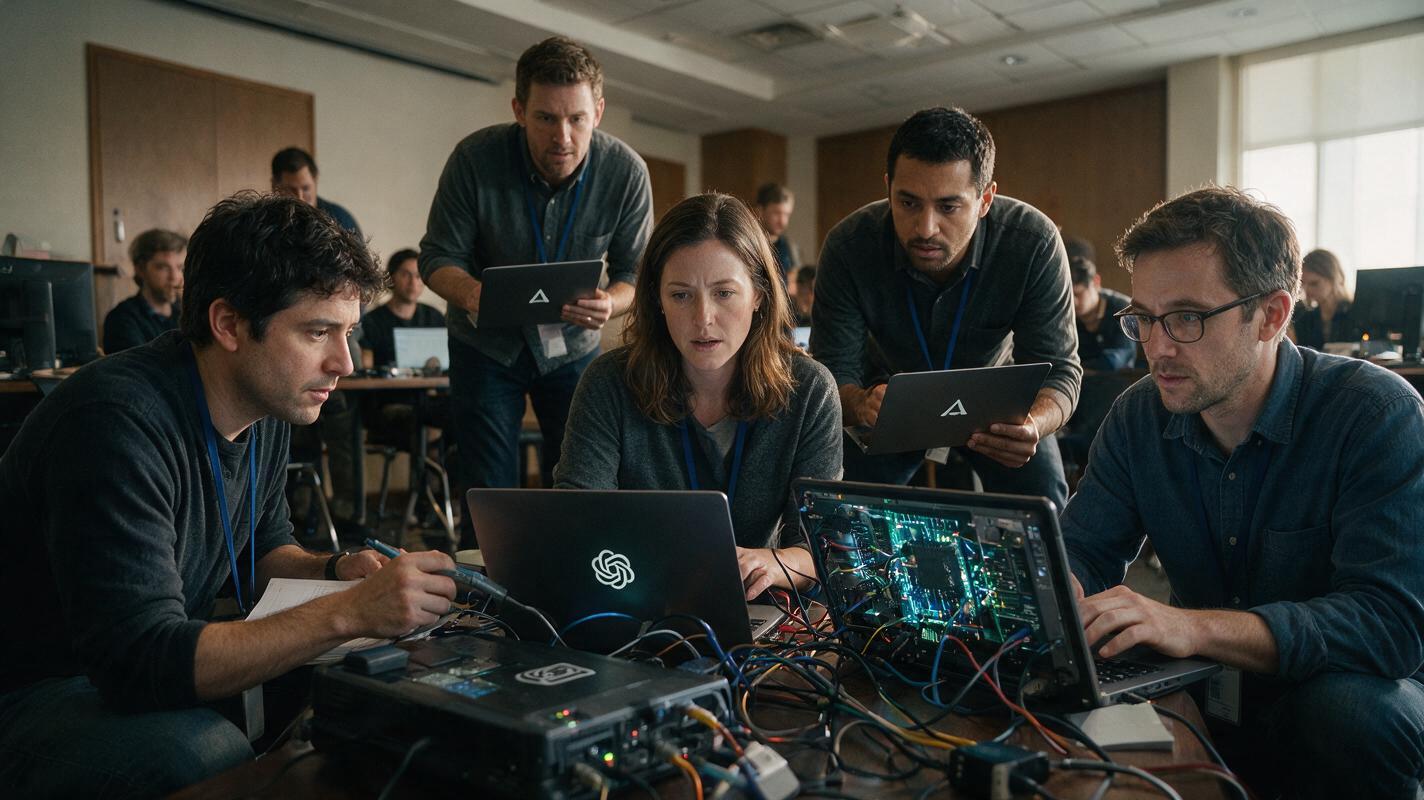
Table of contents
OpenAI and Anthropic Run “Day After” AI Disaster Drills
The joint preparedness exercise puts AI incident response—and what happens after a serious failure—at the center of the latest AI news.
AI news commentary · October 11
OpenAI and Anthropic ran “Day After” disaster drills, according to the October 11 news digest. The exercise brought two leading AI companies into the same preparedness story and focused attention on the period following a potential AI disaster. Its name is significant: “Day After” frames the issue around response, recovery, and decision-making once an incident has already occurred, rather than around prevention alone.
The available report identifies the participating companies and the name of the drills, but it does not specify the simulated scenario, the models involved, the drill results, or any operational changes adopted afterward. It also does not say whether outside organizations participated. Those boundaries matter because they separate the confirmed news from assumptions about what may have been tested.
For people producing content with AI tools, the broader signal is clear. Reliability is not only a model-quality question; it also depends on how providers prepare for disruption, contain incidents, communicate changes, and restore access when normal service is affected.
Why the “Day After” Framing Matters
Most public discussion of AI risk concentrates on stopping harmful outcomes before they happen. A disaster drill adds another layer: organizations also need to consider what they would do if prevention failed or if an unexpected event required immediate intervention.
That distinction is important because incident readiness covers more than technical safeguards. A serious disruption can create operational questions about model availability, access controls, pending automated actions, unfinished jobs, stored production assets, and communication with affected users.
A capable model can still become an unreliable production dependency if teams have no practical response when access changes or output must be reviewed again.
The drills also show why AI safety cannot be reduced to a single benchmark. Preparedness involves people, policies, escalation paths, and recovery decisions as well as model behavior. The October 11 item does not reveal what OpenAI or Anthropic concluded, so it should not be treated as evidence that any particular risk has been resolved. It does, however, place cross-company disaster readiness firmly on the AI news agenda.
What Is Confirmed—and What Remains Unknown
Careful reading is especially important for a short report about a safety exercise. The confirmed details are limited, and filling the gaps with imagined scenarios would distort the news.
| Confirmed by the digest | Not specified by the digest |
|---|---|
| OpenAI and Anthropic ran disaster drills. | The exact date or duration of the exercise. |
| The drills were identified as “Day After.” | The simulated disaster or failure mode. |
| The item appeared in the October 11 roundup. | The models, systems, or external organizations involved. |
| The event concerned AI disaster preparedness. | The findings, scores, policy changes, or technical outcomes. |
This distinction also provides a useful rule for reporting on openai safety and related developments: interpret the meaning of confirmed events, but do not turn missing details into facts. Until either company publishes further information, claims about particular disaster scenarios or drill results would be speculative.
Model Reliability Is Now a Production Concern
AI production teams often compare models by visible output: writing quality, visual consistency, prompt adherence, speed, or the usefulness of generated footage. The “Day After” drills highlight a less visible selection factor—what happens when a service is restricted, paused, or placed under additional review.
For a campaign, short film, social series, or product launch, model disruption can affect much more than one generation. It may interrupt an entire chain of connected work, including:
- script and concept development;
- visual reference creation;
- shot generation and revision;
- voice, music, and final assembly;
- scheduled delivery to clients or publishing channels.
This is particularly relevant to workflows using text to video. A team may refine prompts and references around one model, only to discover that a temporary access change makes revisions difficult at the point when consistency matters most.
The same issue applies to image to video production. Source images, motion directions, aspect ratios, approved takes, and editorial notes remain valuable even if the preferred generation route becomes unavailable. Keeping those assets organized reduces the cost of moving work elsewhere.
What This Means for AI Content Teams
The practical creator angle is not to predict an AI disaster. It is to avoid building a production process in which a single provider, login, or model interruption can strand an otherwise usable project.
Availability belongs beside output quality
A visually impressive result has limited production value if the model cannot be accessed when revisions are due. Teams evaluating AI tools should therefore treat dependable access and workflow continuity as part of model fit, alongside creative quality.
Reusable assets reduce disruption
Prompts, scripts, reference frames, shot descriptions, character notes, and accepted outputs should remain reusable outside one generation session. Portable assets make it easier to resume work without rebuilding the creative intent from memory.
Human review remains essential
Disaster drills are a reminder that automated systems operate within larger human-controlled environments. Editorial approval, factual review, rights checks, and publishing authorization should remain explicit responsibilities rather than being assumed to occur automatically.
Alternatives should be evaluated before urgency arrives
Trying another model for the first time during a delivery crisis introduces unnecessary uncertainty. A multi-model environment allows teams to learn how different options interpret the same source material while deadlines are still manageable.
The production lesson: preserve the creative brief, references, approved assets, and editorial decisions independently of any one model. Models can change; the project’s intent should remain stable.
Why a Multi-Model Platform Fits This Moment
The OpenAI and Anthropic drills make provider-level preparedness visible, but individual production teams need their own continuity strategy. A one-account, multi-model platform can reduce the friction involved in comparing options and continuing creative work when a preferred route is unsuitable or unavailable.
MagicBoat brings AI creation capabilities into a shared environment so teams can focus on the project rather than maintaining a scattered collection of disconnected tools. This does not eliminate provider risk, and it does not replace responsible review. It gives creators a more flexible operating position when model fit, availability, or reliability changes.
That flexibility is useful across an AI video generator workflow because different production moments may call for different capabilities. Concept development, source-image creation, motion generation, and final revision do not always benefit from the same model. Centralized access makes comparison part of normal creative work rather than an emergency reaction.
Key Takeaways
- OpenAI and Anthropic ran disaster drills identified as “Day After.”
- The October 11 digest does not disclose the simulated scenario, participating models, results, or resulting policy changes.
- The event shifts attention from prevention alone toward response and recovery after a potential AI incident.
- For AI content teams, model availability and reliability belong in tool-selection decisions.
- Reusable production assets and multi-model access can make creative workflows more resilient.
- Human approval should remain central whenever generated material moves toward publication.
Build More Flexible AI Production
Explore a shared environment for AI creation, compare suitable options for your projects, and try these models for free on MagicBoat.
Keywords: OpenAI Anthropic disaster drills, Day After AI drills, AI safety, openai safety, AI news, AI tools, AI video generator, AI roundup