OpenAI Launches ChatGPT Wallet With Tokenized Payment Security
OpenAI officially launched ChatGPT Wallet on November 13, 2026, partnering with American Express, Mastercard and Visa to issue single-use, purpose-limited payment tokens for agent-driven purchases. The service integrates with ChatGPT's dots agent to handle product selection and checkout with per-transaction user approval, initially available to U.S. ChatGPT Pro subscribers aged 18 and over with no launch-time transaction fees. The launch signals a broader industry shift toward AI-integrated commerce tools, creating new efficiency and content creation opportunities for AI video and image creators.

Table of contents
ChatGPT Wallet: Core Features and Launch Details
OpenAI officially launched ChatGPT Wallet on November 13, 2026, rolling out a new payment framework that lets AI agents complete purchases on behalf of users without exposing sensitive card information. The launch, listed on OpenAI’s product pages, includes partnerships with three major global card networks: American Express, Mastercard, and Visa.
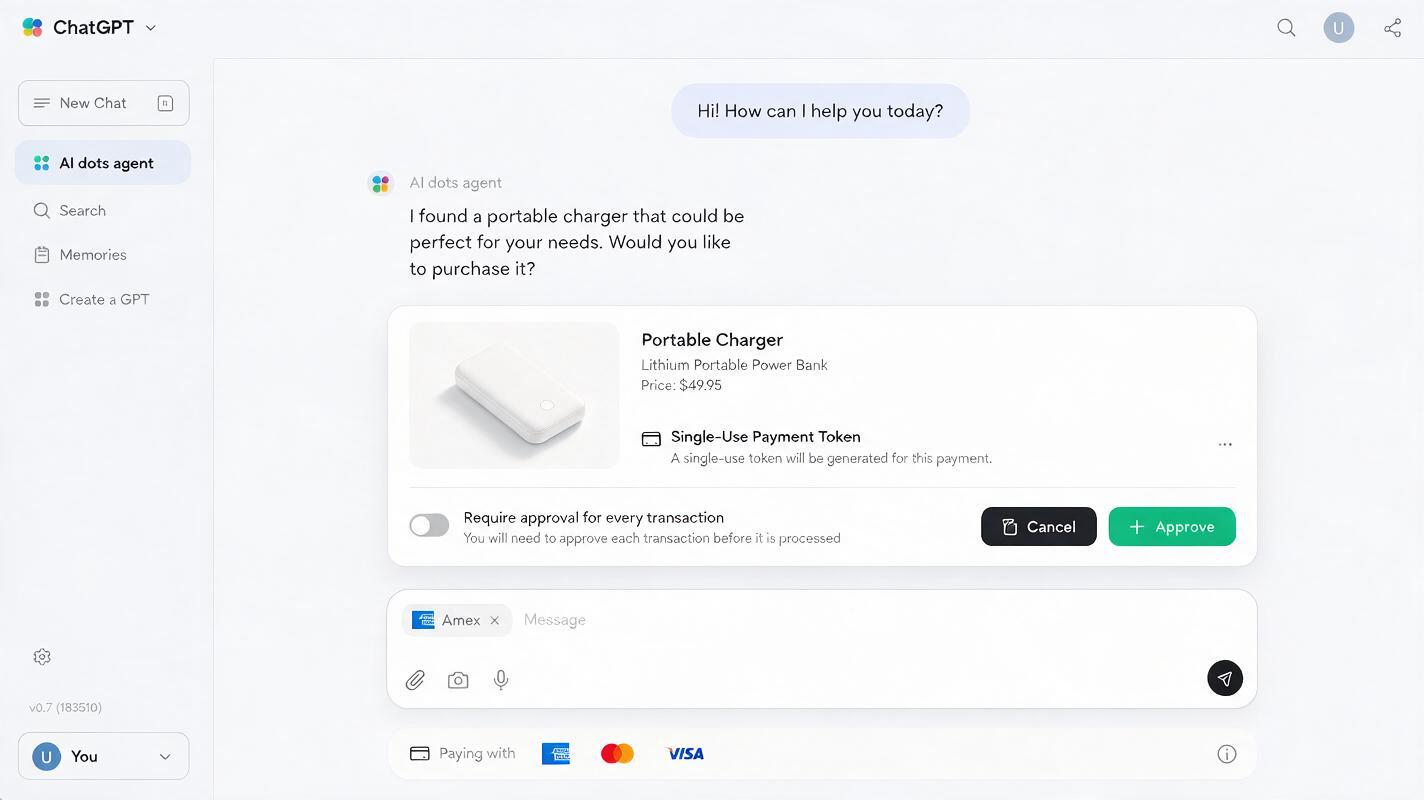
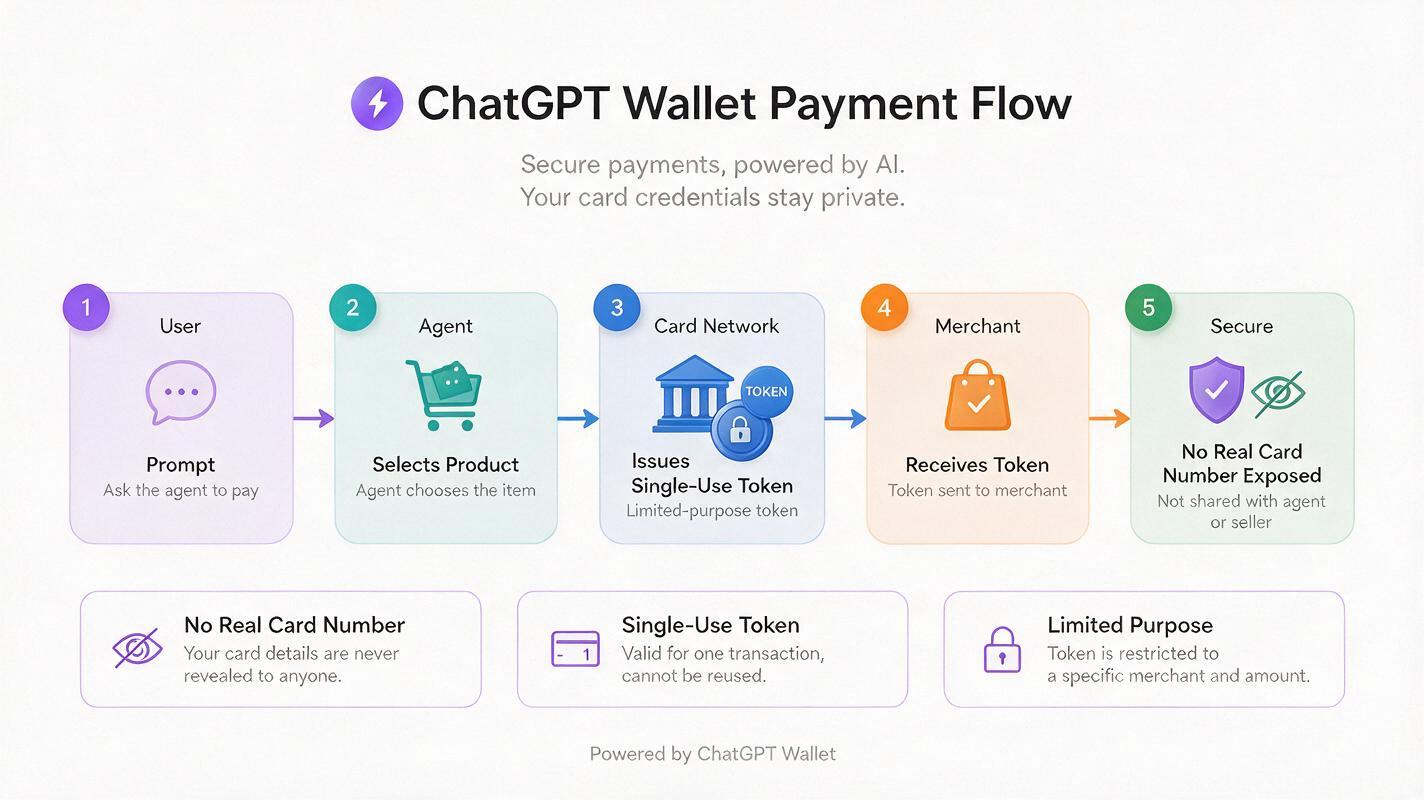
At the core of the service is a tokenized payment model where card networks issue single-use, purpose-limited payment tokens for each transaction. These tokens are shared with both the ChatGPT agent and the merchant, rather than real card numbers, while preserving existing card rewards and standard dispute protections for users. The design is built to reduce fraud risk associated with agent-driven commerce by limiting what payment data an AI can access.
ChatGPT Wallet integrates directly with ChatGPT’s resident “dots” agent, which can select products, prepare order details, and complete checkout flows on behalf of users. Every purchase requires explicit per-transaction user approval, so agents cannot finalize transactions without explicit user consent. At launch, the service charges no transaction commission for users.
Access is initially limited to U.S. ChatGPT Pro subscribers aged 18 and older, with no public timeline announced for international expansion or rollout to free or lower-tier ChatGPT plans.
The same day as OpenAI’s announcement, Google confirmed it will fold Google Wallet into its Gemini personal-intelligence app, signaling a broader industry shift toward integrating payment capabilities directly into AI assistant platforms. Third-party Chinese industry digests have also reported unconfirmed releases including a personal-agent protocol called Poppy v1.0 from Sierra and Meta, and a Daybreak cybersecurity platform from OpenAI; neither of these appeared on first-party English announcement pages as of mid-November, and OpenAI’s public news index only listed two science-focused posts for November 15.
How Tokenized Payments Change AI Agent Commerce
The shift to single-use, purpose-bound payment tokens addresses one of the biggest barriers to mainstream adoption of AI agent commerce: trust. Traditional card payments require sharing a permanent, reusable card number that can be misused if exposed, but tokenized payments tie each token to a specific merchant, amount, and purchase context, drastically reducing the impact of any potential data leak or agent error.
For AI agents in particular, this model creates a clear guardrail for financial actions. Because the token cannot be used for anything outside the approved transaction, even a compromised or misaligned agent cannot run up unauthorized charges or access ongoing payment credentials. The per-transaction approval requirement adds a second layer of user control, balancing the convenience of agent automation with human oversight for high-stakes financial decisions.
The launch also comes amid a broader push by AI labs to expand agent capabilities beyond information and creative tasks into practical, real-world actions. OpenAI’s dots agent, first introduced alongside the GPT-6.1 Sol refresh at DevDay, has been gradually expanded to handle more proactive workflows, and payment integration marks a major step toward agents acting as full-service personal assistants rather than just text-based tools.
What This Means for AI Video and Image Creators
For independent AI video and image creators and small studio operators, AI-powered commerce tools like ChatGPT Wallet offer two key benefits: streamlined workflow automation and new client opportunities in AI-driven commerce channels.
On the operations side, creators can use agent payment tools to automate routine, time-consuming purchases such as stock footage subscriptions, AI model credits, hardware supplies, and software licenses without manually entering card details for every transaction. The tokenized model reduces the risk of exposing primary payment information across multiple vendor platforms, which is especially valuable for creators who use dozens of different tools in their production stack.
On the client side, the integration of commerce features directly into AI chat platforms is expected to drive increased demand for high-quality product visual content. As more brands build out presence in AI assistant discovery channels, they will need custom product imagery, short promotional clips, and interactive visual assets optimized for AI-driven search and recommendation flows. Creators can use ai image generator tools to rapidly iterate on product mockups and lifestyle visuals, then turn those assets into dynamic promotional content with text to video tools — all without switching between multiple separate platforms.
Working with a multi-model creative platform like MagicBoat also gives creators flexibility as the AI commerce landscape evolves. Instead of relying on a single provider for all creative and workflow tools, creators can access a range of image, video, audio, and script generation tools in one place, making it easier to adapt to new platform requirements and client demands as AI agent commerce grows.

Key Takeaways
- OpenAI launched ChatGPT Wallet on November 13, 2026, with American Express, Mastercard, and Visa as launch partners, using single-use purpose-limited payment tokens to protect user card data.
- The service integrates with ChatGPT’s dots agent to handle product selection and checkout, with mandatory per-transaction user approval and no launch-time transaction fees.
- Access is initially restricted to U.S. ChatGPT Pro subscribers aged 18 and older, with no international expansion timeline announced.
- AI payment tools create new efficiency opportunities for creators to automate routine purchases, while also driving demand for product-focused visual content optimized for AI commerce channels.
- Multi-model creative platforms like MagicBoat give creators centralized access to the image and video generation tools they need to serve growing ecommerce and AI commerce client needs. try these models for free
Keywords
chatgpt wallet, openai, ai agents, gpt-6, ai commerce, text to video, free ai tools