OpenAI Releases GPT-OSS-120B and GPT-OSS-20B Open-Weight Models
OpenAI has launched two open-weight frontier AI models, GPT-OSS-120B and GPT-OSS-20B, giving developers full access to model weights for customization and self-hosted deployment. The release expands the open AI ecosystem, offering AI video and image creators new flexibility for custom workflows, style fine-tuning, and high-volume creative tasks. Multi-model platforms like MagicBoat help creators leverage both open and closed AI tools without the overhead of managing infrastructure.
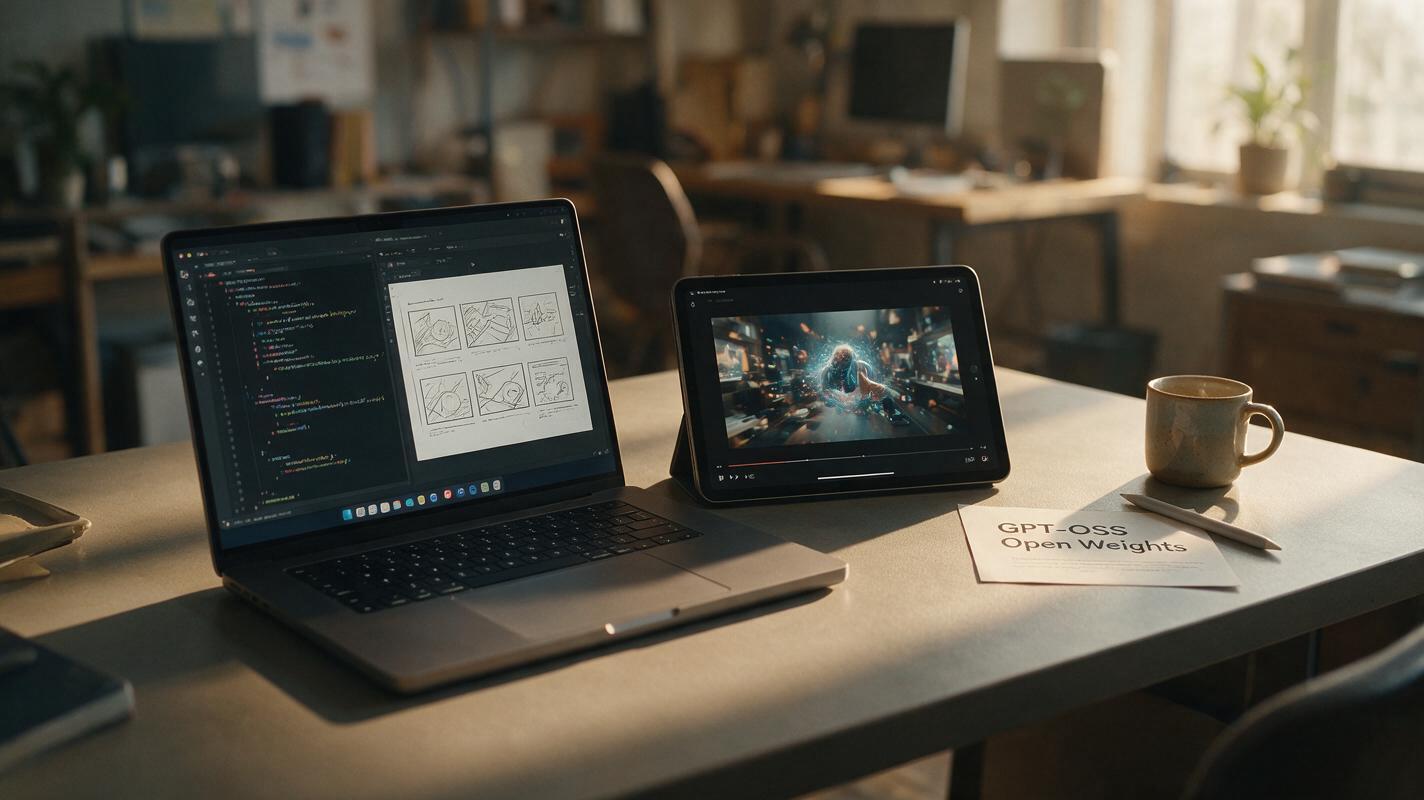
Table of contents
OpenAI Releases GPT-OSS-120B and GPT-OSS-20B Open-Weight Models
On October 19, 2026, OpenAI launched two new open-weight AI models: GPT-OSS-120B and GPT-OSS-20B. The release brings frontier-class AI capabilities to developers as freely accessible model weights, marking a notable expansion of OpenAI’s open ecosystem offerings.
The two models are sized for different use cases: the 120-billion-parameter GPT-OSS-120B targets higher-performance workloads, while the 20-billion-parameter GPT-OSS-20B is optimized for faster deployment and lower resource requirements. Both are released as open weights, meaning developers can download, run, fine-tune, and modify the models directly without relying on OpenAI’s hosted API.
OpenAI’s move follows a wave of open-weight model releases from other leading AI labs, as competition shifts to include openness and customization alongside raw performance.
What This Means for AI Video and Image Creators
For AI video and image creators, the rise of high-quality open-weight models unlocks new levels of flexibility and control over creative workflows. While GPT-OSS models are general-purpose frontier systems rather than dedicated creative generators, their open design lets developers and creative teams adapt them for a wide range of production tasks.
Common use cases for open-weight models in creative pipelines include script and storyboard generation, batch processing of asset metadata, custom style fine-tuning for consistent visual output, and integration with existing tools for text to video and image to video workflows. Open weights also eliminate API rate limits for teams running large volumes of creative tasks, as long as they have the hardware to support local or self-hosted deployment.
The release also adds momentum to the growth of free ai tools built on open-weight foundations, lowering the barrier to entry for new creators who may not have budget for premium closed-model subscriptions.

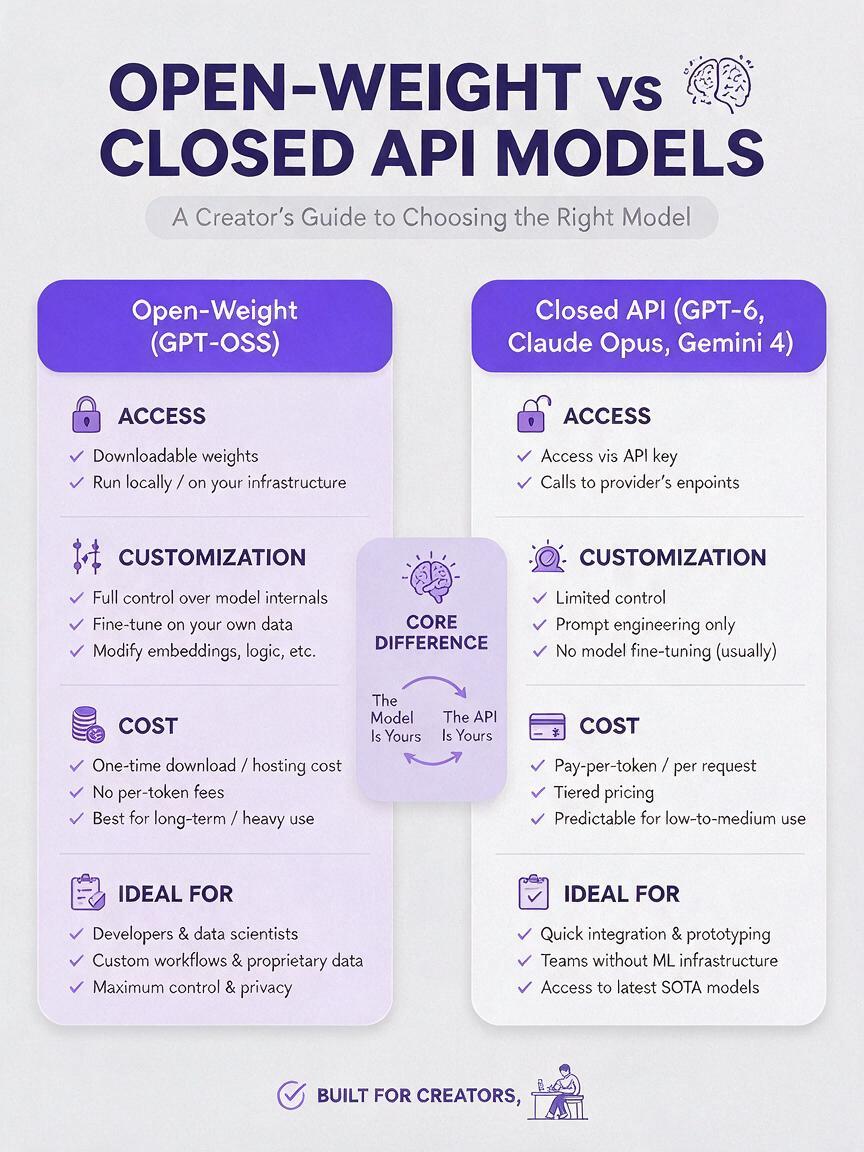
Open-Weight vs Closed API Models: A Comparison for Creators
Creators often weigh open-weight models against closed API models like GPT-6, Claude Opus, and Gemini 4 when building their workflows. Each approach has distinct tradeoffs depending on team size, technical resources, and project needs.
| Factor | Open-Weight Models (GPT-OSS) | Closed API Models (GPT-6, Claude Opus, Gemini 4) |
|---|---|---|
| Access | Download weights, run anywhere | Hosted API, internet required |
| Customization | Full fine-tuning, modification, and integration control | Limited fine-tuning options, fixed feature set |
| Upfront cost | Free model access, hardware/setup costs apply | Pay-per-use, no hardware investment |
| Technical overhead | Requires ML engineering and GPU resources | Minimal setup, maintained by provider |
| Best for | Custom workflows, high-volume tasks, privacy-sensitive projects | Quick setup, reliable performance, regular updates |
For most independent creators and small teams, closed API models remain the most practical starting point, as they eliminate the need for technical infrastructure and offer consistent, regularly updated performance. Open-weight models shine for teams with specific customization needs or the resources to build and maintain their own AI pipelines.
Why a Multi-Model Platform Simplifies Creative Workflows
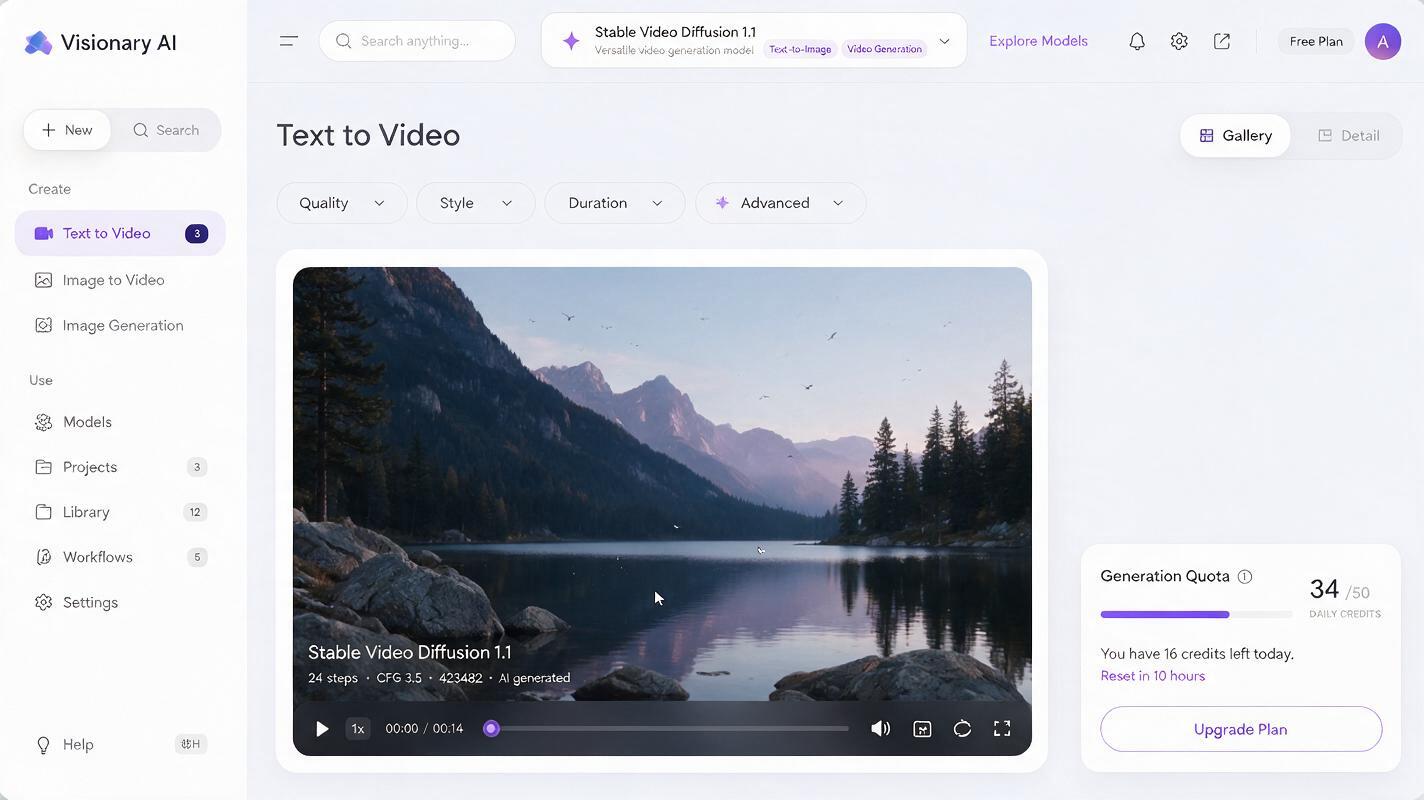
Navigating the growing landscape of open and closed AI models can be overwhelming for creators who want to focus on making content, not managing infrastructure. A multi-model platform like MagicBoat consolidates access to leading AI creative tools in one place, so creators can pick the right model for each task without switching accounts or setting up hardware.
Platforms like MagicBoat handle model updates, infrastructure maintenance, and integration between tools, so creators can experiment with both established closed models and new open-weight-powered features as they become available. This flexibility is especially valuable as the AI ecosystem evolves, with new models and capabilities launching every month.
Whether you’re drafting a script, generating concept art, or turning a static image into a short clip, a unified platform lets you move seamlessly between tasks without losing work or reconfiguring tools. try these models for free to see how a multi-model setup can streamline your creative process.
Key Takeaways
- OpenAI released two open-weight frontier models, GPT-OSS-120B and GPT-OSS-20B, on October 19, 2026, giving developers full access to model weights for customization and self-hosting.
- For AI video and image creators, open-weight models offer new flexibility for custom workflows, style fine-tuning, and high-volume task processing, though they require more technical setup than closed API models.
- The growing open-weight ecosystem is expanding the pool of available ai video model tools and free ai tools, making it easier for creators of all sizes to access powerful AI capabilities.
- Multi-model platforms like MagicBoat let creators take advantage of both open and closed AI tools without managing infrastructure, with built-in support for text to video, image to video, and other creative tasks.
Keywords
gpt-oss-120b, openai open weight models, gpt-6, ai video model, text to video, image to video, free ai tools, open source ai