Hidden Recording Devices Found in OpenAI Office, Employee Arrested
On October 15, 2026, reports emerged that hidden recording devices had been discovered in OpenAI’s office, leading to the arrest of one employee. The incident highlights underdiscussed physical and internal security risks at leading AI firms, with potential implications for service reliability and intellectual property protection. For AI content creators, the event underscores the importance of building resilient workflows using multi-model platforms to avoid disruption from single-provider security events.

Table of contents
What We Know About the OpenAI Office Recording Incident
On October 15, 2026, reports emerged that hidden recording devices had been discovered in OpenAI’s office, resulting in the arrest of one employee. As of initial reports, no further details have been confirmed about the specific location of the devices within the office, the role of the arrested employee, the alleged motive behind the recording, or the scope of any audio or visual material that may have been captured.
The incident marks a rare physical security breach at one of the world’s most prominent frontier AI developers, a company that handles highly sensitive intellectual property including model training data, safety research, internal product roadmaps, and unreleased model weights. OpenAI has not yet issued an official statement addressing the discovery or the arrest, and it remains unclear whether the incident is tied to corporate espionage, internal misconduct, or other unrelated activity.

Why the Incident Raises Broader AI Security Questions
While physical office security may seem unrelated to day-to-day AI tool usage, the incident shines a light on the wide range of risks facing leading AI providers — risks that extend far beyond cyberattacks or model safety failures. OpenAI safety protocols have long focused on frontier model alignment and external threat mitigation, but this event highlights that internal and physical security gaps can also pose significant risks to a company’s operations and intellectual property.
For the broader AI industry, the incident serves as a reminder that sensitive AI research and development depends on layered security across digital, physical, and personnel domains. A breach of any one layer could lead to leaks of proprietary technology, premature disclosure of untested models, or disruptions to regular service availability for end users.
Frontier AI firms handle some of the most valuable and potentially high-stakes intellectual property in the tech industry, making them targets for both external and internal security threats.
What This Means for AI Content Creators
For independent creators and content teams that rely on AI tools for daily production, the incident raises a practical question: what happens if a major AI provider faces a security event that disrupts access to its models? Many creators build entire workflows around a single provider’s tools, from content ideation and scriptwriting to asset generation and final editing.
Disruptions can range from temporary outages during internal investigations to longer-term changes in model access, feature rollouts, or pricing as companies reallocate resources to address security gaps. For creators working on tight deadlines, even a few hours of lost access to an ai video generator or text generation tool can derail production schedules and cost clients or revenue.
Model availability and reliability are often underrated factors when choosing AI tools, but they become critical when workflows depend on consistent access. Creators who rely on a single provider for all their AI needs face higher risk of downtime than those who spread their work across multiple tools and providers.
Building Resilient Creator Workflows With Multi-Model Platforms
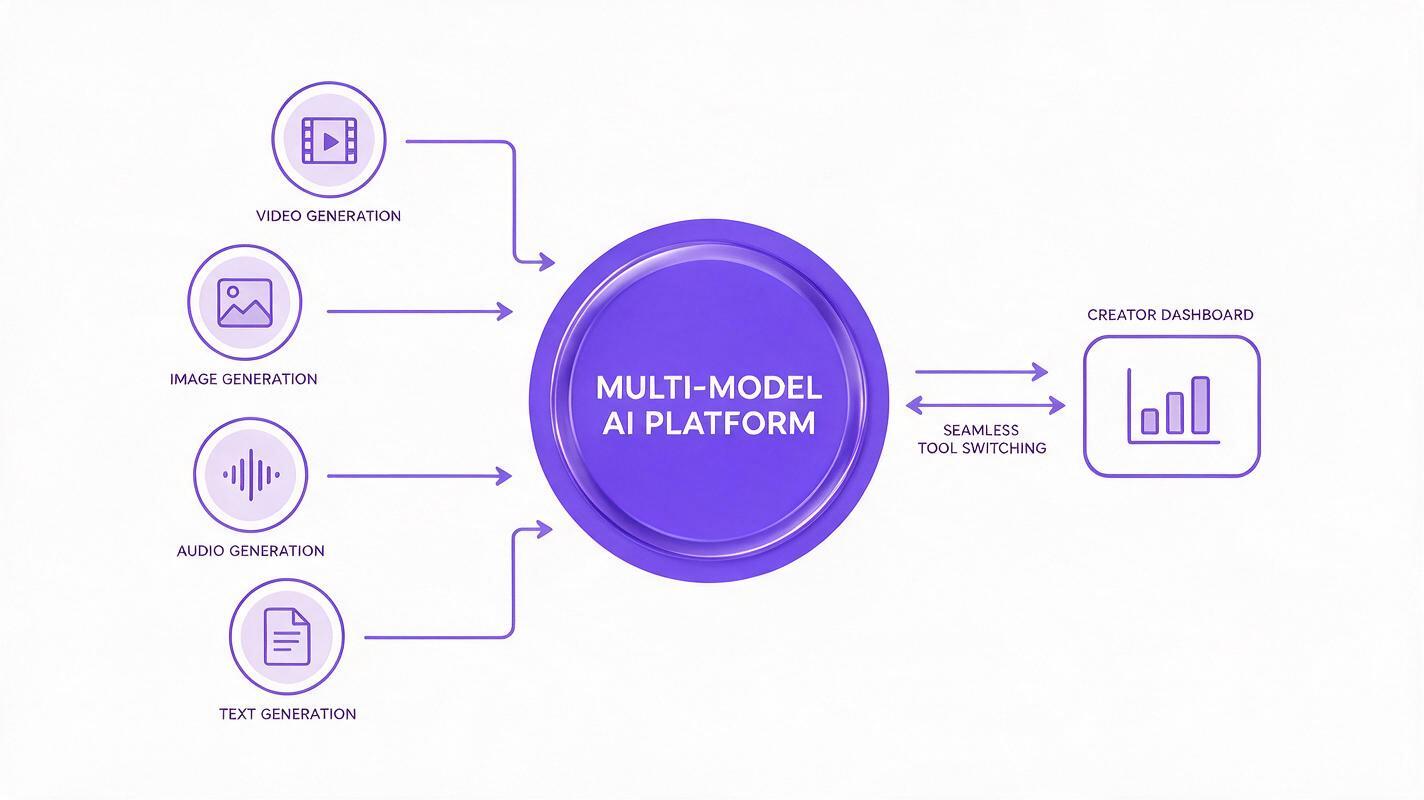
The most effective way to mitigate the risk of single-provider disruptions is to use a centralized multi-model AI platform that gives you access to dozens of tools from different providers under one account. Instead of managing separate logins, billing, and asset libraries for each AI tool, you can access everything you need in one place, and switch between providers seamlessly if one experiences an outage or security issue.
For video creators, this means having access to multiple text to video models, image-to-video tools, and AI editing features so you can keep producing content even if your go-to model is temporarily unavailable. You can also test different models side by side to find the best fit for each project, without having to sign up for new services or learn new interfaces every time.
Multi-model platforms also make it easier to standardize your production pipeline, store all your assets in one place, and maintain consistent output quality across projects. Instead of rebuilding your workflow every time a tool changes or goes down, you can swap out individual components while keeping the rest of your process intact.
You can try these models for free on MagicBoat, a one-account multi-model platform built for creators, with access to leading AI video, image, audio, and scriptwriting tools all in one place.
Key Takeaways
- Hidden recording devices were discovered in OpenAI’s office on October 15, 2026, leading to the arrest of one employee; full details of the incident remain unconfirmed.
- The incident highlights that AI providers face a wide range of security risks beyond cyber threats, including physical and internal breaches that can disrupt operations.
- Creators who rely on single AI providers face higher workflow risk from outages, policy changes, or security events affecting that provider.
- Multi-model AI platforms reduce risk by giving creators access to multiple tools under one account, enabling seamless switching between providers without disrupting production.
- Centralized access to creative tools like ai video generator and text to video models helps maintain consistent output and meet tight deadlines even during industry disruptions.
Keywords
openai hidden recording devices arrest, ai news, ai tools, openai safety, ai security, ai company governance, multi-model ai platform