OpenAI Launches Rosalind Academic Plan for Life Science Research
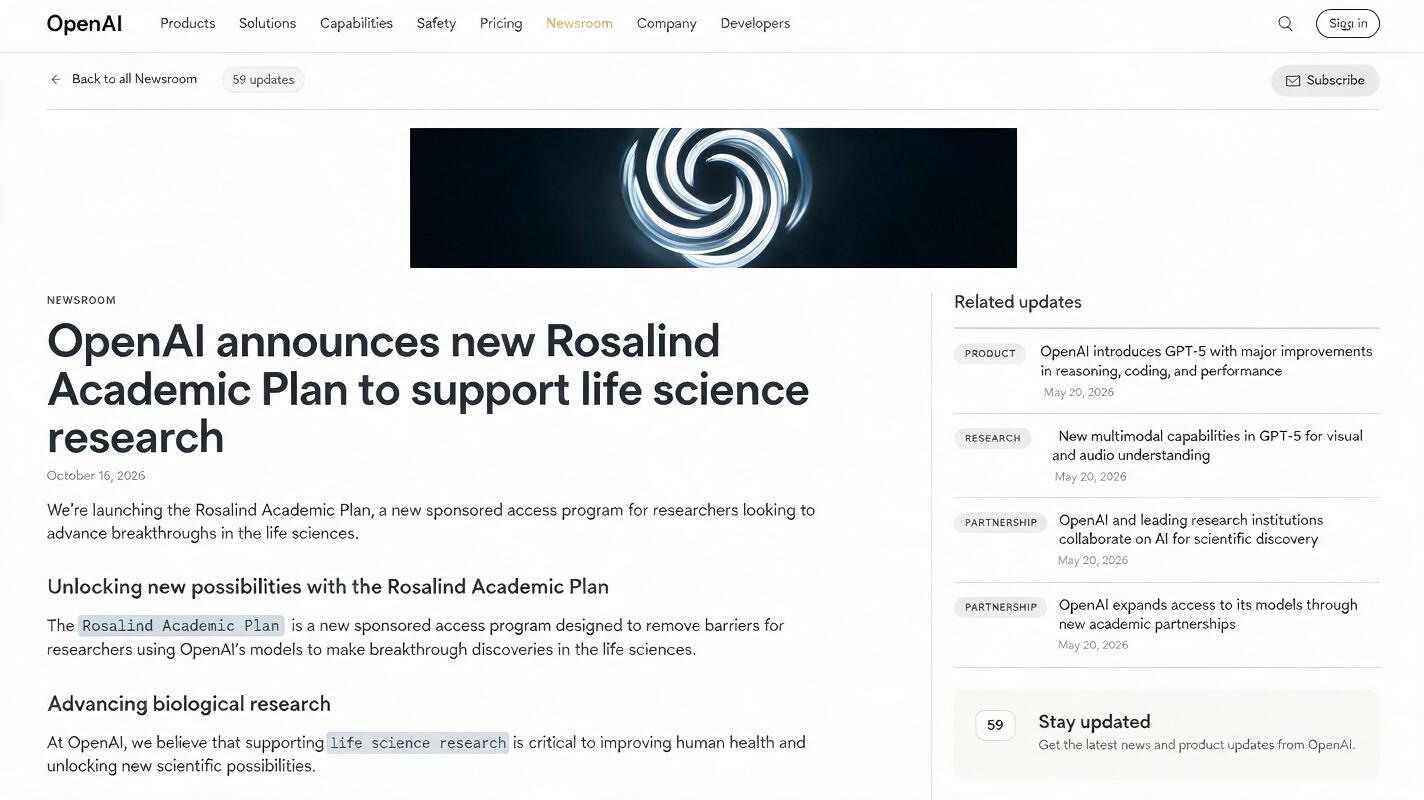
On October 16, 2026, OpenAI launched the Rosalind Academic Plan, which provides sponsored access to its GPT-Rosalind model for eligible academic laboratories focused on life science research. The program expands OpenAI's footprint in specialized scientific AI and aligns with a broader industry trend toward domain-specific models. For AI video and image creators working in science communication, this trend signals new tools for accurate research and content development ahead.

Table of contents
OpenAI’s latest specialized AI initiative targets life science research, with ripple effects for creators working in educational and scientific content spaces.
What Is the OpenAI Rosalind Academic Plan?
On October 16, 2026, OpenAI announced the launch of the Rosalind Academic Plan, a new program that provides sponsored access to its GPT-Rosalind model for eligible academic laboratories. The initiative, first shared via the OpenAI Newsroom, has a stated goal of advancing life-science research through expanded access to specialized AI tools.
The program targets academic research institutions, with access provided through a sponsored model that reduces or eliminates cost barriers for qualifying teams. GPT-Rosalind is positioned as a life-science focused AI model, separate from OpenAI’s general-purpose consumer and professional models like the GPT-6 Sol and GPT-6 Luna, which are built for broad use cases including coding, writing, and general reasoning.
The Broader Trend of Specialized AI Models
The launch of the Rosalind Academic Plan is part of a larger industry shift toward domain-specific AI models, as developers move beyond one-size-fits-all general-purpose models to build tools tailored to specific industries and use cases. Across the AI landscape, major providers have released specialized models targeted at coding, cybersecurity, government use, and scientific research, each optimized for the unique constraints and requirements of its target field.
For example, recent announcements from competing providers include Google’s Gemini 4 Argon, which has posted strong results on complex reasoning benchmarks, and Anthropic’s Claude Opus 5.5, which is positioned as a high-end model for professional and research use cases. Even coding-focused tools like GitHub Copilot regularly update their underlying model lineup to prioritize performance in specific development workflows, as seen in the recent retirement of six older models in favor of newer, more specialized alternatives.
This trend toward specialization is driven by demand for better performance in niche tasks, as general-purpose models often struggle to match the accuracy and depth of tools built explicitly for a single domain. For users, this means more choice than ever before, but also a more fragmented landscape where no single model excels at every task.
What This Means for AI Video and Image Creators
While the Rosalind Academic Plan is currently targeted at academic research labs, the rise of specialized life-science AI has clear implications for AI video and image creators working in science communication, educational content, health explainers, and biotech media. As domain-specific AI models become more widely available, creators working on scientific content gain access to tools that can support multiple stages of their production workflow.
For pre-production work, specialized life-science AI can help creators refine their research and ensure the scientific accuracy of their content. Whether developing a short animated explainer about molecular biology or a longer documentary about ecosystem health, accurate foundational research is critical to producing credible, high-quality content. Specialized models can help creators quickly verify facts, understand complex concepts, and frame technical information in accessible language for general audiences — a key part of working with an ai script writer to develop engaging, accurate scripts.
Beyond script development, specialized scientific AI can also support visual ideation for AI-generated content. Creators can use domain-specific models to brainstorm accurate visual representations of scientific concepts, from cellular structures to ecological systems, that can then be used as prompts for text to video or image generation tools. This helps ensure that final visuals are both visually compelling and scientifically accurate, a key priority for educational and institutional content clients.
It’s important to note that GPT-Rosalind itself is currently only available to eligible academic labs through the Rosalind Academic Plan, not to general commercial users. Even so, its launch signals a growing pipeline of specialized AI models that will eventually become more widely accessible to creators and other commercial users as the market matures.

Why Multi-Model Platforms Support Resilient Creator Workflows
As the AI landscape becomes more specialized and more regulated, relying on a single model provider or tool can create significant workflow risk for creators. Recent regulatory actions, including the FTC’s sweeping probe into major AI labs over potential consumer harms, have highlighted the possibility of sudden changes to model access, pricing, or features that could disrupt production schedules for creators who depend on a single tool.
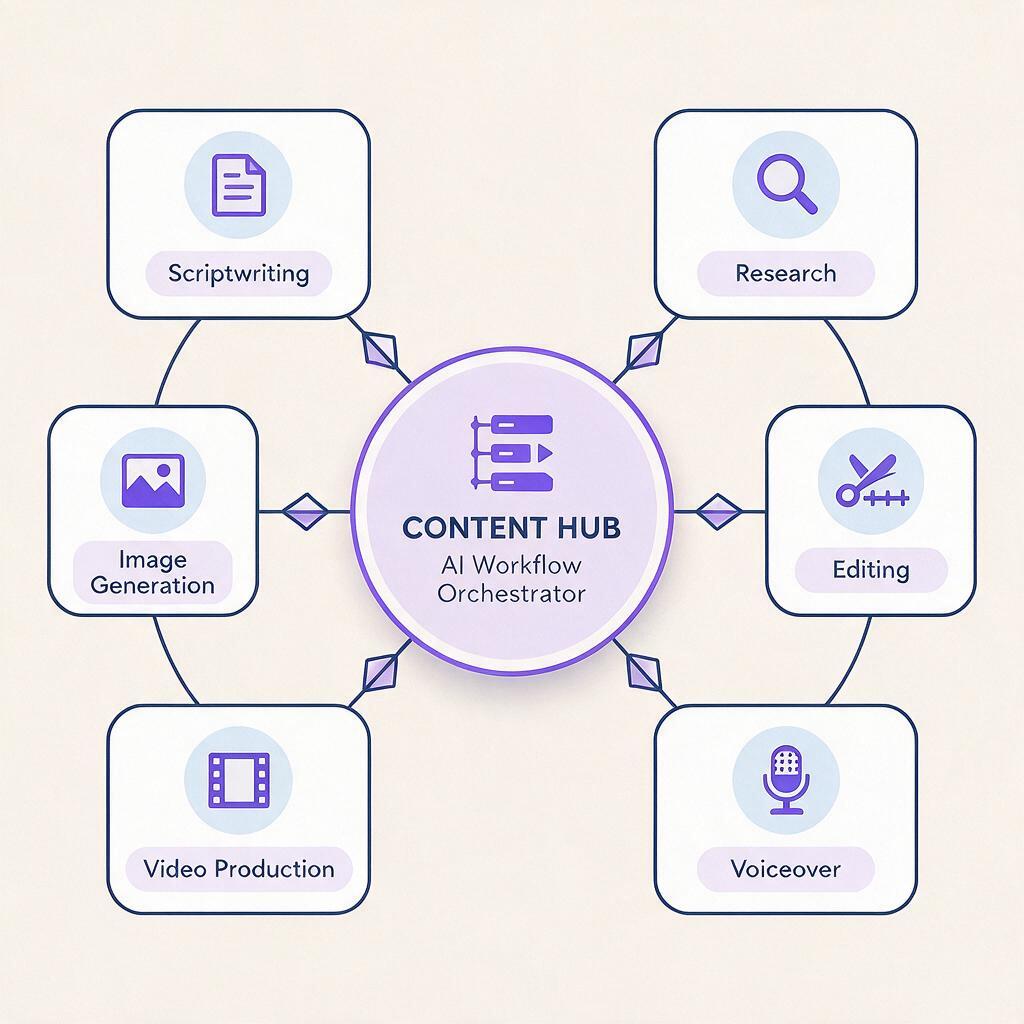
Multi-model platforms address this risk by giving creators access to a wide range of AI tools for different tasks — from scriptwriting and image generation to video editing and voiceover — all under a single account. This means creators can pick the best tool for each specific job, whether that’s a general-purpose model for brainstorming, a specialized scriptwriting tool for structured content, or a high-performance video model for final production. If one model experiences downtime, changes its pricing, or removes a feature, creators can switch to an alternative without rebuilding their entire workflow or losing access to their projects.
For creators working in niche fields like science communication, this flexibility is even more valuable. As new specialized models launch for different domains, multi-model platforms are often the first to integrate these tools, giving creators early access to capabilities that can set their content apart from competitors. Instead of managing multiple subscriptions and accounts across different providers, creators can access all the tools they need in one place, streamlining their workflow and reducing administrative overhead.
You can try these models for free to build a flexible, resilient content production stack that adapts to the rapidly evolving AI landscape, whether you’re working on scientific explainers, marketing videos, or personal creative projects.
Key Takeaways
- OpenAI launched the Rosalind Academic Plan on October 16, 2026, offering sponsored access to its life-science focused GPT-Rosalind model for eligible academic research labs.
- The program is part of a broader industry trend toward specialized, domain-specific AI models, as providers move beyond general-purpose tools to target niche use cases.
- AI video and image creators focused on science communication and educational content stand to benefit from the rise of specialized scientific AI models, which can support research, script accuracy, and visual ideation.
- Multi-model platforms like MagicBoat help creators build resilient workflows by providing access to a range of tools under one account, reducing the risk of disruption from model changes or regulatory shifts.
Keywords
openai rosalind academic plan, gpt-rosalind, life science ai, ai video model, text to video, educational ai content, ai script writer