OpenAI Launches Science Blog, GPT-6 Astra Aids Standard Model Proof
OpenAI launched a new science blog on November 15, 2026, publishing its first guest post by UC Santa Barbara theoretical physicist Nathaniel Craig detailing how GPT-6 Astra helped develop a candidate nonperturbative lattice definition of the Standard Model of particle physics. The launch note also recaps prior AI-assisted scientific breakthroughs including a September Navier-Stokes proof, October quasi-Riemann-hypothesis results, and a large-scale neuroscience analysis by GPT-Rosalind agents. For AI content creators, the advance highlights the rapidly expanding reasoning capabilities of frontier models that power script development, concept art generation, and complex creative planning workflows.
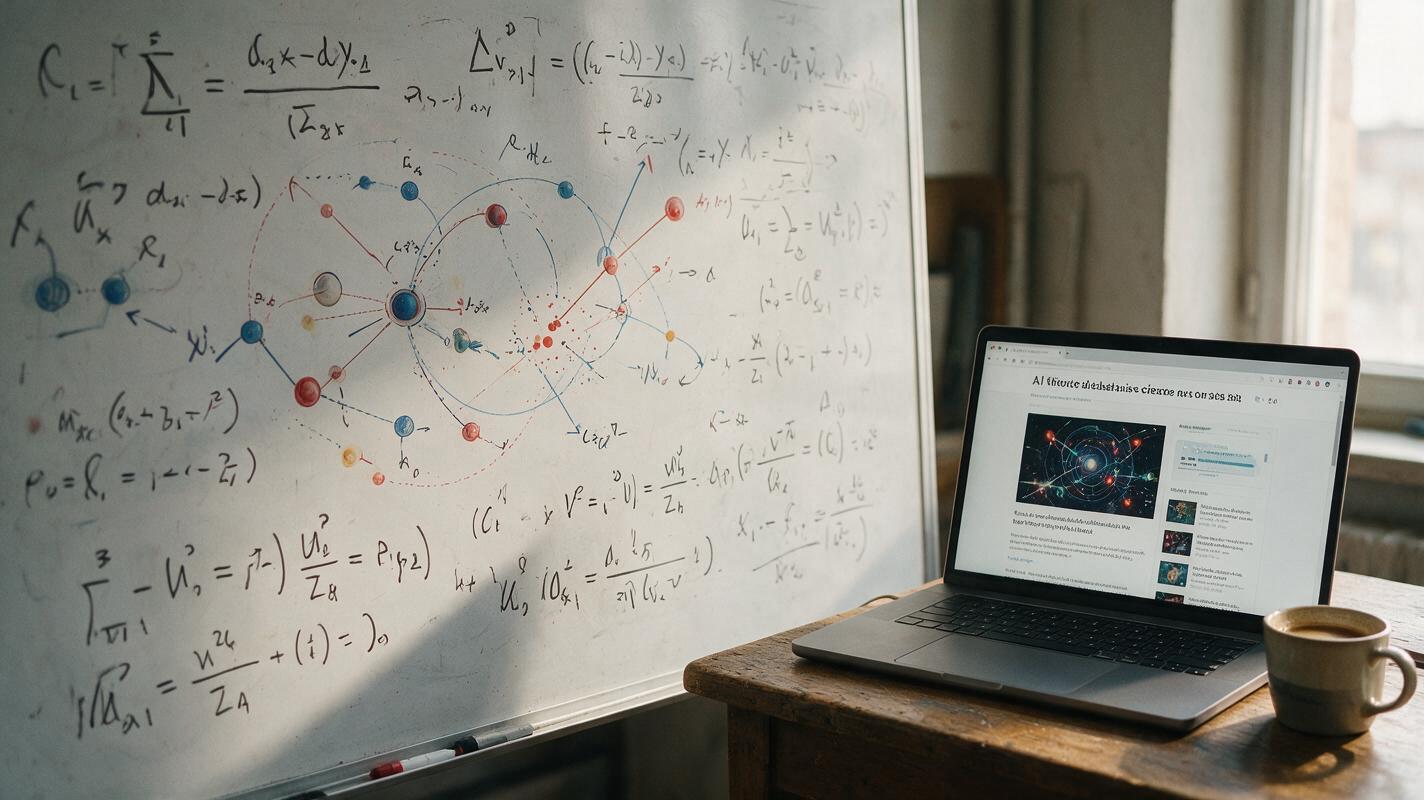
Table of contents
OpenAI launched a new dedicated science blog on November 15, 2026, publishing its first guest post detailing how GPT-6 Astra contributed to a major advance in theoretical particle physics: a candidate nonperturbative lattice definition of the Standard Model. The post, written by a leading theoretical physicist with deep ties to OpenAI, marks the latest in a string of high-profile AI-assisted scientific breakthroughs from the lab and its collaborators.
Details of the Standard Model Lattice Research
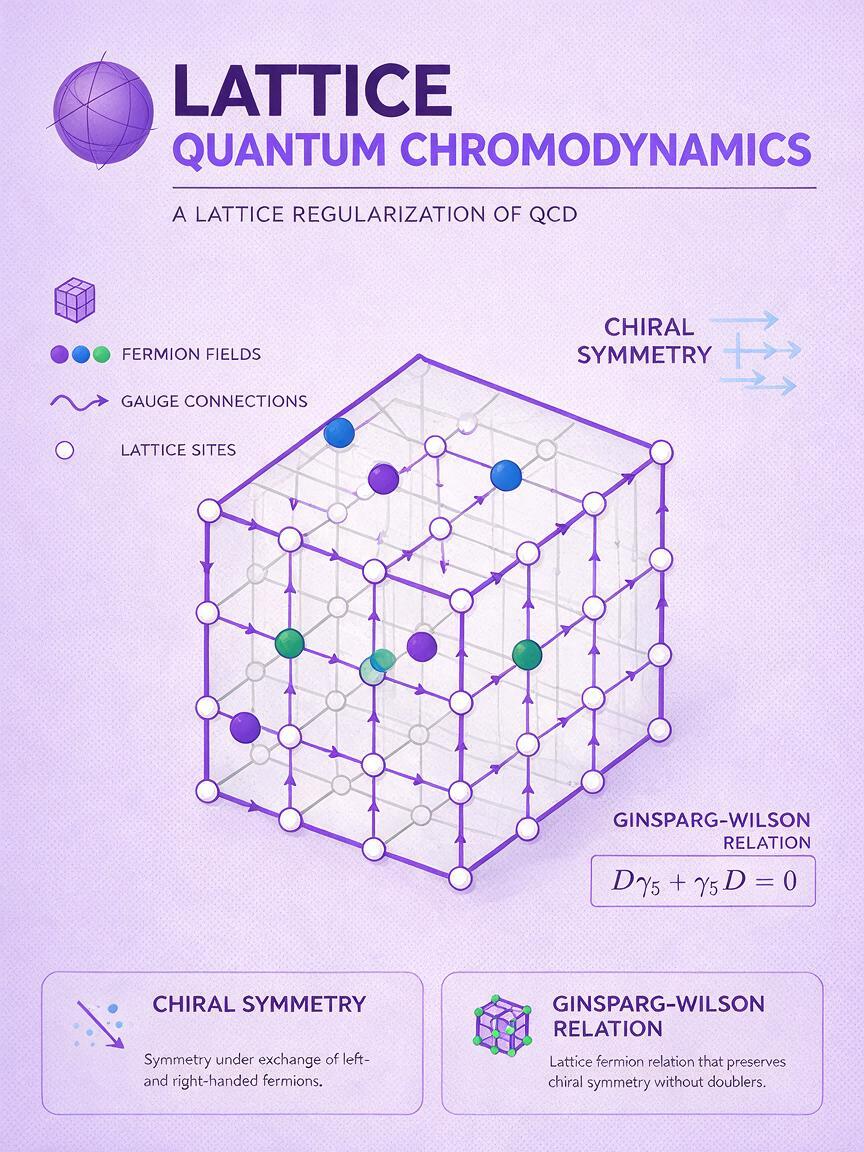
The inaugural guest post, titled "A step toward defining the Standard Model on a lattice," is authored by Nathaniel Craig, who leads the particle theory group at UC Santa Barbara, is a permanent member of the university’s Kavli Institute for Theoretical Physics, and serves as a visiting scientist at OpenAI. The work is also available as a preprint on arXiv under ID 2610.09093.
Craig explains he had developed a high-level strategy for addressing a longstanding problem in particle physics — defining the Standard Model on a lattice in a way that resolves chiral-fermion doubling and the fermion-measure phase, following the Ginsparg-Wilson / overlap-fermion / Luscher research line — but could not prove the strategy worked across all required cases. According to Craig’s first-person account, GPT-6 Astra helped translate that broad strategy into a concrete mathematical construction and took the lead in developing the detailed proof supporting the candidate definition.
The result is framed as a candidate definition, not a final peer-reviewed finding, and Craig’s account of GPT-6 Astra’s role has not been independently verified. Even with those caveats, the work represents a notable example of frontier AI models contributing to highly specialized, abstract theoretical research.
Other AI Science Breakthroughs Highlighted in the Launch
The science blog launch note recaps three additional major AI-assisted research milestones from OpenAI and its partners in recent months:
- A September 2026 proof of the Navier-Stokes existence-and-smoothness problem, one of the Clay Mathematics Institute’s Millennium Prize problems
- October 2026 results related to the quasi-Riemann hypothesis, another foundational open problem in mathematics
- A joint effort between PerturbAI and Scripps Research where thousands of GPT-Rosalind agents analyzed existing data from millions of mouse brain cells in just 32 minutes
Taken together, these results underscore the rapidly expanding scope of frontier AI models across scientific disciplines, from pure mathematics to neuroscience.
What This GPT-6 Astra Advance Means for Creators
While theoretical particle physics may seem far removed from day-to-day content creation, the reasoning capabilities that let GPT-6 Astra contribute to a complex mathematical proof have direct, practical applications for AI video and image creators.
Advanced reasoning and structured problem-solving skills translate directly to creative tasks that require consistency, attention to detail, and long-form planning. For example, creators developing sci-fi or fantasy worlds can use frontier models to build consistent internal rules for physics, magic, or technology, ensuring those rules hold across dozens of scenes or even entire series. The same structured thinking helps with drafting tight, logically consistent screenplays, mapping out complex story arcs with multiple plot threads, and generating detailed production briefs that leave no room for ambiguity.
These reasoning gains also improve the quality of generative creative outputs. Better prompt understanding and more accurate adherence to complex instructions mean text to video generations follow creative direction more precisely, with fewer continuity errors across scenes. For visual artists, frontier models can help iterate on concept art by maintaining consistent character designs, environments, and art styles across dozens of variations, cutting down the time spent on manual adjustments.
Why a Unified Multi-Model Platform Matters
As frontier models grow more capable across both reasoning and creative tasks, creators face a growing challenge: keeping up with new releases, managing multiple accounts and API keys, and knowing which model to use for each step of a project. A unified platform like MagicBoat solves this by bringing dozens of AI tools together in one interface, with a single account and consistent pricing.
Whether you need a high-reasoning frontier model to outline a feature-length screenplay, an ai image generator to develop concept art for your characters, or specialized tools for lip-syncing, voiceover, or short drama production, you can access everything you need without switching between services. This flexibility lets creators experiment with the latest models as they launch, while also having reliable fallback options for day-to-day work.
If you’re ready to test the latest frontier AI models for your creative projects, you can try these models for free on MagicBoat today.
Key Takeaways
- OpenAI launched a new science blog on November 15, 2026, with an inaugural post detailing GPT-6 Astra’s role in developing a candidate lattice definition of the Standard Model of particle physics
- The result is a candidate finding, not yet peer-reviewed, and GPT-6 Astra’s contribution is based on the lead author’s first-person account
- The launch also recaps prior breakthroughs including a Navier-Stokes proof, quasi-Riemann-hypothesis results, and a large-scale neuroscience analysis by GPT-Rosalind agents
- The advanced reasoning capabilities demonstrated by GPT-6 Astra directly benefit creators by improving long-form planning, worldbuilding consistency, and generative output quality
- Multi-model platforms like MagicBoat let creators access the latest frontier reasoning and generative tools in one place, streamlining workflows and reducing administrative overhead
Sources
Keywords
gpt-6, openai science blog, gpt-6 astra, standard model proof, ai scientific reasoning, gemini 4, ai video model