Oxide Computer Raises $445M for Rack-Scale Private Cloud Servers
Oxide Computer raised a $445 million Series D led by Eclipse, with AMD participating as a strategic investor, to support its rack-scale private cloud server business. The funding highlights the infrastructure layer beneath AI production and why creative teams need portable assets, controlled workflows, and flexible access to AI tools.
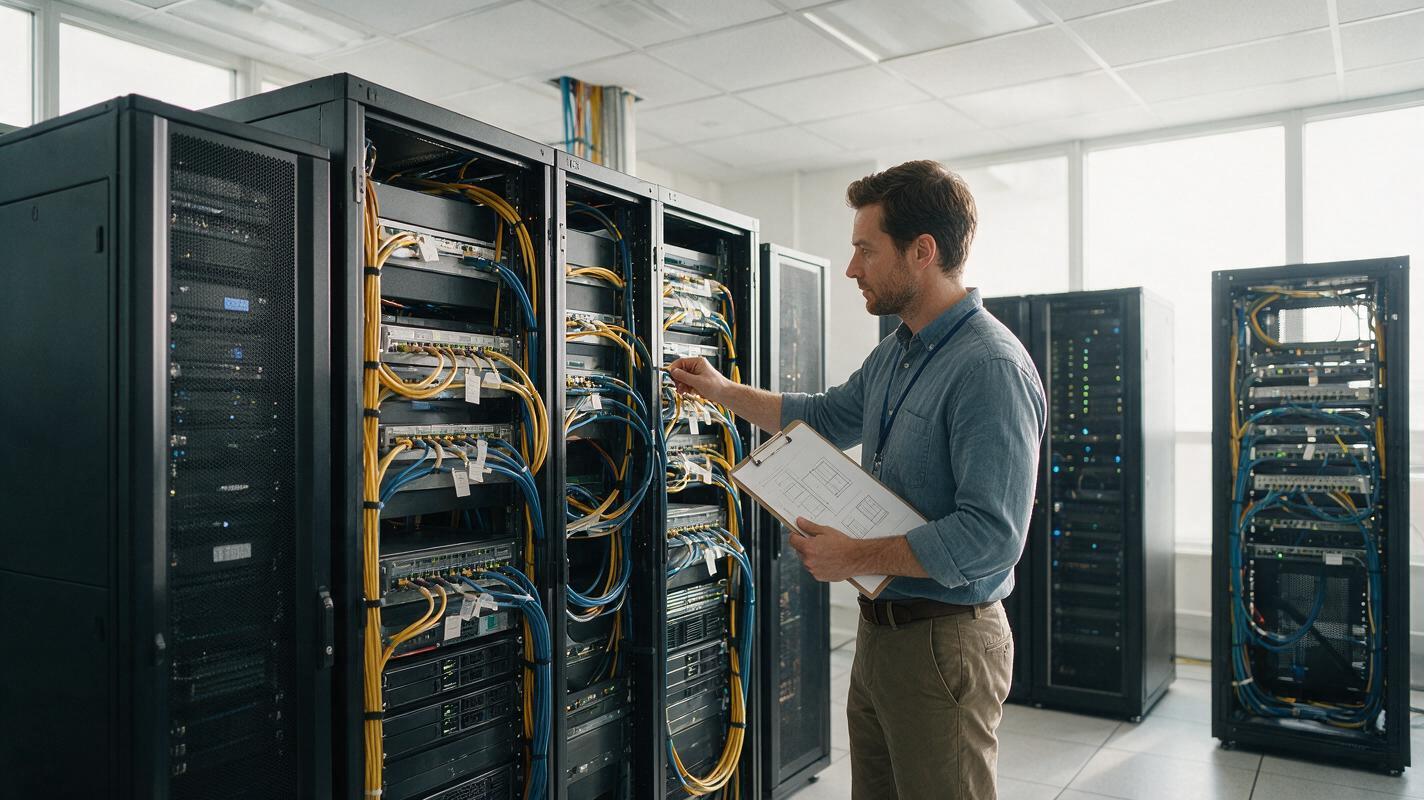
Table of contents
Oxide Computer Secures $445 Million for Private Cloud Infrastructure
Oxide Computer announced on October 9, 2026, that it had raised a $445 million Series D for its rack-scale private cloud server business. Eclipse led the financing, while AMD participated as a strategic investor. The announcement places substantial new capital behind infrastructure designed around private cloud deployments at rack scale.
The size of the round is the central news: $445 million represents a significant commitment to the physical systems underlying private computing environments. The involvement of AMD adds a strategic semiconductor participant to a round led by Eclipse, connecting the financing story with the broader market for the hardware used to run demanding cloud workloads.
No valuation, product benchmark, deployment count, or additional technical specification was included in the reported details. The confirmed facts are therefore focused: Oxide Computer raised a Series D, the round totaled $445 million, Eclipse led it, AMD joined strategically, and the company is applying the funding to rack-scale private cloud servers.
For content teams, the announcement is a reminder that every AI assistant, automated production task, and generated media asset ultimately depends on computing infrastructure. Even when creators never manage a server, infrastructure availability can influence whether an AI workflow remains reliable, portable, and economically sustainable.
Why Rack-Scale Private Cloud Is Attracting Capital
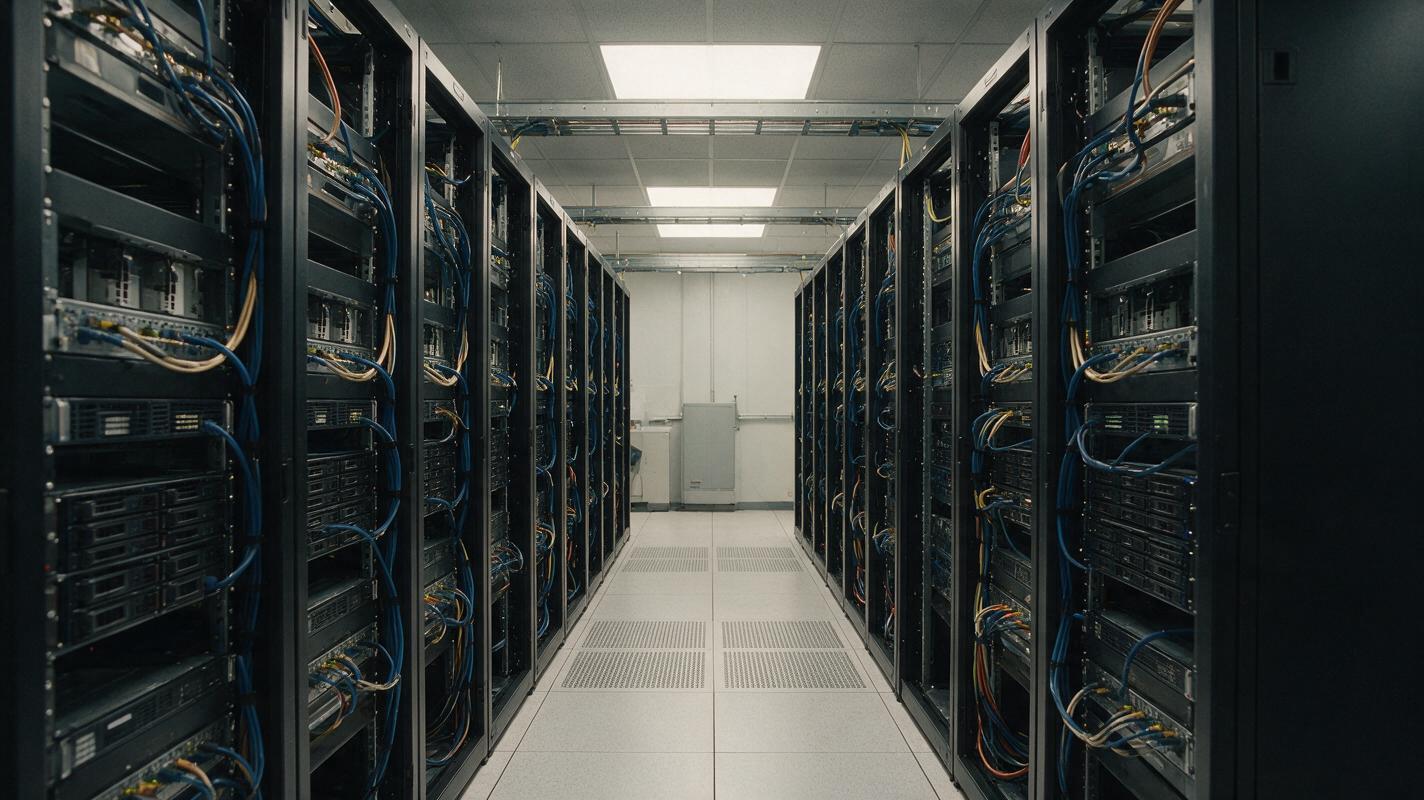
The phrase rack-scale private cloud brings two infrastructure priorities together. Rack scale describes systems organized around a complete rack rather than an isolated machine, while private cloud refers to cloud-style computing resources maintained for a defined organization or controlled environment.
Oxide Computer’s financing does not by itself establish that every business should adopt this model. It does show that investors are placing substantial capital behind an alternative path for organizations that want cloud infrastructure while retaining greater control over the environment in which workloads operate.
That distinction matters as AI infrastructure grows more important. AI automation can involve large files, repeated generation, multiple model calls, review copies, source material, and final deliverables. A production environment must account not only for model output but also for storage, access policies, workflow records, and recovery when a service becomes unavailable.
The infrastructure beneath an AI system may be invisible to the end user, but its availability becomes visible immediately when production stops.
The Oxide Computer Series D therefore belongs to a larger conversation about where computational work runs and who controls that environment. The announcement concerns private cloud servers, but the operational question extends to any team building recurring AI-assisted production.
What the Funding Signals for AI Production
The $445 million round points toward sustained investment in the systems behind software services. For creative departments, agencies, and studios, that infrastructure layer supports an increasingly complex chain of work: briefs become scripts, scripts become visual concepts, concepts become generated assets, and approved assets move into editing and distribution.
An ai workflow can fail at several boundaries even when the model performs well. A source file may be inaccessible, a generation service may be interrupted, an output may lack an approval record, or a project may depend so heavily on one tool that moving it becomes difficult. Hardware funding cannot solve those workflow-design problems, but it reinforces the importance of treating AI production as a system rather than a single prompt.
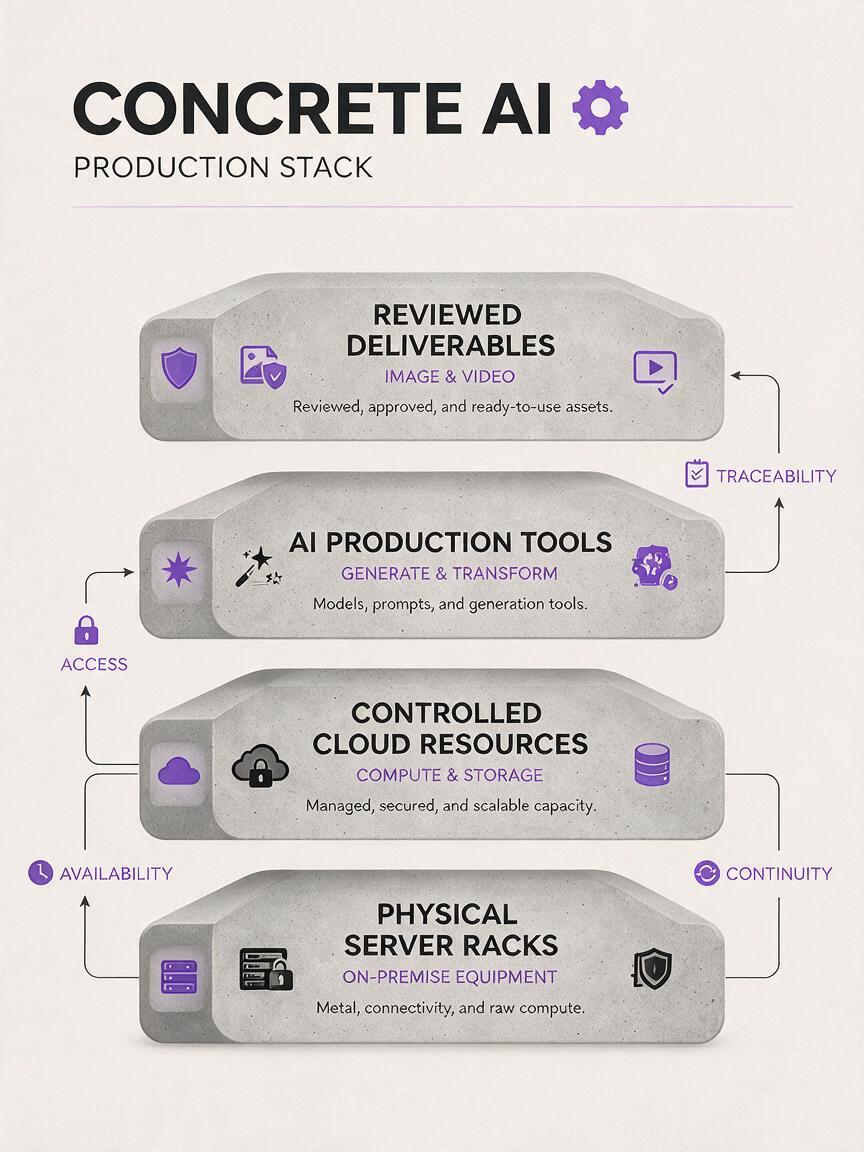
| Production concern | Infrastructure question | Creative response |
|---|---|---|
| Availability | Can work continue during a service interruption? | Keep briefs, source assets, and approved outputs portable. |
| Control | Who can access workloads and production material? | Define permissions and preserve human approval authority. |
| Continuity | Can a project move between tools or environments? | Use model-neutral project records and reusable prompts. |
| Traceability | Can the team reconstruct how an asset was produced? | Save input, output, revision, and approval context. |
These are not claims about features offered by Oxide Computer. They are practical questions raised by the growth of private cloud servers and the infrastructure investment surrounding AI workloads.
Portable Creative Context Matters More Than Hardware Choice
Most creators will not decide which rack-scale servers their organizations purchase. They can still prepare for infrastructure changes by making the creative context portable. A reusable project record should explain the campaign goal, audience, visual direction, required format, approved claims, prohibited elements, source assets, and publication status.
That record becomes especially valuable when an ai agent or ai assistant participates in production. Automation should not be the only place where project knowledge exists. If a tool becomes unavailable or a team changes models, the brief and approved assets should remain understandable without reconstructing the entire project from memory.
Project goal:
Audience:
Approved message:
Visual direction:
Required deliverables:
Source assets:
Usage restrictions:
Current review status:
Human approver:
Archived outputs:
This compact structure can support an ai video workflow without granting autonomous systems uncontrolled publication authority. It separates durable creative intent from the temporary tool used to generate a draft. The same context can then support copy development, visual exploration, video generation, review, and revision.
A strong production record also improves collaboration between creative and technical teams. Infrastructure specialists can change storage or computing environments while editors retain a clear record of what each asset means, where it came from, and whether it is approved.

MagicBoat Connects the Infrastructure Story to Creation
The Oxide Computer funding story is about the computing foundation beneath cloud workloads. MagicBoat addresses a different layer: the creative environment where ideas, scripts, images, and videos are developed. The connection is workflow resilience. Infrastructure may change behind the scenes, but creators still need a coherent place to move projects from concept to output.
A consolidated ai film platform can reduce the fragmentation created when every production activity lives in a separate service. Instead of making one isolated generation the center of the process, teams can preserve the relationship between the story, visual materials, and resulting media.
For motion-focused projects, an ai video generator can form part of a broader production flow rather than becoming a disconnected endpoint. Human reviewers can continue to control the brief, evaluate outputs, request revisions, and decide what is published.
This approach does not eliminate infrastructure dependencies. It makes the creative layer easier to manage by keeping intent and review decisions visible. That matters whether the underlying workload runs in a public service, a private environment, or an evolving combination of systems.
Private Cloud Investment Changes the Reliability Conversation
The Oxide Computer Series D should not be interpreted as proof that one infrastructure architecture will replace all others. Its importance lies in the scale of the commitment: $445 million led by Eclipse, with strategic participation from AMD, for rack-scale private cloud servers.
For AI teams, the announcement expands the reliability conversation beyond model quality. A model may produce excellent material, but production also depends on computing capacity, data access, asset storage, permissions, and operational continuity. The most durable creative system is one that can preserve the work when any individual component changes.
That is why model-independent briefs, archived source files, explicit approvals, and exportable deliverables deserve the same attention as prompt quality. They turn AI creation from an isolated experiment into a repeatable production capability.
To explore a unified environment for AI-assisted media production, try these models for free and build around a workflow that keeps human creative direction at the center.
AI Infrastructure Readiness Checklist
- Preserve the brief: Keep goals, audiences, claims, and restrictions outside any single model session.
- Archive source material: Maintain accessible copies of images, scripts, audio, and reference files.
- Record approvals: Identify who reviewed each asset and whether it is cleared for publication.
- Keep outputs portable: Export completed work in formats that remain useful beyond one service.
- Plan for interruption: Make it possible to resume a project without rebuilding its context.
- Retain human authority: Require review before automated work reaches a public channel.
Keywords
oxide computer series d, rack-scale private cloud, private cloud servers, ai infrastructure, ai workflow, ai automation, ai video workflow