Google Adds TPU 8tx and Dual-Die TPU 8i Max
Google adds TPU 8tx, described as its first confidential-computing TPU, alongside the dual-die TPU 8i Max. The announcement puts infrastructure confidentiality and accelerator design in focus for AI teams and content production platforms.
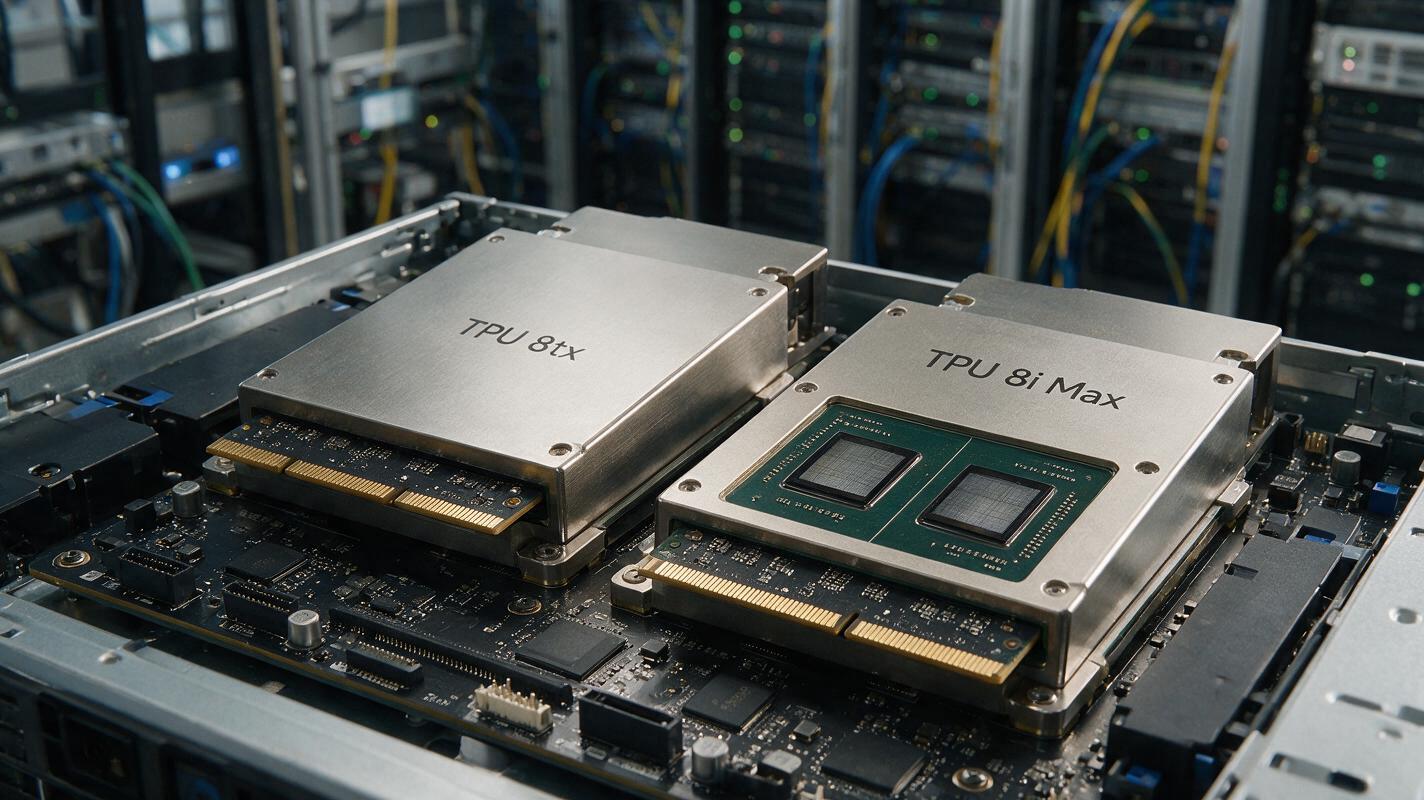
Table of contents
AI News · November 10, 2026
Google Adds TPU 8tx and Dual-Die TPU 8i MaxGoogle has expanded its TPU lineup with TPU 8tx, identified as the company’s first confidential-computing TPU, and TPU 8i Max, described as a dual-die accelerator.
Two New Google TPUs Put Infrastructure in the Spotlight
Google added two named processors to its AI infrastructure portfolio on November 10, 2026: TPU 8tx and TPU 8i Max. The two additions are distinguished by different headline characteristics. TPU 8tx is described as Google’s first confidential-computing TPU, while TPU 8i Max carries a dual-die designation.
The announcement is notable because it pairs a confidentiality-oriented milestone with a distinct hardware design development. TPU 8tx introduces confidential computing into Google’s TPU naming and product story for the first time. TPU 8i Max, meanwhile, draws attention to its dual-die construction directly in the launch description.
No performance benchmark, availability schedule, price, memory figure, power specification, workload comparison or deployment requirement was included in the announced details. Claims about speed, efficiency or suitability for a particular model would therefore go beyond what is currently established. What is confirmed is the arrival of both processor names and the two defining descriptions attached to them.
The central AI news is precise: TPU 8tx is identified as Google’s first confidential-computing TPU, and TPU 8i Max is identified as a dual-die TPU. Broader performance conclusions require additional specifications.
For creators, the immediate significance is indirect but important. Generative media products depend on infrastructure beneath the visible model interface, so changes in accelerator design can shape the environment in which future AI tools are operated—even when the announcement does not yet establish a particular benefit for video, image or writing workloads.
What Google Confirmed About TPU 8tx and TPU 8i Max
| Processor | Confirmed description | What remains unspecified |
|---|---|---|
| Google TPU 8tx | Google’s first confidential-computing TPU | Technical protections, benchmarks, pricing, availability and supported workloads |
| Google TPU 8i Max | Dual-die TPU | Performance, memory, efficiency, pricing, availability and deployment details |
The limited disclosure makes careful interpretation essential. The confidential-computing label places protected computation at the center of TPU 8tx’s positioning, but the announcement does not detail the mechanisms or operating conditions involved. Likewise, the dual-die label is central to TPU 8i Max, but it does not by itself establish how the processor performs against another TPU or accelerator.
TPU 8tx Marks a Confidential-Computing Milestone
The most distinctive part of the announcement is Google’s description of TPU 8tx as its first confidential-computing TPU. That “first” designation makes the processor a new category marker within Google’s TPU history. It also puts confidentiality into the infrastructure conversation at a time when AI systems can handle commercially sensitive prompts, media assets and production material.
Even so, the available announcement does not state which confidentiality controls are included or how access will be provided. Teams evaluating the processor will need concrete documentation before connecting the label to any compliance requirement, security policy or production decision.
TPU 8i Max Introduces a Dual-Die Design
TPU 8i Max is differentiated by its dual-die description. The announcement makes that construction the processor’s defining disclosed attribute, but it provides no numerical comparison that would support claims about throughput, latency or cost.
The “Max” name may attract attention from teams following large-scale AI infrastructure, yet the name alone should not be treated as a benchmark. For now, TPU 8i Max is best understood through the one design fact that has been confirmed: it is a dual-die TPU.
Why Accelerator News Matters to AI Content Production
Most people using an ai video generator never interact directly with the processor running the workload. They see prompts, reference images, generated clips and editing controls. Underneath that experience, however, content platforms depend on models and the infrastructure made available to operate them.
That distinction matters when interpreting hardware announcements. Google’s new TPUs are not, based on the disclosed information, new video models or image models. There is no confirmed claim here that TPU 8tx or TPU 8i Max changes output quality, generation speed or creative control for a specific application. The announcement concerns the computing layer rather than a newly described content-generation capability.
Still, infrastructure remains part of the broader AI creation market. A campaign involving text to video, image generation, voice production and model-assisted writing can rely on several services at once. Processor developments can therefore be relevant to the companies operating those services, even when end users do not select a TPU directly.
Confidentiality Is Becoming Part of the Infrastructure Conversation
TPU 8tx’s positioning highlights a question that extends beyond raw computing performance: how AI workloads are handled at the infrastructure level. Creative production may involve unreleased campaigns, scripts, visual concepts, character references and internal brand material. The launch does not establish how TPU 8tx would protect those assets, but it demonstrates that confidentiality is prominent enough to define a new Google TPU.
For production teams, the practical response is not to infer guarantees from a processor name. It is to separate confirmed product information from assumptions and evaluate the policies of the actual services they use. A hardware label, a model name and an application’s data practices are related parts of an AI stack, but they are not interchangeable.
- Confirmed: TPU 8tx is Google’s first confidential-computing TPU.
- Confirmed: TPU 8i Max is a dual-die TPU.
- Not disclosed: benchmark results or comparative performance.
- Not disclosed: pricing or a release schedule.
- Not disclosed: specific benefits for image, video, audio or writing models.
Model Access Matters More Than Hardware Names for Daily Work
Creators generally make decisions at the model and application layers. They compare whether an AI tool fits a visual direction, preserves a reference, follows a prompt reliably or produces material suitable for further editing. The processor beneath a service can be consequential, but it is rarely the only factor determining a useful creative result.
This is why a multi-model environment can be valuable. The AI market changes across several layers at once: processors evolve, models are updated and applications reorganize access. MagicBoat brings AI creation options into one account, allowing production teams to focus on making assets rather than tying an entire workflow to a single infrastructure announcement.
Google TPU 8tx and TPU 8i Max add two more developments to the 2026 AI roundup. Their long-term impact will depend on information not yet included in the announcement, particularly availability, technical specifications and measurable results. Until those details arrive, the strongest reading is also the simplest: Google has introduced its first TPU positioned around confidential computing and a separate dual-die TPU named 8i Max.
Keep Creative Work Flexible as AI Infrastructure Evolves
New processors can change the foundation of the AI market, but content teams still need accessible tools for actual production. Explore MagicBoat and try these models for free while keeping your creative workflow flexible across changing AI technologies.
Primary keyword: Google TPU 8tx
Related keywords: TPU 8i Max, confidential-computing TPU, Google TPU, AI infrastructure, AI news, AI tools, AI roundup