Replit AI Agent Switches Its Default Model to OpenAI
Replit changed the default model powering its AI Agent to OpenAI on October 19, 2026, marking another shift in coding-agent model selection. The move highlights why model defaults, availability and workflow portability matter to developers and AI content teams alike.

Table of contents
Replit Changes the Model Behind Its AI Agent
Replit switched the default model used by its AI Agent to OpenAI on October 19, 2026, according to Tech Bytes. The change puts OpenAI at the center of the coding agent’s standard experience, meaning users who rely on the default configuration will now encounter an OpenAI model when working through Replit’s agent.
The report did not identify a specific OpenAI model, publish benchmark results or detail the previous default in the supplied information. Its significance instead comes from the platform decision itself: Replit has selected OpenAI as the default model behind an established AI Agent, adding to the continuing movement in coding-agent model selection.
A default is more than a label in a settings menu. It determines which model most users meet first and can shape the behavior around which teams build prompts, review practices and expectations. For creators, developers and content teams, the news is a reminder that an AI workflow may change when a platform revises the model operating beneath it.
The central news: Replit’s AI Agent now defaults to OpenAI, but the supplied report does not specify the exact OpenAI model or make comparative performance claims.
Why the Default Model Matters
An AI agent connects model output with actions inside a larger environment. In a coding context, the model may influence how the agent interprets requests and produces responses, while the surrounding platform controls the actual experience. Changing the default model therefore alters one of the most important components in that relationship without necessarily changing the name of the product users open.
The Replit decision also demonstrates the power platform operators hold over model discovery. Many users never change a default. The selected model receives immediate exposure, while teams may gradually shape their internal language and review habits around its output.
That does not establish that one model is universally better than another. No such conclusion is supported by the reported facts. It does show that model selection is an active platform-level decision rather than a permanent technical constant.
Defaults Can Become Workflow Dependencies
A team that treats an agent’s current behavior as fixed can unknowingly create a dependency. Prompt wording, output review, internal documentation and automation logic may all reflect assumptions about the active model. When the platform changes its default, those assumptions deserve another look.
This is particularly relevant when an ai assistant supports repeatable production. A small change in interpretation or output structure can flow into later work, especially when material moves from ideation into scripts, visual planning and publication. Human review remains important even when the platform makes the model decision automatically.
The Latest Tilt in Coding-Agent Model Selection
Replit’s move is notable because it is a platform endorsement expressed through product configuration. Rather than announcing a broad comparison, Replit made OpenAI the standard model choice for its AI Agent. That gives the decision practical weight: it affects the starting experience rather than merely adding another optional provider.
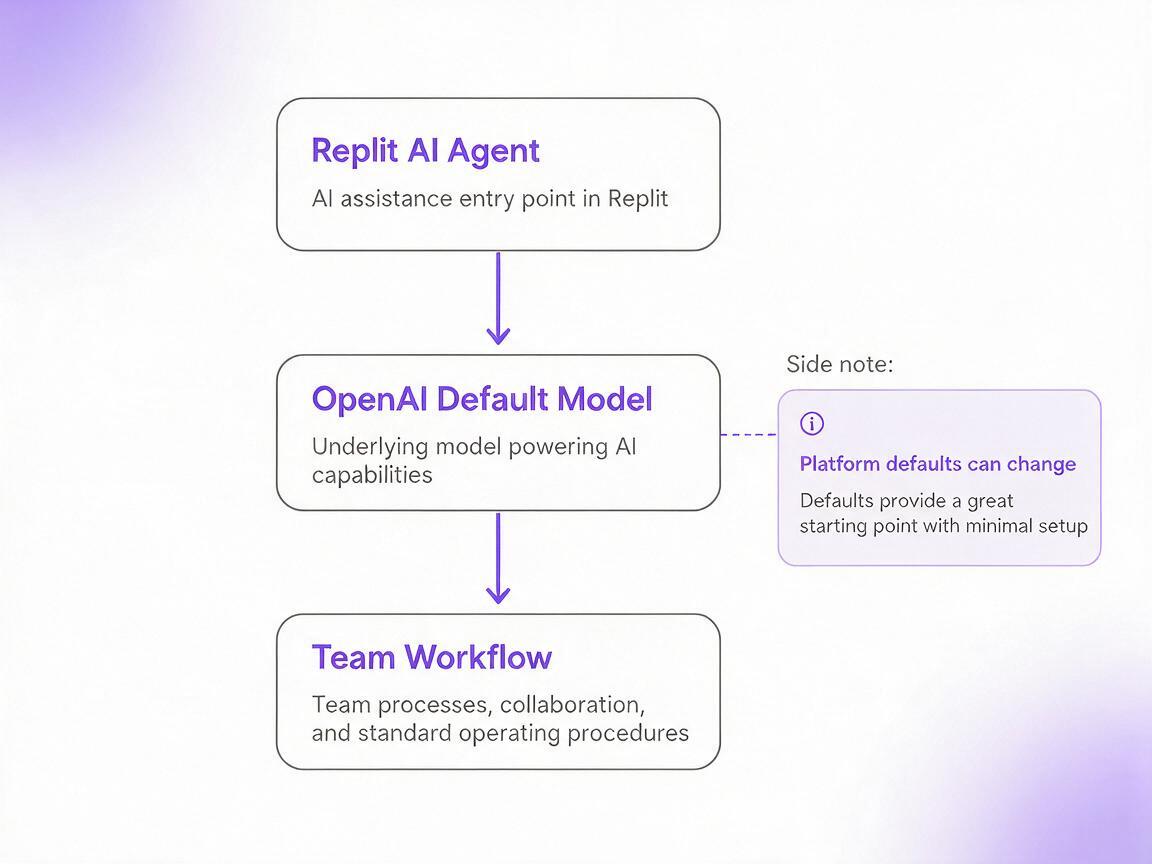
The development also separates the agent product from the model serving as its current default. Replit owns the user-facing agent experience, while OpenAI supplies the newly selected model layer. This distinction helps explain why agent platforms can change model relationships as their priorities evolve.
| Layer | Role in the reported change | What teams should track |
|---|---|---|
| Replit AI Agent | The user-facing coding agent | Platform behavior and current configuration |
| OpenAI | The newly selected default model provider | Which model is active when details are available |
| Team workflow | The prompts, reviews and records surrounding agent use | Whether outputs remain suitable after a default changes |
The distinction matters for responsible reporting as well. The available information supports saying that Replit switched its AI Agent’s default to OpenAI. It does not support naming an unreported model, assigning new capabilities or claiming a benchmark victory.
What This Means for AI Content Production
Coding agents and content-generation tools serve different immediate purposes, but they share a structural issue: the visible application and the underlying model are not always the same thing. A platform can preserve its interface while revising the model that interprets requests and generates output.
For content teams, this can affect an ai workflow that depends on consistent tone, formatting or interpretation. A campaign may begin with research and copy, move into an ai script generator, and then continue through visual production. If any model-dependent component changes, teams benefit from retaining the original brief, approved facts and review criteria outside a single chat session.
The strongest response is not to assume that every model change will be disruptive. It is to make the workflow understandable enough that a change can be evaluated. Teams can preserve the source brief, label model-assisted drafts and compare new output with previously approved material before publication.
Portable Context Is More Valuable Than One Perfect Prompt
A reusable creative brief can outlast a model default. It can include the intended audience, factual boundaries, tone, required format and elements that must not appear. That context gives editors a stable reference when an agent or model produces something different from earlier work.
This approach also supports ai automation without surrendering editorial control. Automation can accelerate drafting and transformation, while people remain responsible for validating claims, protecting brand consistency and authorizing publication.

A More Resilient Model Strategy With MagicBoat
The Replit news reinforces a broader selection principle: model availability and reliability matter alongside raw output quality. When one application determines the default, users inherit that platform’s choice. A one-account, multi-model environment offers another way to work by reducing dependence on a single model path.
MagicBoat brings creative tools into one production environment, allowing teams to move from planning into assets such as an ai video generator. The practical advantage is continuity: a creator can keep the project’s core concept and approved material at the center of the process while evaluating which available model or capability fits the current task.
This does not eliminate the need for review. It makes comparison and adaptation easier when model access, defaults or production requirements change. The goal is a resilient creative process in which the project is not defined by whichever model happens to be selected automatically by another platform.
Human Approval Remains the Stable Layer
Model providers and platform defaults can change, but editorial standards should remain consistent. Teams can anchor production around approved facts, clear ownership and explicit release decisions. That is especially important when an ai agent contributes to work that may later be published, distributed or connected to automation.
Replit’s switch is therefore relevant beyond software development. It shows how quickly the model beneath a familiar product can become a news event of its own. Content operations built around portable context and human approval are better prepared for that reality.
Editorial Checklist
- Record the active model: Do not assume the model behind an agent will remain unchanged.
- Separate confirmed facts from interpretation: The report confirms an OpenAI default, but not a specific model or benchmark result.
- Preserve the source brief: Keep audience, tone and factual boundaries available outside a single model session.
- Review after configuration changes: Compare new output with approved examples before extending automation.
- Keep model options open: Use a workflow that can adapt when availability or platform defaults shift.
- Explore a multi-model creative environment: try these models for free and keep your production centered on the project rather than one default.
Keywords
replit ai agent, openai default model, coding agent, ai workflow, ai automation, ai assistant, model selection