Replit AI Agent Switches Its Default Model to OpenAI
Replit switched the default model in its AI Agent to OpenAI on October 19, 2026, marking another turn in coding-agent model selection. The change highlights why teams should treat default models as adjustable infrastructure rather than permanent foundations for every AI workflow.

Table of contents
Replit Changes the Default Behind Its AI Agent
Replit switched the default model used by its AI Agent to OpenAI on October 19, 2026. The change represents the latest shift in coding-agent model selection, where the model placed behind an agent can change even while the user-facing product and its broader purpose remain familiar.
The central news is the default-model decision itself. Replit AI Agent now points users toward OpenAI by default, making OpenAI the initial model choice inside the agent experience. The available report does not specify a particular OpenAI model version, benchmark result, price change or expanded feature set, so the significance should not be overstated beyond the confirmed switch.
For creators and production teams, the announcement is a reminder that an ai agent is not necessarily tied permanently to one underlying model. Defaults can move as platform providers revise their model-selection strategies, making workflow portability and output review increasingly important.
Why a Default-Model Change Matters
A default is more influential than it may first appear. Many users begin with the model a platform selects for them, especially when they want an ai assistant to work without additional configuration. Changing that selection can therefore shape the first responses, coding suggestions and agent behavior that users encounter.
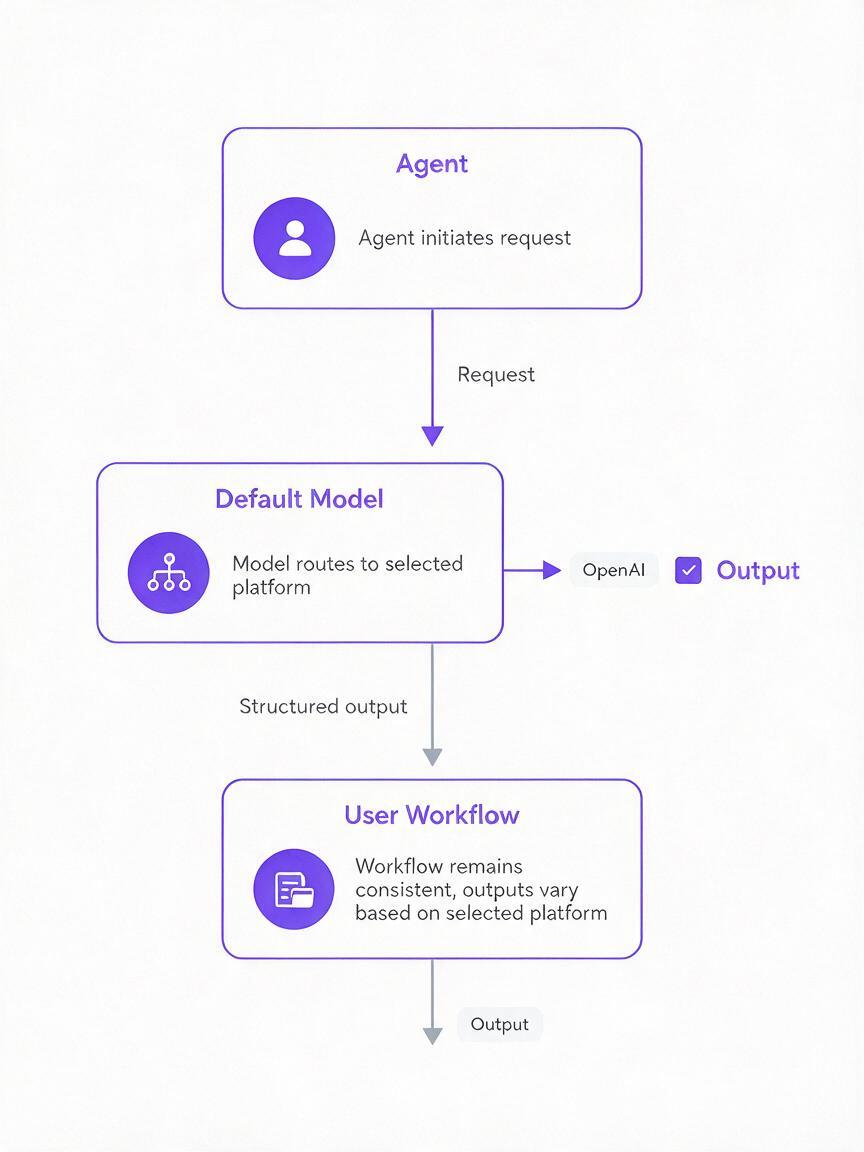
Replit's decision also separates two layers that are often discussed as though they were identical:
- The agent layer, which provides the product experience and coordinates a task.
- The model layer, which supplies the underlying intelligence selected by the platform.
- The workflow layer, which includes the user's brief, source material, review process and final deliverable.
The October 19 switch concerns the model layer. It does not mean that every other part of an ai workflow has changed, nor does it establish that one model is universally preferable. It does show that model selection is an active platform decision rather than a fixed background detail.
A familiar agent interface can remain in place while the default intelligence behind it changes.
What the Replit Move Signals About Coding Agents
The Replit AI Agent change is described as the latest tilt in coding-agent model selection. That framing points to a competitive environment in which agent platforms continue to reconsider which model should occupy the default position.
It is important to distinguish the confirmed facts from conclusions that the report does not support. The switch confirms Replit's new OpenAI default. It does not, by itself, provide a comparison of model quality, disclose the commercial reasoning behind the choice or prove that the selected model is the best option for every coding task.
| Confirmed | Not established by the report |
|---|---|
| Replit changed its AI Agent default model | A specific OpenAI model version |
| OpenAI is now the default selection | New benchmark scores or performance gains |
| The change was reported on October 19, 2026 | Pricing, availability or feature changes |
| The move reflects shifting coding-agent model selection | A universal ranking for all workflows |
This distinction is useful for anyone publishing fast-moving AI news. A concise announcement can generate broad assumptions, but responsible coverage should preserve the boundary between a documented platform change and unreported explanations.
Model Portability Is Becoming a Workflow Requirement
When a platform changes its default, teams may see variation in tone, formatting or how an agent interprets a brief. Those possibilities should be evaluated through direct output review rather than presumed from the provider's name alone.
A durable ai automation process therefore depends on more than accepting whichever model is preselected. Teams benefit from keeping prompts, reference files, acceptance criteria and approved outputs organized independently of a single provider. That makes it easier to assess a changed default without rebuilding the entire production process around it.
Useful review questions include:
- Does the new default follow the same brief consistently?
- Are important constraints preserved in the output?
- Can reviewers identify what changed between comparable runs?
- Does the workflow retain a human approval point before publication or deployment?
These questions do not assume that the Replit switch will improve or reduce output quality. They provide a neutral framework for evaluating any model change based on actual results.
What This Means for AI Content Production
Although Replit's news concerns a coding agent, the underlying lesson extends to content operations. Scripts, images, video concepts and campaign assets often pass through several AI-supported activities. If one model or platform changes its default behavior, a production team still needs continuity across the larger creative process.
That is where a multi-model environment becomes useful. MagicBoat brings AI creation capabilities into one account, helping teams maintain a broader production path rather than making an entire project dependent on one agent default. A creator can develop copy with an ai script generator and move approved material into an ai video generator without treating a single coding-agent decision as the foundation of the whole campaign.
This does not make model changes irrelevant. It makes them easier to absorb. A modular ai video workflow preserves the brief, source material and review standards while individual tools or default selections evolve.

Editorial Discipline for Fast-Moving AI Platform News
The Replit announcement also illustrates why AI coverage should be update-ready. A report about a default-model switch may later be followed by model-version details, product documentation or additional platform changes. Until then, publishers should state only what is known.
A strong news brief should keep four elements separate:
- The event: Replit changed its AI Agent default to OpenAI.
- The date: the change was reported on October 19, 2026.
- The context: coding-agent platforms are actively revisiting model selection.
- The unknowns: no specific version, price, benchmark or additional capability was provided in the available report.
This structure produces content that can be revised cleanly if more information emerges. It also prevents speculative claims from becoming embedded in scripts, social posts or video narration.

Build Around the Workflow, Not Only the Default
Replit's move to an OpenAI default is a notable platform decision, but its broader significance lies in what it reveals about the agent market: the underlying model can change while users continue interacting with the same product category.
Creators can respond by keeping briefs portable, reviewing changed outputs and maintaining options across the production chain. To explore image, script and video creation from one account, try these models for free on MagicBoat.
Key Takeaways
- Replit switched its AI Agent default model to OpenAI on October 19, 2026.
- The available report does not name a particular OpenAI model version.
- No benchmark, pricing or new capability claims were included in the reported change.
- The move highlights ongoing competition over coding-agent model selection.
- Portable prompts, independent source files and human review can make AI workflows more resilient.
- A multi-model content platform can reduce dependence on any single default selection.
Keywords
replit ai agent, openai, ai agent, ai workflow, ai automation, model selection, ai assistant