Replit Switches AI Agent Default Model to OpenAI in Coding Agent Tilt
Replit has switched the default model for its coding-focused AI Agent to OpenAI, marking the latest shift in the competitive coding-agent model selection landscape. The move underscores ongoing volatility in AI agent model choices across the industry, with direct implications for creators building AI-powered workflows and automation pipelines. This article breaks down the news, its broader industry context, and how multi-model platforms can help creators mitigate the risk of unexpected model shifts.
Table of contents
Breaking Down the Replit AI Agent Model Shift
On October 19, 2026, Replit updated its AI Agent to use OpenAI as its default model, according to reporting from Tech Bytes. The change represents the latest high-profile shift in the competitive coding-agent space, where platforms regularly adjust their underlying model selections to balance performance, cost, and user experience.
Replit’s AI Agent is a coding-focused agent integrated directly into the Replit development platform, designed to assist developers with a range of coding-related tasks. As the default model, OpenAI’s model will power the agent’s core interactions for all users who do not manually select an alternative model. The move signals a significant vote of confidence in OpenAI’s coding capabilities from one of the most popular developer platforms in the AI agent space, and it comes amid a broader period of flux across the entire AI agent ecosystem.
Context: The Shifting Coding Agent Model Landscape
The Replit switch is far from an isolated development. Across the AI agent ecosystem, platforms have been regularly updating their default model choices as new models launch, pricing structures shift, and user demands evolve. For coding agents in particular, model selection is a high-stakes choice: coding performance, accuracy, and support for niche programming languages can make or break the user experience for developers relying on the agent for daily work.
This volatility extends beyond coding agents to the broader AI assistant and agent space. Personal assistant agents, enterprise workflow agents, and content creation agents have all seen similar shifts as platforms navigate tradeoffs between model capability, inference cost, and alignment with their product roadmap. For end users, this means the default model they rely on today may not be the same one powering their favorite agent tool in six months — or even sooner.
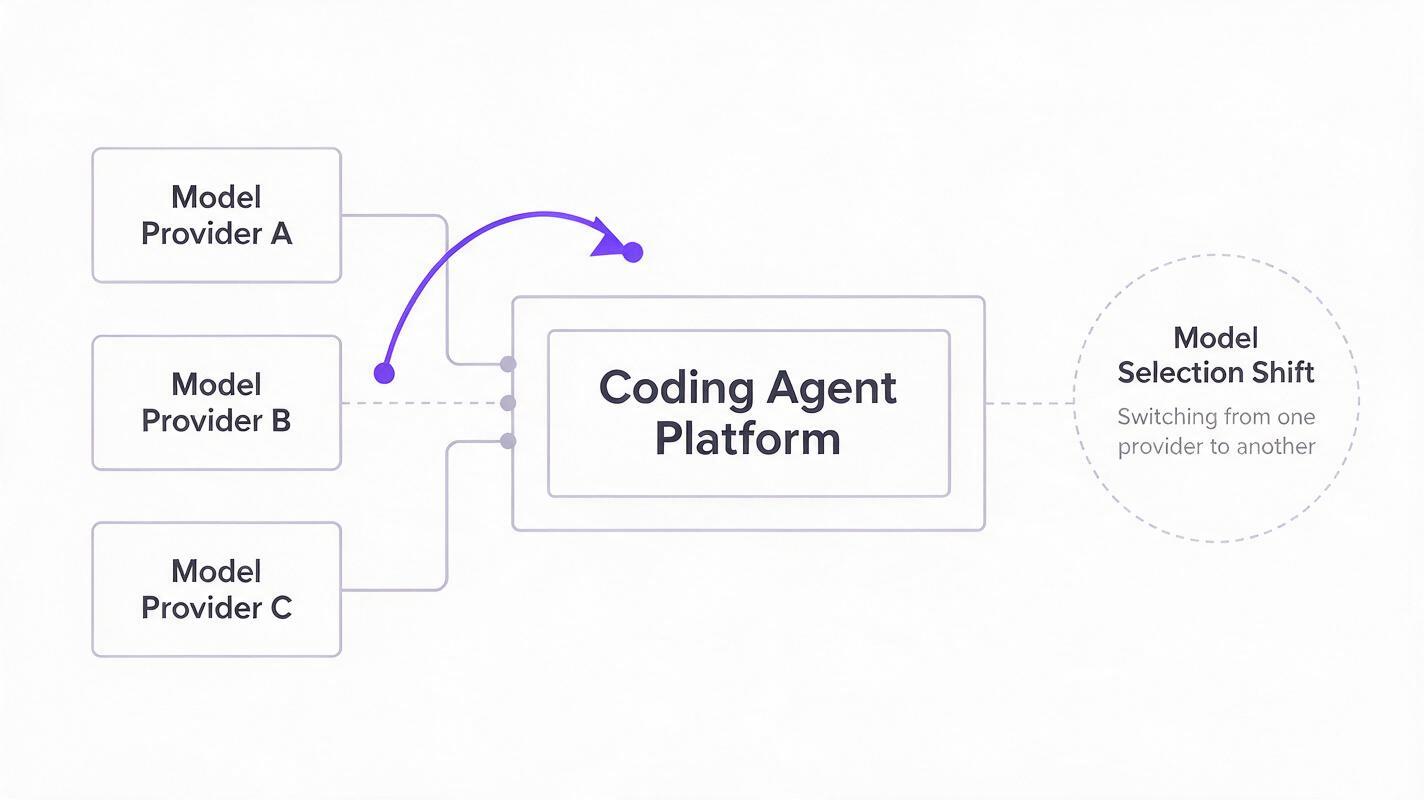
For anyone building workflows on top of AI agent tools, this trend highlights the importance of model flexibility. What works well with one model may not work with another, and users who are locked into a single platform’s default choice may face unexpected disruptions when a switch occurs. These disruptions can range from minor changes in output tone to major breaks in automated pipelines that require hours of work to fix.
What This Means for AI Workflow and Automation Builders
For creators and builders who use AI agents to power ai automation and custom workflows, default model shifts can have immediate, practical impacts. Many small creators and independent developers build custom automation pipelines on top of popular agent platforms, relying on the default model to handle tasks like code generation, debugging, and workflow orchestration. When the underlying model changes, these pipelines can break or produce lower-quality output, requiring hours of debugging and prompt adjustment to get back to full functionality.
For content creators specifically, coding agent model shifts can ripple into tools used for day-to-day production. Many creators use custom scripts and AI-powered automations to streamline tasks ranging from script drafting to video asset generation, often building on top of agent platforms to connect tools like ai script writer and ai video generator into cohesive pipelines. When a default model changes, prompts and automation rules that worked reliably with the previous model may produce inconsistent results, requiring time-consuming debugging and adjustment that pulls focus from creative work.
Even creators who don’t directly use coding agents can feel the impact of these shifts. Many third-party AI tools and content creation platforms rely on underlying models from major providers, and changes to those models — or to the partnerships between tool platforms and model providers — can alter the performance of tools creators use every day. This is especially true for ai video workflow pipelines, where consistent output quality is critical for maintaining brand voice and production timelines.
Why Multi-Model Platforms Reduce Model Shift Risk
For creators looking to reduce their exposure to unexpected model shifts, a unified multi-model platform like MagicBoat offers a more stable alternative. With access to dozens of leading AI models for content creation, coding, and automation under one account, you can select the right model for each specific task, test alternatives side by side, and switch providers at any time without rebuilding your entire workflow.
Unlike single-provider agent platforms that lock users into a default model chosen by the platform, multi-model platforms put control back in the hands of creators. If you prefer one model for script drafting and another for video generation, you can use both within the same workflow. If a model you rely on is updated or replaced, you can test alternative options and switch to a new one with minimal disruption, rather than being forced to adapt to whatever default the platform chooses.
This flexibility is especially valuable for creators running consistent content pipelines, where output quality and reliability directly impact audience engagement and revenue. Instead of spending hours debugging broken prompts after a model switch, you can proactively test new models, compare output quality, and transition gradually on your own timeline. You can try these models for free to build a flexible, model-agnostic production pipeline that adapts to your needs, not the priorities of a single platform.

Key Takeaways
- Replit has switched the default model for its coding-focused AI Agent to OpenAI, marking the latest shift in the fast-evolving AI agent model selection landscape.
- Default model changes can disrupt custom ai automation and workflow pipelines, requiring time-consuming adjustments for creators who build on top of single-provider platforms.
- Content creators may feel indirect impacts from coding agent shifts, as many content production tools rely on underlying AI models that can change without warning.
- Multi-model AI platforms offer greater stability and flexibility, allowing creators to choose the best model for each task and switch providers easily when needed.
Keywords
ai agent, ai workflow, openai, coding agent, replit, ai automation, ai video workflow