Microsoft MAI Models at Ignite 2026: Pricing, Benchmarks, and Access | MagicBoat
Microsoft unveiled seven in-house MAI models at Ignite 2026 on November 17, 2026, with aggressive promotional pricing that undercuts GPT-6.1 Sol and Claude Opus 5.5 on coding and cybersecurity tasks. The lineup spans coding, cybersecurity, image, real-time, decision, and licensable weight models, though all benchmarks are vendor-reported and pricing uses 50% promo rates. For AI video and image creators, the launch signals intensifying price competition that is making AI-assisted creative workflows more affordable.
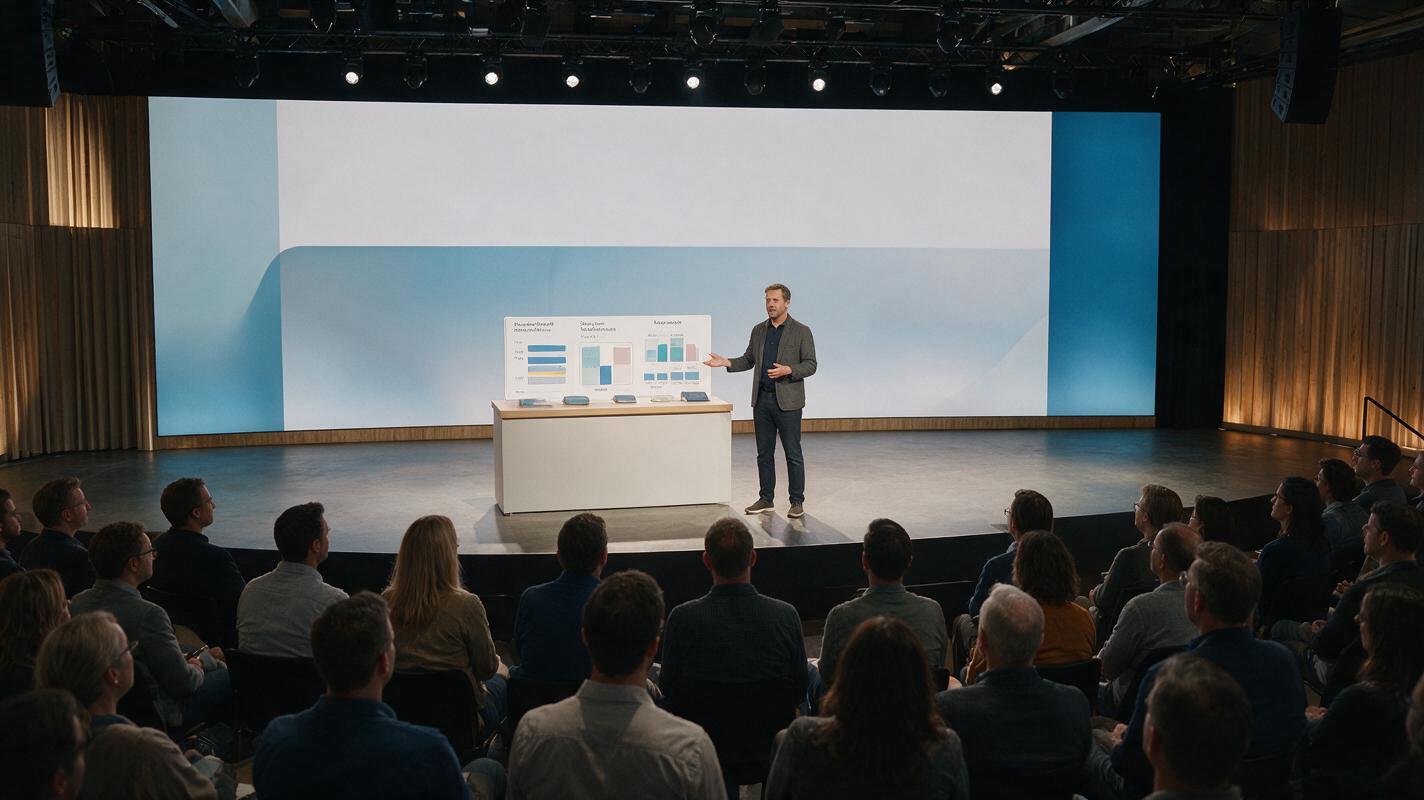
Table of contents
What You Need to Know About Microsoft's MAI Model Launch
Microsoft unveiled seven in-house MAI models at its Ignite 2026 conference in San Francisco on November 17, 2026, framing the entire lineup around aggressive cost reduction for enterprise and developer workloads. The announcement positions Microsoft's proprietary model family as a direct price competitor to OpenAI's GPT-6 family and Anthropic's Claude models, with cost-per-task figures that dramatically undercut both on several benchmarks. For AI video and image creators, the expansion of available model families creates more options for budget-conscious production workflows and signals a broader industry shift toward price-based competition.
The MAI lineup spans coding, cybersecurity, image generation, real-time processing, decision-making, and customer-tunable weights. Microsoft explicitly notes the models are not optimized for frontier scientific research or long-horizon agentic tasks, carving out a practical, cost-focused niche rather than competing directly on raw frontier capability. All quoted pricing uses half-off promotional rates, meaning standard pricing would be double once promotions end.
What Happened at Ignite 2026
At its annual Ignite conference, Microsoft pulled back the curtain on seven custom-built AI models under its "MAI" (Microsoft AI) brand. The models were developed in-house and represent Microsoft's deepest push yet into proprietary foundation model development, complementing its longstanding commercial relationship with OpenAI through Azure.
The seven models announced cover a range of enterprise use cases:
- MAI Code 2 — a general-purpose coding model now shipping in GitHub Copilot
- MAI Code 2 Flash — a faster, cheaper coding variant also deployed in GitHub Copilot
- MAI Cyber 2 Flash — a cybersecurity-focused model shipping via MDASH in mid-December
- MAI Image 2.7 — an image generation model (specific capabilities not disclosed)
- MAI Realtime 1 — a real-time processing model
- MAI Decision 1.1 — a decision-focused classification model
- MAI Licensed Weights — customer-tunable weights for in-Azure deployment
Microsoft emphasized cost as the central differentiator across the lineup. The company framed the models as practical workhorses for high-volume enterprise tasks rather than frontier research tools, explicitly acknowledging that they are not tuned for frontier science or long-horizon agent workloads.
Key Pricing and Performance Figures
The most detailed information centers on the coding models, where Microsoft shared direct cost-per-task comparisons against competing models. All figures below are vendor-reported by Microsoft and not independently verified.
| Model | Cost Per Task (Promo) | Benchmark Claim | Availability |
|---|---|---|---|
| MAI Code 2 | $0.309 | ~98% of GPT-6.1 Sol quality; 64% developer preference in front-end blind tests | Shipping now in GitHub Copilot |
| GPT-6.1 Sol | $0.761 | Baseline comparison (Microsoft figures) | Generally available |
| Claude Opus 5.5 | $6.306 | ~96% of Opus 5.5 quality at 5% of the price (Microsoft claim) | Generally available |
| MAI Code 2 Flash | $0.052 | 61.0% pass rate on DeepSWE 1.1/Terminal-Bench 2.1/SWE-Atlas | Shipping now in GitHub Copilot |
| MAI Cyber 2 Flash | Under 2% of GPT-6 Astra cost | 92.3% on CyberGym-E2E vs GPT-6 Astra's 91.5% | Mid-December via MDASH |
The cost comparisons are particularly striking. MAI Code 2 is claimed to deliver roughly 98% of GPT-6.1 Sol's quality at 40% of the price per task, and about 96% of Claude Opus 5.5's quality at just 5% of the price. In front-end blind tests with developers, 64% of participants preferred MAI Code 2's output.
For cybersecurity tasks, MAI Cyber 2 Flash actually scores slightly higher than GPT-6 Astra on the CyberGym-E2E benchmark — 92.3% versus 91.5% — at a fraction of the cost, according to Microsoft's claims. The model is set to ship via Microsoft's MDASH platform in mid-December.
MAI Code 2 Flash, the budget coding option, averages a 61.0% pass rate across the DeepSWE 1.1, Terminal-Bench 2.1, and SWE-Atlas benchmarks at just $0.052 per task under promotional pricing. This positions it as an extremely low-cost option for bulk coding work where perfect accuracy is less critical.
What This Means for AI Video and Image Creators
While the MAI lineup is primarily developer- and enterprise-focused, several elements carry meaningful implications for creators working with AI-generated visual content.
First, the MAI Image 2.7 model signals Microsoft's continued investment in image generation capabilities. While specific features were not detailed at Ignite, having another major player actively developing image models typically drives pricing competition and feature innovation across the industry. Creators who regularly use an ai image generator or work with text to video pipelines benefit from this competition through lower costs and more model options to choose from for different creative tasks.
Second, lower-cost coding models translate to cheaper AI-assisted creative tooling behind the scenes. Many creative AI platforms rely on coding and reasoning models for prompt parsing, workflow automation, asset organization, and plugin development. When foundation model prices drop across the industry, those savings often cascade down to end-user creative tools through lower subscription prices, higher usage quotas, or expanded feature sets.
Third, the MAI Realtime 1 model could have implications for real-time creative workflows — such as live video effects, interactive installations, or real-time content iteration. Microsoft did not share detailed specifications for the real-time model, but its existence suggests the company is investing in low-latency AI processing that could eventually power more responsive creative tools.
Perhaps most importantly for creators, Microsoft's explicit positioning as a cost-focused alternative underscores a broader industry trend: AI capabilities are rapidly commoditizing, and price-to-performance ratios are improving at a dramatic pace. This means creators can do more with less, experiment more freely with different approaches, and scale their output without proportional cost increases.
Multi-model creative platforms give creators the flexibility to choose the best tool for each specific task — whether that is a cost-effective model for bulk background generation or a top-tier model for critical hero shots and final deliverables. You can try these models for free to see which combination works best for your creative workflow.
Important Caveats and Limitations
There are several important limitations to keep in mind when evaluating the MAI announcement:
- All benchmark scores and quality comparisons are vendor-reported by Microsoft and have not been independently verified
- All quoted pricing uses 50% promotional rates; standard pricing would be twice as high once promotions end
- Microsoft explicitly states the models are not tuned for frontier science or long-horizon agents, so they are not positioned as direct replacements for top-tier models on the most complex open-ended tasks
- Several models — including MAI Image 2.7, Realtime 1, and Decision 1.1 — were announced with minimal technical detail, making it difficult to assess their real-world creative value at this stage
- MAI Cyber 2 Flash is not shipping until mid-December, so its real-world performance and reliability remain untested in production environments
- The 64% developer preference figure is limited to front-end blind tests and may not generalize to other coding domains or creative tasks
Key Takeaways
- Microsoft unveiled seven in-house MAI models at Ignite 2026, all positioned around aggressive cost savings compared to competing frontier models
- MAI Code 2 claims approximately 98% of GPT-6.1 Sol quality at 40% of the price per task, with 64% developer preference in front-end blind tests
- All pricing uses 50% promotional rates and all benchmark claims are vendor-reported, not independently verified
- The lineup includes coding, cybersecurity, image, real-time, decision, and licensable weight models for Azure deployment
- Microsoft explicitly notes the models are not optimized for frontier science or long-horizon agent workloads
- AI video and image creators benefit from increased model competition through lower prices and more diverse tool options
- Multi-model creative platforms let you match the right model to each task, balancing quality and cost across your production pipeline
Keywords
microsoft mai, gpt-6, claude opus, ai video model, text to video, image to video, free ai tools