SGLang Consortium, llama.cpp 1.0 Lead Open Inference Release Wave
A cluster of open AI inference infrastructure announcements landed in mid-November 2026, including the launch of the SGLang Consortium with major industry players, the stable 1.0.0 release of llama.cpp and ggml, and an updated Amazon Bedrock AgentCore runtime with sub-two-second session starts. A Nov 14 availability tracker also reported zero outages across major AI model providers, though the data comes from a single source. These developments promise faster, cheaper and more reliable performance for ai agent deployments and creative ai video workflow pipelines.
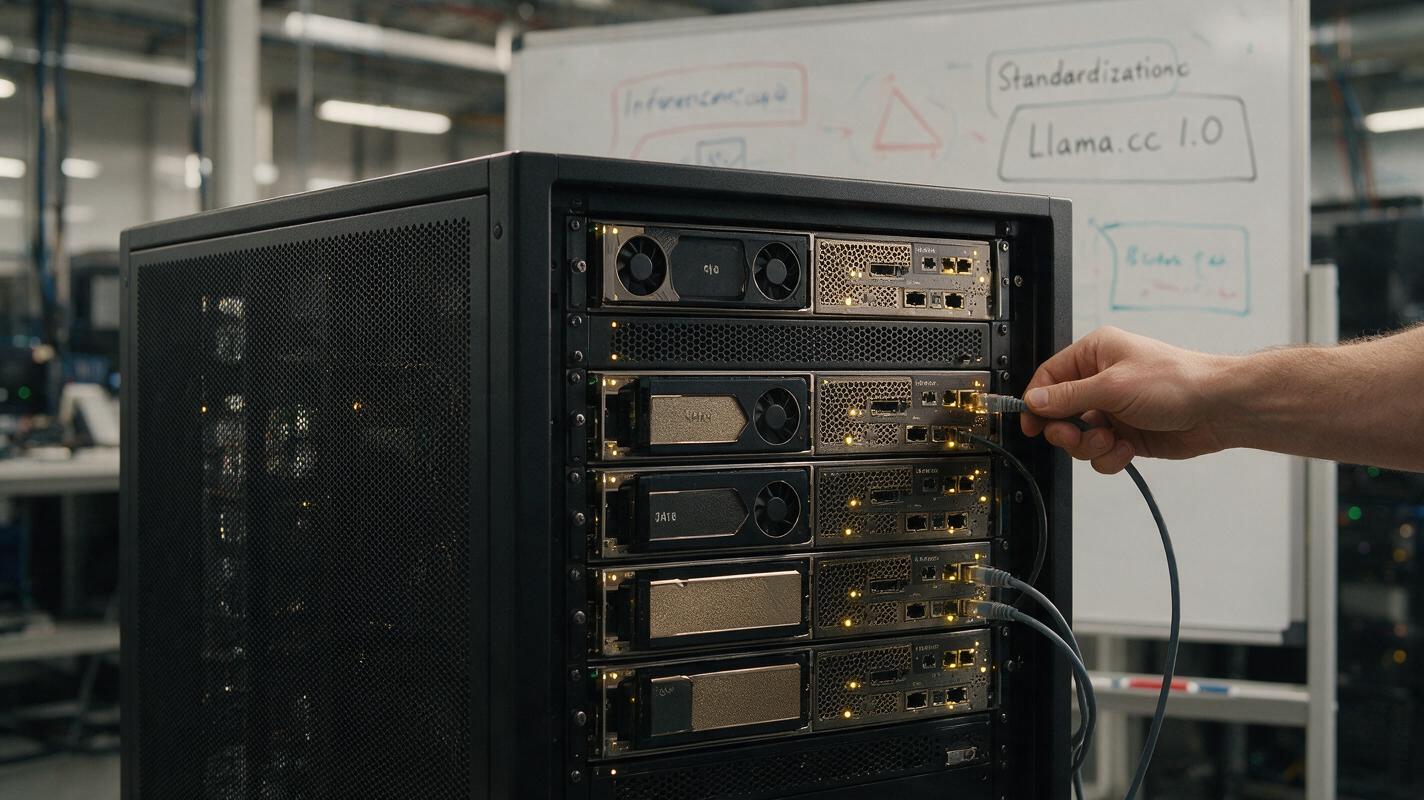
Table of contents
The New Wave of Open AI Inference Infrastructure Releases
A cluster of open inference-infrastructure announcements landed in mid-November 2026, according to Chinese industry digests published Nov 15, spanning standardization bodies, stable open-source releases, cloud runtime updates and open-source tooling.
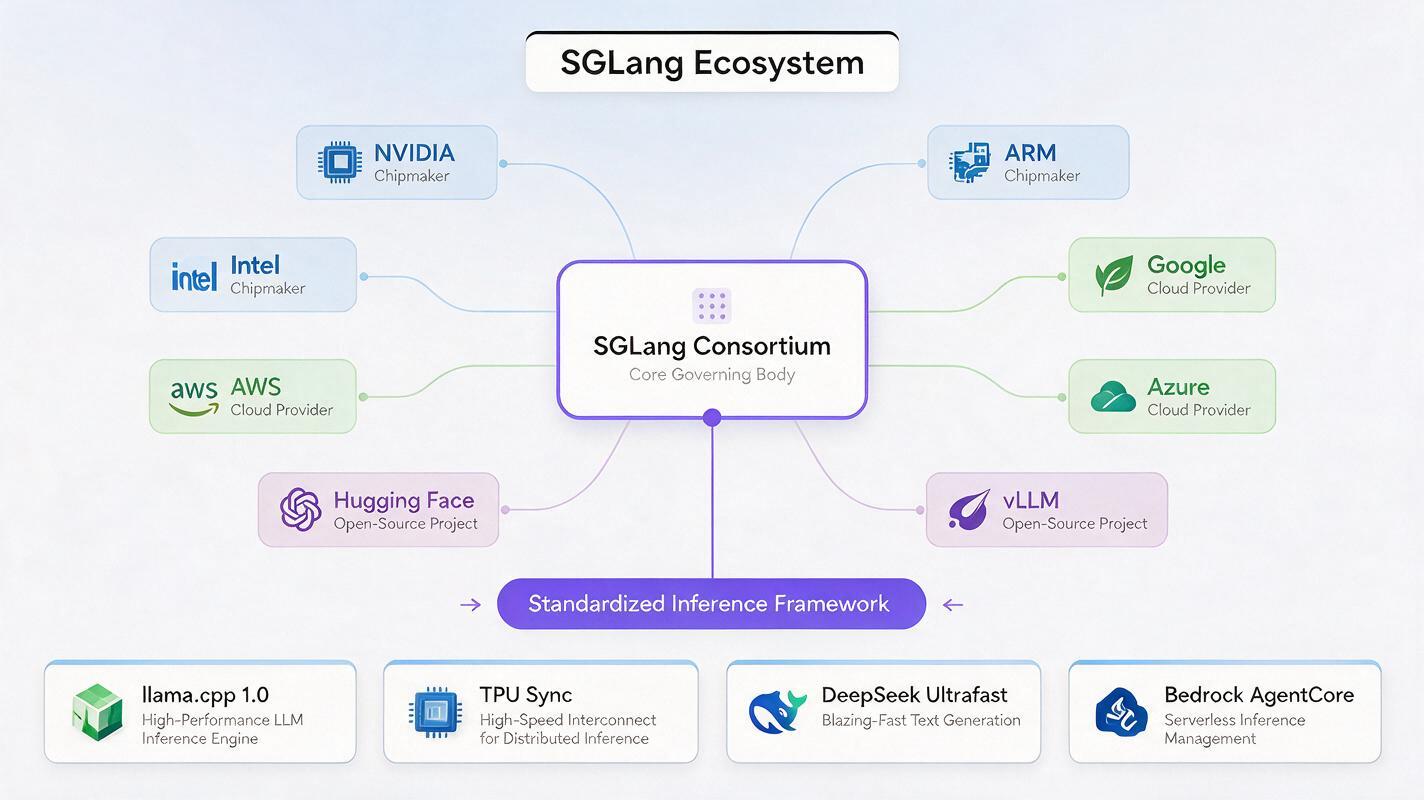
The highest-profile launch is the SGLang Consortium, founded with NVIDIA, AMD, Intel, Google, Meta, Cloudflare and Modal as founding members. The group’s stated goal is to standardize LLM inference frameworks, a move that could reduce fragmentation across the AI ecosystem and make it easier for developers to deploy models across different hardware and cloud platforms.
On the open-source side, llama.cpp shipped its first stable release, version 1.0.0, alongside ggml 1.0.0, with more than 200 changes included in the stable milestone. llama.cpp is one of the most widely used tools for running LLMs locally on consumer and edge hardware, so a stable release signals greater reliability for local inference deployments.
Baseten open-sourced a DeepSeek Ultrafast inference engine, Google open-sourced TPU Sync for coordinating TPU workloads, and Amazon Bedrock AgentCore received a new runtime update with hardware-isolated sessions and usage-based billing. First detailed in AWS’s Nov 12 Bedrock AgentCore update, the runtime also delivers session start times under two seconds and lower memory usage while sessions are paused, making it better suited for short, frequent agent tasks. Alibaba’s open-code-review tool also trended on GitHub as part of the same release wave.
A separate Nov 14 availability tracker reported no outages across major AI model providers including OpenAI, Anthropic, Google Vertex Gemini, Mistral and Microsoft Azure Foundry.
The release cluster comes with important caveats. Most of the announcements are sourced from second-hand digest aggregation, so release dates may be merged across several days. The 100% availability figure comes from a single tracker with undisclosed probe frequency, so it may not reflect all regional or edge-case downtime. Finally, the formation of the SGLang Consortium does not equal a shipped standard; the group will need to align on specifications and roll out implementation guidance before standardization delivers real-world benefits.
What Standardized Inference Means for AI Agent Development
Standardized inference frameworks are a significant development for ai agent builders and anyone relying on ai automation at scale. Today, deploying an ai agent across multiple cloud providers or hardware platforms often requires custom optimization work for each environment, raising costs and slowing down iteration.
If the SGLang Consortium delivers on its standardization goal, developers could write agent logic once and run it consistently across different accelerators and edge devices, with predictable performance and cost. This would lower the barrier to building robust ai assistant tools, and make it easier for small teams to deploy agentic workflows without deep infrastructure expertise.
The Amazon Bedrock AgentCore runtime update also addresses a key pain point for agent deployments: cold start latency. Sub-two-second session start times mean agents can spin up on demand for short tasks without wasting resources on idle instances, while hardware-isolated sessions add a layer of security for sensitive workloads like handling creator account data or processing confidential project files.

Stable Open Inference Boosts Creative AI Workflows
For content creators, improvements to inference infrastructure translate directly to faster, cheaper and more reliable creative tools. Faster inference speeds up every stage of an ai video workflow, from drafting scripts to generating assets with an ai image generator to rendering final clips with text to video models. Lower inference costs mean creators can run more iterations, test more ideas and produce higher-quality content without blowing their budget.
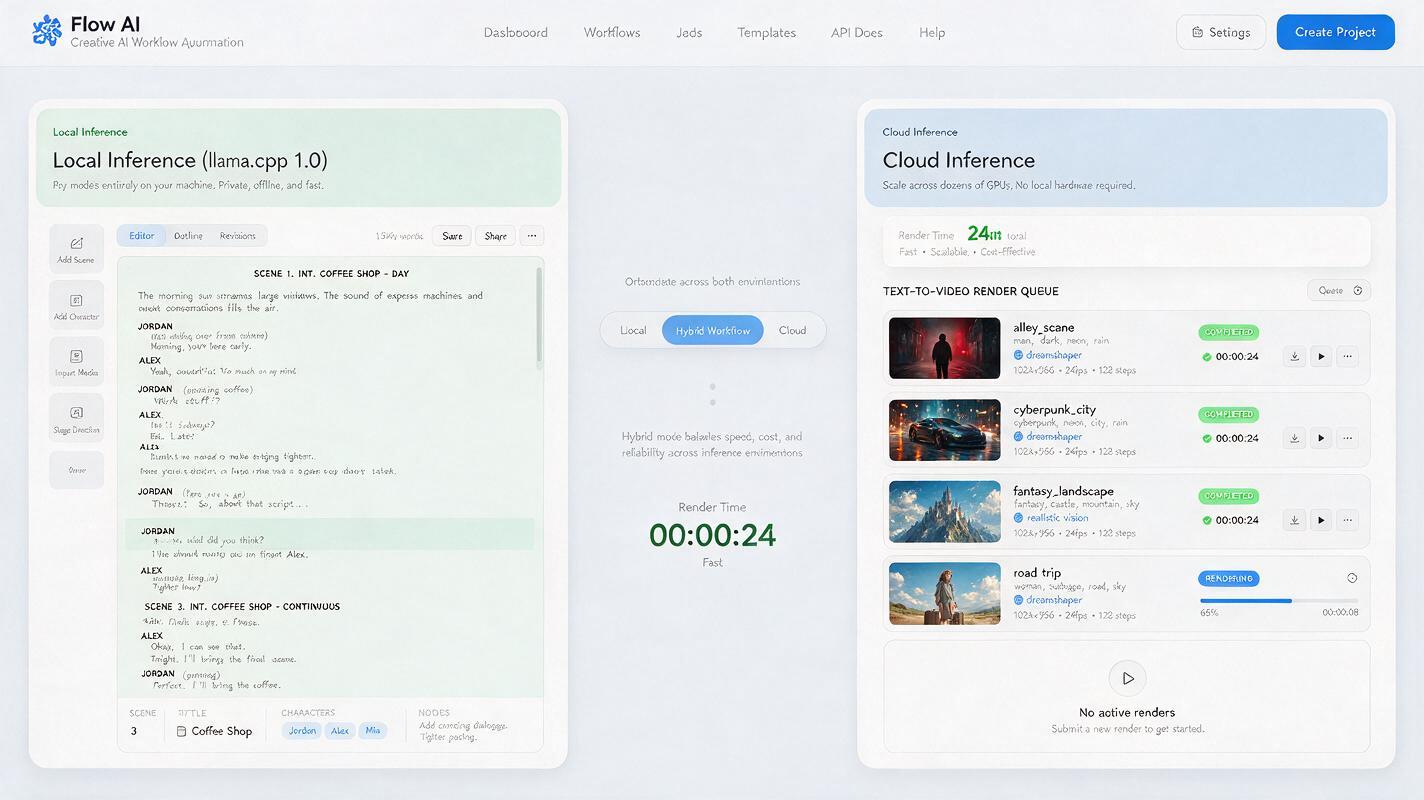
The stable 1.0.0 release of llama.cpp is particularly meaningful for creators who want to run parts of their workflow locally. Local inference eliminates API latency for quick tasks like generating shot lists or editing copy, and keeps sensitive project data on-device instead of sending it to cloud servers. Creators can pair local lightweight models for fast drafts with cloud-based frontier models for high-fidelity output, creating a hybrid workflow that balances speed, cost and quality.
Standardized inference frameworks will also make it easier for creative tool platforms to integrate new models as they launch, so creators get access to the latest capabilities faster without waiting for custom integration work.
Multi-Model Platforms Unlock Inference Gains for Creators
The Nov 14 availability tracker’s report of zero outages across major providers is a positive sign for overall AI service reliability, but it does not eliminate the risk of future downtime or performance fluctuations. As recent large-scale outages have shown, even the largest cloud providers can experience extended disruptions that derail workstreams.
For creators who rely on AI tools for their livelihood, the best way to take advantage of the latest inference gains while minimizing risk is to use a multi-model platform that gives them access to a range of top providers in one place. MagicBoat is one such platform, with a suite of creative AI tools that span image generation, video creation, scriptwriting and more, all accessible through a single account.
Instead of managing separate API keys, billing accounts and usage limits for every model provider, creators can switch between tools and models on demand, picking the fastest or most cost-effective option for each task. Whether you’re generating concept art, drafting a video script or rendering a short film, you can tap into the latest inference performance improvements without locking yourself into a single vendor.
If you’re ready to put these inference gains to work for your creative projects, you can try these models for free today.
Key Takeaways
- A broad cluster of open inference infrastructure releases landed in mid-November 2026, led by the SGLang Consortium founding and llama.cpp’s 1.0.0 stable release.
- Standardized inference frameworks could reduce deployment friction for ai agent and ai automation workloads across hardware and cloud platforms.
- Amazon Bedrock AgentCore’s new runtime delivers sub-two-second session starts and hardware-isolated sessions, improving performance and security for agentic tasks.
- A Nov 14 tracker reported zero outages across major AI model providers, though the data comes from a single source with undisclosed monitoring frequency.
- Multi-model creative platforms let creators take advantage of the latest inference gains while avoiding vendor lock-in and reducing downtime risk.
Keywords
ai inference infrastructure, sglang consortium, llama.cpp, ai agent, ai workflow, bedrock agentcore, ai automation, ai video workflow