Four AI Labs Endorse Shared robots.txt AI-Training Opt-Out
In mid-November 2026, Google, Microsoft, Anthropic and OpenAI jointly endorsed a shared robots.txt signal, __usage_ai-training, that lets website operators opt out of AI model training across all four providers with a single configuration line. Rollout timelines vary widely, from Anthropic’s already-deployed implementation to OpenAI’s vague 'coming months' commitment, with a prediction market pricing 56% odds OpenAI will honor the signal by March 31, 2027. The voluntary pledge covers only training use, not retrieval or live crawling, and is not yet an adopted IETF standard, with implications for creators managing ai workflow and content ownership.
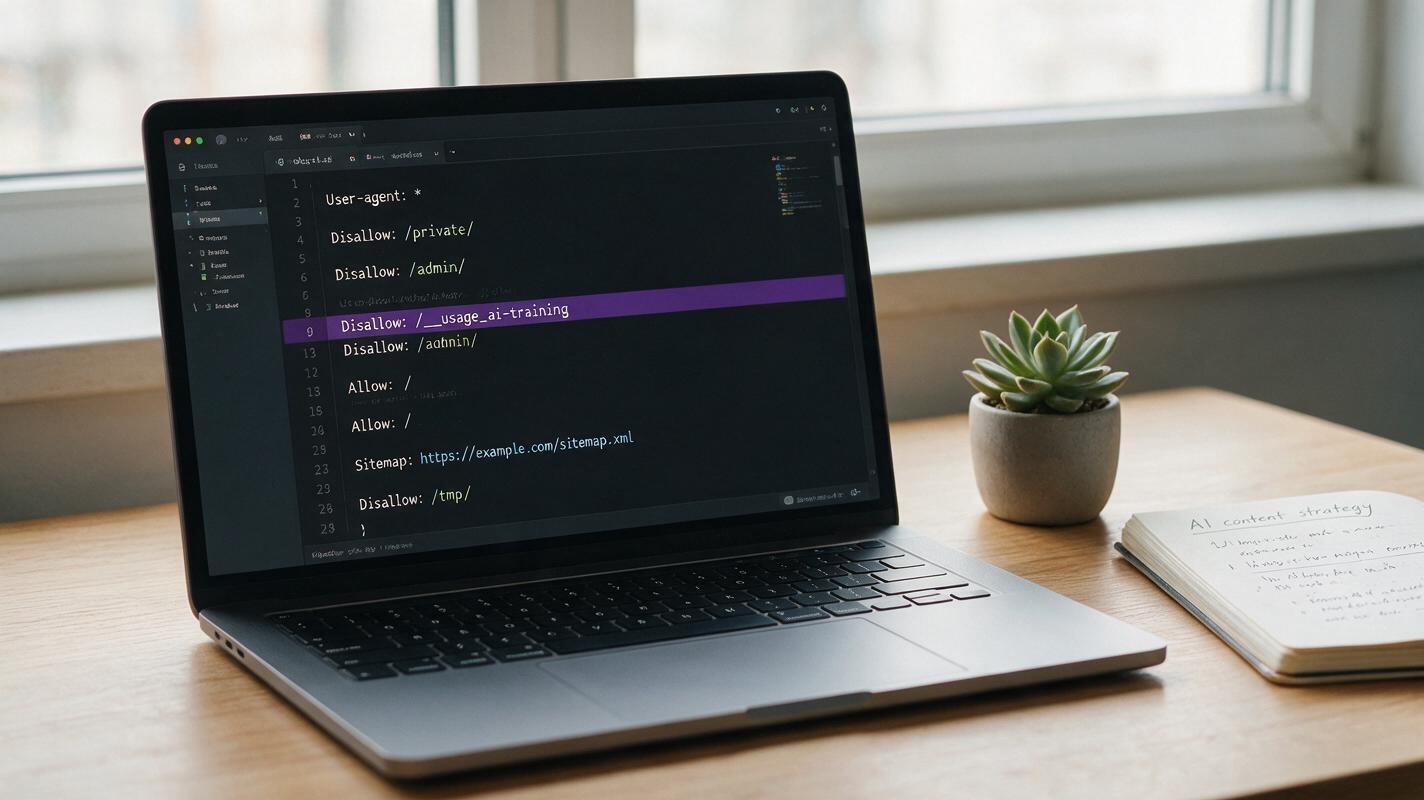
Table of contents
What the Shared AI-Training Opt-Out Signal Is
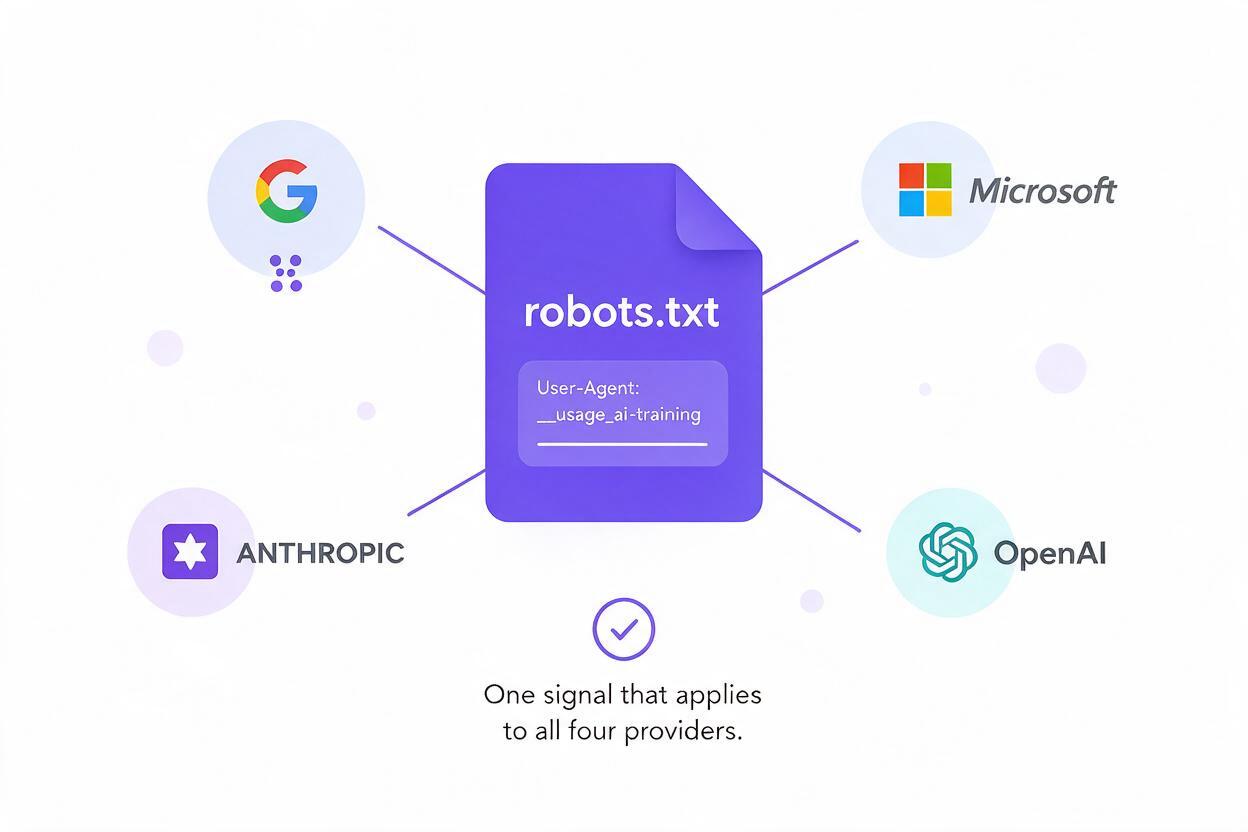
In mid-November 2026, four leading AI labs — Google, Microsoft, Anthropic and OpenAI — jointly endorsed a single, shared robots.txt signal for AI training opt-outs, marking a notable step toward standardized content control across the industry. The signal, named __usage_ai-training, is defined in an IETF individual draft dated October 30, 2026, and is not yet an official adopted standard. Website operators can add a single line to their robots.txt file to decline AI training use across all signatory providers, instead of maintaining separate rules for each provider’s crawler.
The rollout timelines for the signal vary significantly across the four labs, according to a side-by-side comparison released alongside the endorsement. Anthropic has already deployed support for the signal, while Microsoft has set a hard date of February 1, 2027 for its Bing crawler to honor it. Google targets early 2027 for implementation, while OpenAI has only committed to rolling it out "in the coming months." As of mid-November, OpenAI’s GPTBot documentation does not yet list the __usage_ai-training token, and a prediction market has priced roughly 56% odds that OpenAI will honor the signal by March 31, 2027. OpenAI has stressed that existing GPTBot controls remain fully in force for users who have already configured custom opt-outs.
The pledge comes with important caveats. It is a voluntary agreement with no enforcement mechanism or penalties for non-compliance. The signal covers only AI training use, not content retrieval for live AI agent queries, real-time browsing, or search engine crawling. The draft is still an individual IETF submission, not a formal standard from bodies like the IETF or W3C.
How the Signal Fits Into the Broader AI Agent Ecosystem
The arrival of a shared training opt-out signal comes as ai agent and ai automation tools grow more widespread, raising new questions about how content flows between public websites and AI systems. For years, website operators have relied on individual crawler directives to block search engines and specific AI bots, but the fragmented landscape has made it hard for site owners to keep up with new model providers and agent frameworks.
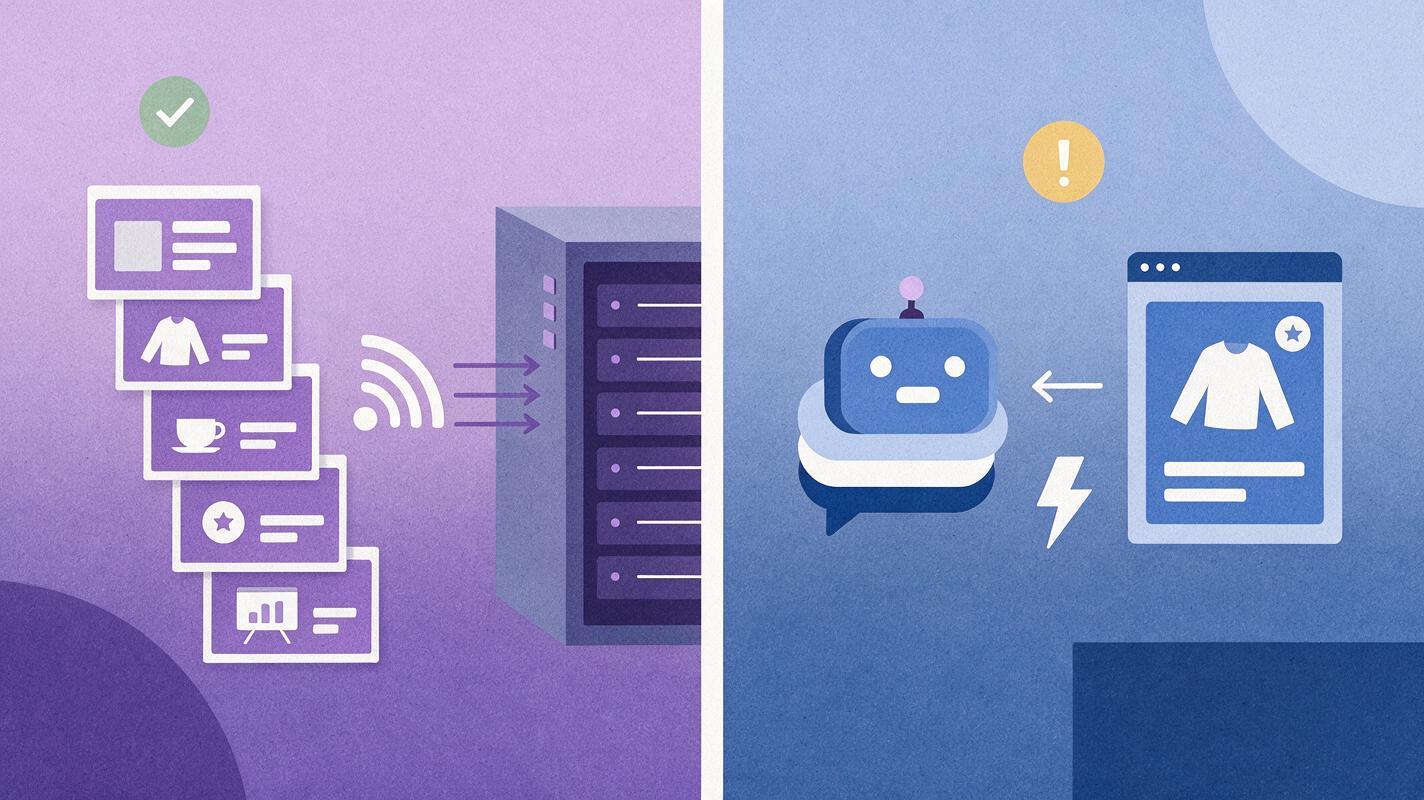
It is important to distinguish training opt-outs from live access controls. The __usage_ai-training signal only controls whether content is used to train future AI models, not whether an ai assistant or ai agent can access the content in real time to answer user queries, complete tasks, or pull live data. For creators and site owners concerned about ai agent access to their content, additional controls beyond robots.txt are still needed, as the current standard does not address retrieval use cases.
The signatories include the developers behind many of the most widely used enterprise and consumer AI tools, from Claude (Anthropic) to GPT models (OpenAI) to Gemini (Google) to Copilot (Microsoft). Standardizing even one piece of the content control puzzle can reduce administrative overhead for site owners and set a precedent for future collaboration on ai workflow and content governance.
What This Means for Content Creators Using AI Tools
For independent creators and content teams building ai workflow pipelines, the shared opt-out signal brings both clarity and context to the evolving AI content landscape. Whether you rely on an ai video generator for short-form social content, an ai image generator for concept art and thumbnails, or text-based AI tools for scripting and research, standardizing training controls affects the entire creative AI ecosystem.
If you host your own content on a personal website, portfolio, or blog, the new signal means you can opt out of training across all four major labs with a single configuration line, rather than looking up and adding separate rules for GPTBot, Google-Extended, ClaudeBot, and BingBot. This simplifies content management for creators who want more control over how their original work is used to train commercial AI models.
For creators who use AI tools rather than host content, the announcement is a sign that major labs are responding to concerns about training data transparency and content ownership. While the signal is voluntary and limited to training use, it represents a move toward more consistent, creator-friendly controls across the industry — a trend that can reduce uncertainty around copyright and fair use for AI-generated content.
It is also a reminder of how fragmented the AI tool landscape remains. With different providers rolling out features at different paces and adhering to different standards, working with a single multi-model platform can help creators stay on top of changes without having to manage dozens of separate accounts and policy updates.
Key Takeaways
- Google, Microsoft, Anthropic and OpenAI have endorsed a shared
__usage_ai-trainingrobots.txt signal for AI training opt-outs. - Rollout timelines vary widely: Anthropic is already live, Microsoft commits to February 2027, Google targets early 2027, and OpenAI has only a vague "coming months" timeline.
- The signal is voluntary, has no enforcement mechanism, and covers only training use — not live crawling, retrieval, or ai agent access.
- For creators who run their own websites, the single standard line simplifies opt-out configuration across four major model providers.
- Multi-model creative platforms let you access tools from multiple leading providers while staying aligned with evolving industry standards.
If you want to explore a multi-model creative platform that brings together AI video, image, and script tools in one unified interface, try these models for free today.
Keywords
ai training opt-out, robots.txt, __usage_ai-training, openai safety, ai agent, ai workflow, claude, anthropic