SINGULUS to Supply SpaceX HJT Solar Lines for Starmind AI Satellites
German equipment maker SINGULUS announced on November 10, 2026 that it will supply SpaceX with turnkey heterojunction (HJT) solar cell production lines for the company’s Starmind AI satellite program, with the first line scheduled for delivery in the first half of 2027. The two parties plan additional lines supporting more than 100GW of solar cell manufacturing capacity, laying the physical groundwork for an orbital AI compute constellation that could bypass terrestrial grid and land use constraints. The announcement aligns with SpaceX’s upcoming Starship flight 15, which will test the reusable launch technology needed to deploy a large satellite constellation at low cost.
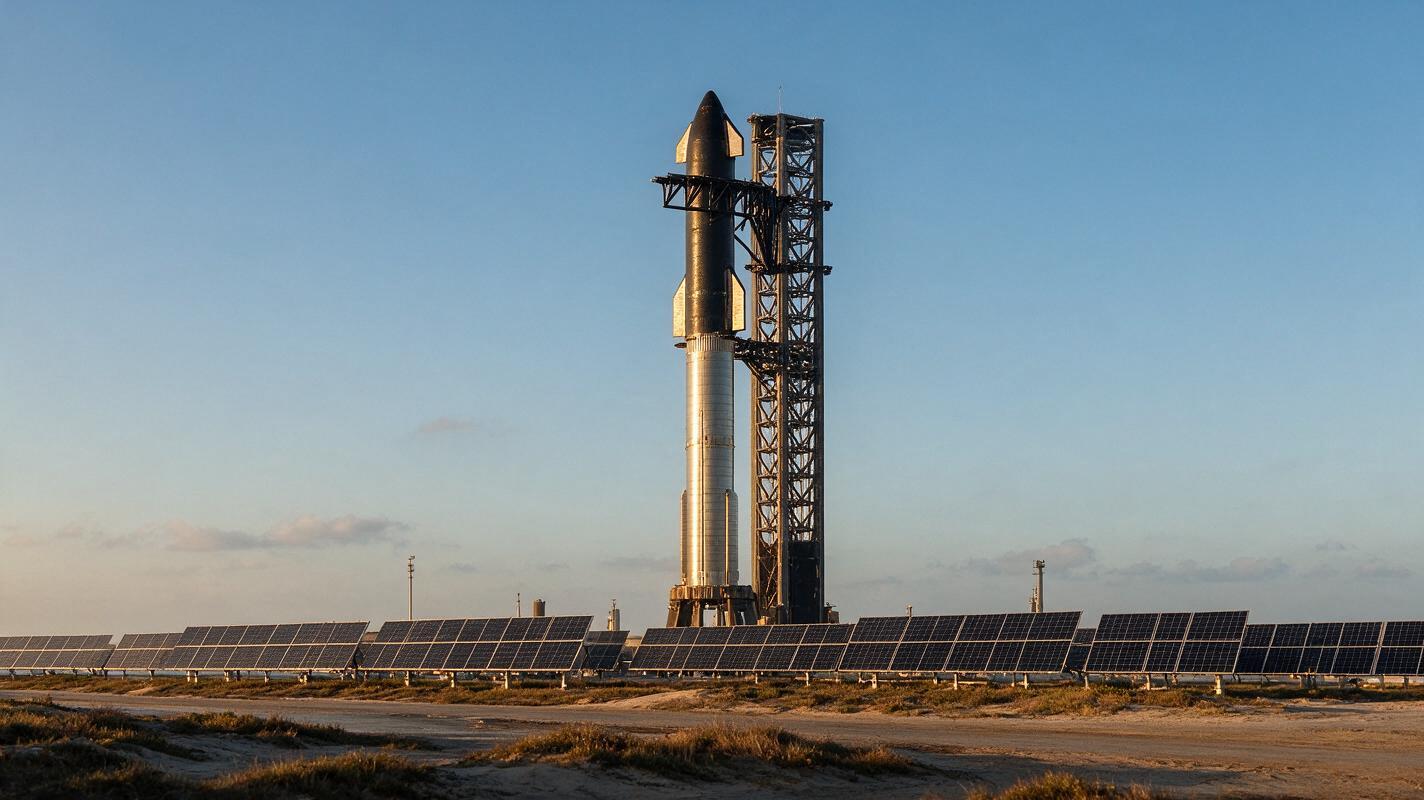
Table of contents
The SINGULUS-SpaceX HJT Solar Supply Agreement
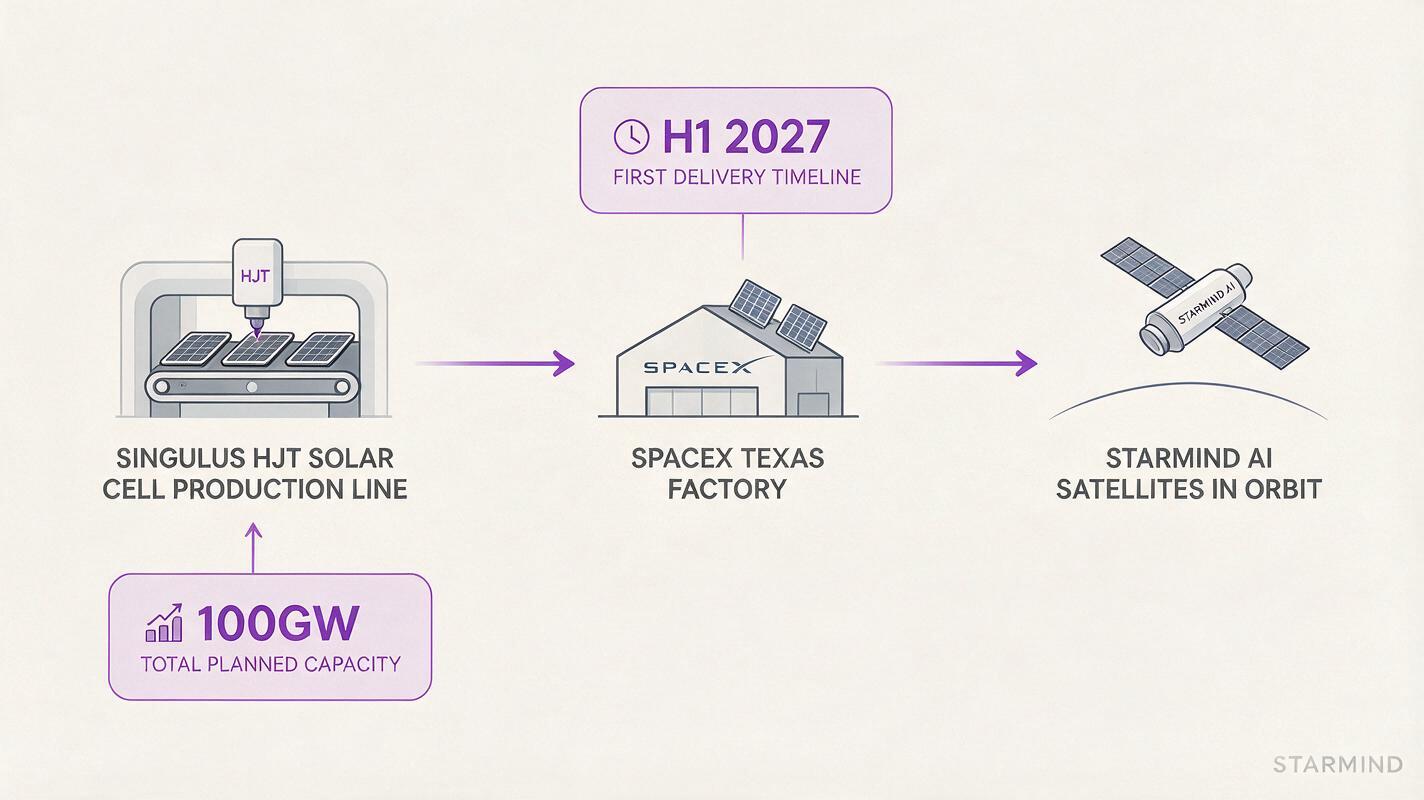
German equipment maker SINGULUS announced on November 10, 2026 that it will supply SpaceX with turnkey heterojunction (HJT) solar cell production lines, marking a major milestone for SpaceX’s orbital AI compute ambitions. The first production line is scheduled for delivery in the first half of 2027, and will manufacture solar cells purpose-built for SpaceX’s Starmind AI satellites, which are being assembled at the company’s Texas factory. Starlink SVP Mike Nicolls confirmed the cells are designed specifically to power the on-board AI compute capabilities of the Starmind constellation.
The two parties plan to deploy additional production lines over time, with a total target of more than 100GW of solar cell manufacturing capacity. Neither company disclosed the output capacity of the initial line, the total financial value of the contract, or the specific timeline for scaling to the 100GW target. The announcement is one of the first concrete public signs of SpaceX’s long-rumored plans to build a large-scale orbital AI compute network.
Starship Flight 15 and the Reusable Launch Foundation
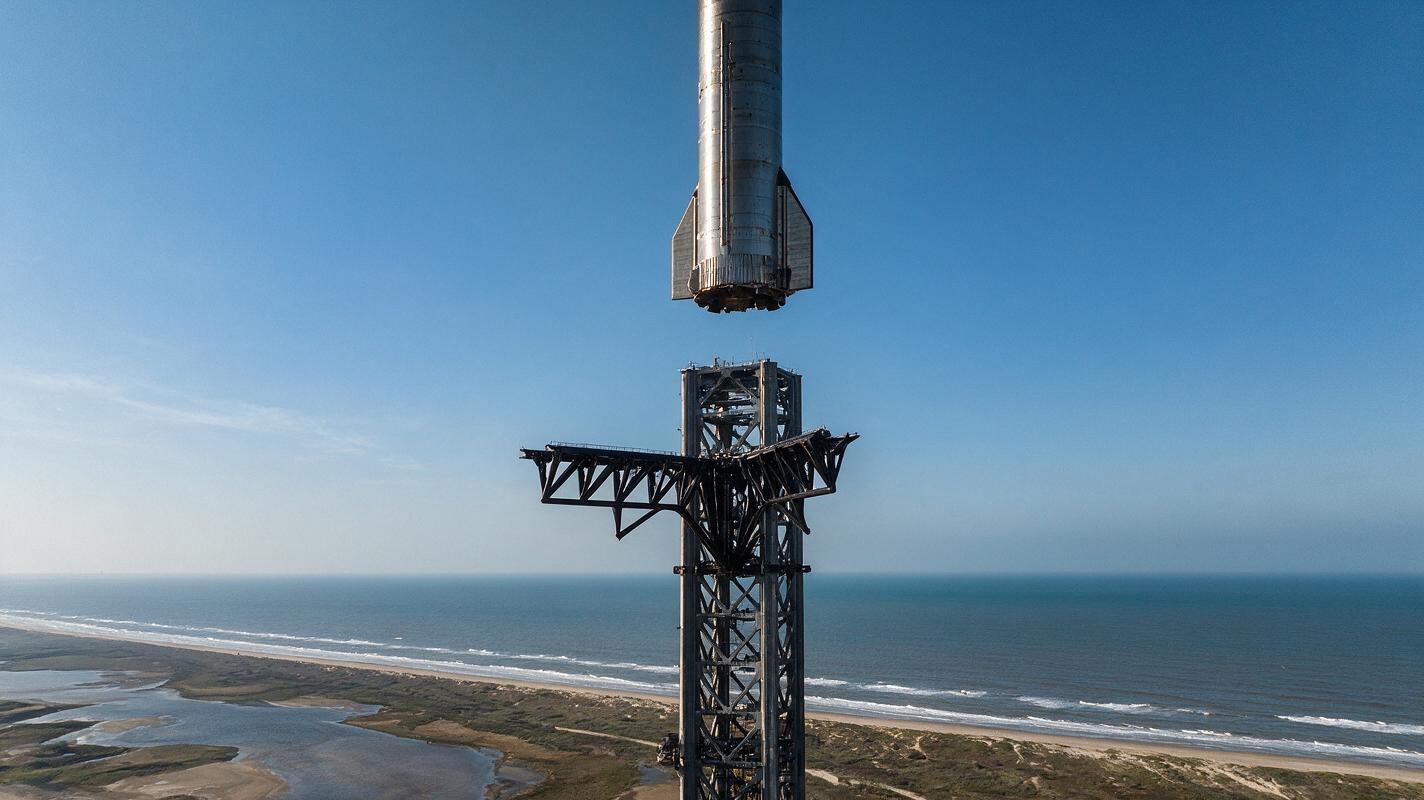
Alongside the solar supply news, SpaceX is targeting no earlier than November 13, 2026 US time for Starship flight 15, a landmark mission that will attempt the first ever “dual catch” of both the Super Heavy booster and the Starship upper stage. The mission aims to return both vehicles to the launch site for capture by the launch tower’s “chopstick” arms, a capability that would drastically reduce per-launch costs and turnaround time for heavy-lift orbital missions.
Taken together, the 100GW-scale solar cell production pipeline and the imminent maturation of reusable heavy-lift launch technology form the physical substrate for an orbital AI compute constellation that could bypass many of the structural constraints facing terrestrial data centers. Terrestrial AI infrastructure currently faces growing headwinds from grid interconnection queues, local land use disputes, water access conflicts, and regulatory pushback — issues that orbital compute could avoid entirely by operating in space with on-board solar power generation.
What Orbital AI Compute Means for the Global AI Ecosystem
An orbital AI compute constellation would add a new, geographically independent layer of capacity to the global AI supply chain, which has been strained by surging demand for frontier model training and high-volume inference. Terrestrial data center capacity has expanded rapidly in recent years, but faces growing bottlenecks from power availability, permitting delays, and community opposition in many regions.
For AI model providers and platform operators, orbital compute could offer greater resilience against terrestrial outages, regional regulatory restrictions, and supply chain disruptions. It could also expand access to AI compute in regions with limited terrestrial infrastructure, opening up new markets for AI tools and services. While the Starmind program is still in its early stages, the SINGULUS supply deal signals that SpaceX is moving aggressively to build out the physical infrastructure needed for large-scale orbital AI compute.
Implications for AI Content Creators
For AI content creators, the expansion of global AI compute capacity — whether terrestrial or orbital — has direct, tangible impacts on workflow reliability, cost stability, and access to advanced creative tools. Creators rely on ai video generator tools, ai story generator platforms, and a growing suite of AI-powered creative tools that depend on consistent, affordable access to GPU and TPU compute resources.
When compute capacity is constrained, creators may face slower generation times, higher usage costs, or limited access to high-end models during peak demand periods. A more diverse global compute supply chain, including potential orbital capacity, reduces the risk of single points of failure and helps keep tool access stable and affordable over time. This is especially critical for creators running complex ai automation pipelines, building long-form content, or relying on multiple AI models across different stages of their workflow.
Multi-model AI platforms like MagicBoat that aggregate tools across multiple infrastructure providers are best positioned to take advantage of a more diverse compute ecosystem. By routing workloads across a mix of infrastructure sources, these platforms can maintain consistent performance and availability even when individual providers face temporary constraints. Creators can try these models for free to experience the benefits of a flexible, multi-model AI workflow platform firsthand.
Key Takeaways
- SINGULUS will supply SpaceX with turnkey HJT solar cell production lines for the Starmind AI satellite program, with the first line scheduled for delivery in the first half of 2027 and total planned capacity exceeding 100GW.
- SpaceX’s upcoming Starship flight 15 will attempt the first dual catch of both the Super Heavy booster and Starship upper stage, a critical capability for low-cost, large-scale satellite deployment.
- Combined, the solar production pipeline and reusable heavy-lift launch technology lay the groundwork for an orbital AI compute constellation that could bypass terrestrial grid, land, and water constraints.
- A more diverse global compute supply chain benefits AI content creators by improving workflow reliability, reducing cost volatility, and expanding access to advanced creative tools.
Keywords
ai agent, ai workflow, spacex starmind, singulus hjt solar, orbital ai compute, ai infrastructure, ai automation