FTC Issues Civil Subpoenas to OpenAI and Anthropic Over Consumer Harm
The FTC issued civil subpoenas to OpenAI and Anthropic over potential consumer harm, signaling a shift toward formal evidence gathering in US AI regulation.
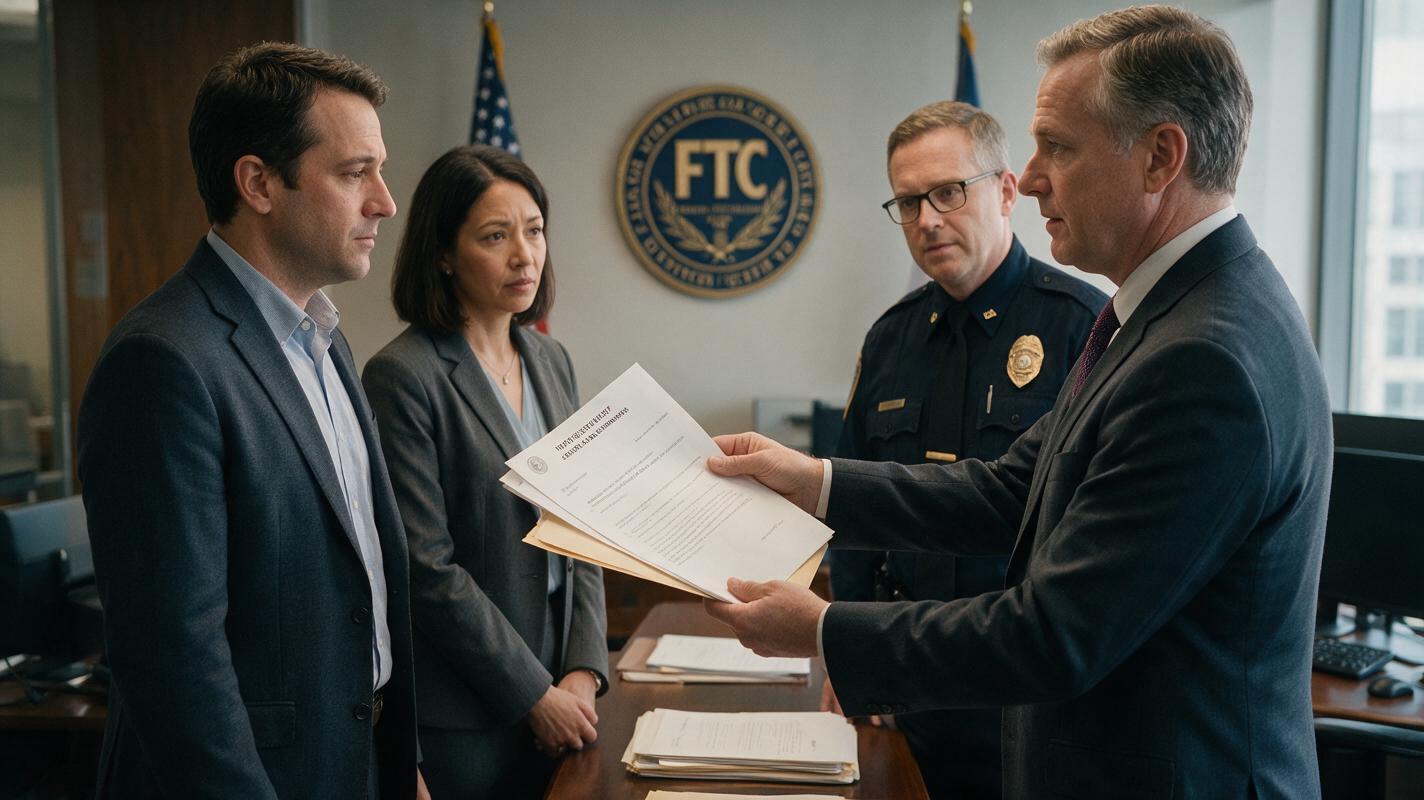
Table of contents
Formal demands for evidence mark a consequential change in how US authorities are examining potential consumer risks from leading AI companies.
AI regulation analysis · October 17
The FTC Moves From AI Warnings to Formal Evidence Gathering
On October 17, the US Federal Trade Commission issued civil subpoenas to both OpenAI and Anthropic over potential consumer harm. The action placed two leading AI laboratories under formal regulatory scrutiny and moved the US debate beyond broad calls for industry self-regulation.
The key development is not a new model release or benchmark result. It is the regulator’s use of compulsory evidence gathering. Civil subpoenas allow the FTC to demand relevant information as it examines whether conduct affecting consumers warrants further action. The document reports the subpoenas as an investigation into potential harm, not as a final determination that either company violated the law.
That distinction matters. A subpoena signals that questions about AI products and their effects are being investigated through an official process, while leaving the eventual findings unresolved. OpenAI and Anthropic are both named in the same regulatory event, making the inquiry broader than a dispute involving one model, one product, or one isolated incident.
The central facts: the FTC issued civil subpoenas to OpenAI and Anthropic on October 17, the inquiry concerns potential consumer harm, and the action represents a shift toward formal evidence gathering in US AI oversight.
For AI video and image creators, the immediate issue is operational rather than speculative: regulatory scrutiny can become another factor in model availability, platform policies, and workflow reliability. A production process that can move between models is less exposed to changes involving any single provider.
What Civil Subpoenas Change in the AI Regulation Debate
AI governance discussions often center on voluntary commitments, company safety policies, and public statements. The FTC’s subpoenas introduce a different mechanism: a government agency formally requesting evidence as part of its examination of possible consumer harm.
This does not establish the scope or outcome of the inquiry. It does, however, show that regulatory attention is becoming more procedural. For AI companies, claims about safety and consumer impact may increasingly be considered alongside records and evidence obtained by authorities.
| Aspect | What the October 17 action establishes | What remains unresolved |
|---|---|---|
| Organizations involved | OpenAI and Anthropic received civil subpoenas. | The document does not identify additional subpoena recipients for this event. |
| Regulatory focus | The FTC is examining potential consumer harm. | No final finding of wrongdoing is reported. |
| Policy significance | US oversight is moving from self-regulation discussions toward formal evidence gathering. | The eventual regulatory outcome and product-level effects are not specified. |
A formal inquiry should not be confused with a verdict. Its significance lies in the FTC’s decision to gather evidence directly from major AI laboratories.
Why Model Availability Is Becoming a Production Variable
Creative teams usually compare AI systems by output quality, speed, cost, and control. Regulatory exposure adds another consideration: whether a production workflow remains usable when providers change access rules, product policies, or model availability.
The October 17 subpoenas do not confirm that OpenAI or Anthropic services will change. Treating service disruption as a known outcome would go beyond the reported facts. The event nevertheless highlights why creators should distinguish between a model’s creative performance and the durability of the workflow built around it.
Reliability Extends Beyond Output Quality
An AI video model may produce strong results and still sit within a changing commercial and regulatory environment. The same applies to language models used for scripts, shot descriptions, prompt refinement, continuity notes, or campaign variants. A useful model-selection framework therefore considers:
- Creative fit: whether the output suits the intended visual or narrative task.
- Access stability: whether the tool can remain part of an ongoing production pipeline.
- Workflow portability: whether prompts and source assets can be reused elsewhere.
- Provider concentration: whether the entire project depends on one company or model family.
- Review discipline: whether people verify outputs before publication or client delivery.
A Multi-Model Approach Reduces Creative Lock-In
The practical response is not to abandon leading AI laboratories because they face scrutiny. It is to avoid making one provider the only route from an idea to a finished asset.
For example, a team may draft a concept, produce visual references with an ai image generator, and then move selected frames into a text to video workflow. Keeping those creative stages connected through a multi-model platform makes it easier to test alternatives without rebuilding the entire project structure.
This approach is especially useful for recurring campaigns, serialized short videos, and client work with fixed delivery dates. If a preferred model becomes unavailable or unsuitable, the project can shift toward another option while retaining its script, visual references, and creative direction.
Portable Assets Matter More Than Provider Loyalty
Creators can protect continuity by keeping the durable parts of a project independent of any model: approved scripts, character descriptions, shot lists, reference images, aspect-ratio requirements, and review notes. Models can then be treated as interchangeable production resources rather than permanent foundations.
That mindset also supports more meaningful testing. Instead of assuming that a famous model is automatically the right choice, teams can compare outputs against the needs of a specific scene, visual identity, or distribution format.
Key Takeaways From the FTC Action
- The FTC issued civil subpoenas to OpenAI and Anthropic on October 17.
- The inquiry concerns potential consumer harm and represents formal evidence gathering.
- The subpoenas are not reported as final findings against either company.
- Regulatory conditions are becoming relevant to model availability and workflow planning.
- Creative teams can reduce dependence on one provider by preserving portable assets and using multi-model workflows.
Keep AI Production Flexible
Build a creative workflow that can adapt as models, providers, and policies change. Use one account to explore multiple production options and try these models for free.
Keywords: FTC AI probe, OpenAI subpoena, Anthropic subpoena, AI consumer harm, AI regulation, model availability, AI video model