US AI Stocks Sell Off Sharply, Nasdaq Enters Correction Territory
On November 16, 2026, US AI stocks sold off sharply, pushing the Nasdaq Composite down 2.49% to 24,509.76 and into correction territory more than 10% below its October 6 closing high. The Philadelphia Semiconductor Index slid 5.28% with all 30 components down, driven by a new BIS chip rule, lingering fallout from Jensen Huang's resignation, and pre-earnings de-risking ahead of Nvidia's November 17 report. For AI content creators, the selloff highlights the value of flexible, cost-efficient multi-model workflows that reduce reliance on single-vendor market volatility.

Table of contents
A sharp selloff across US AI and semiconductor stocks on November 16, 2026 pushed the Nasdaq Composite into official correction territory, as regulatory changes, leadership uncertainty and pre-earnings caution combined to drive widespread losses.
The November 16 Trading Session: Full Market Breakdown
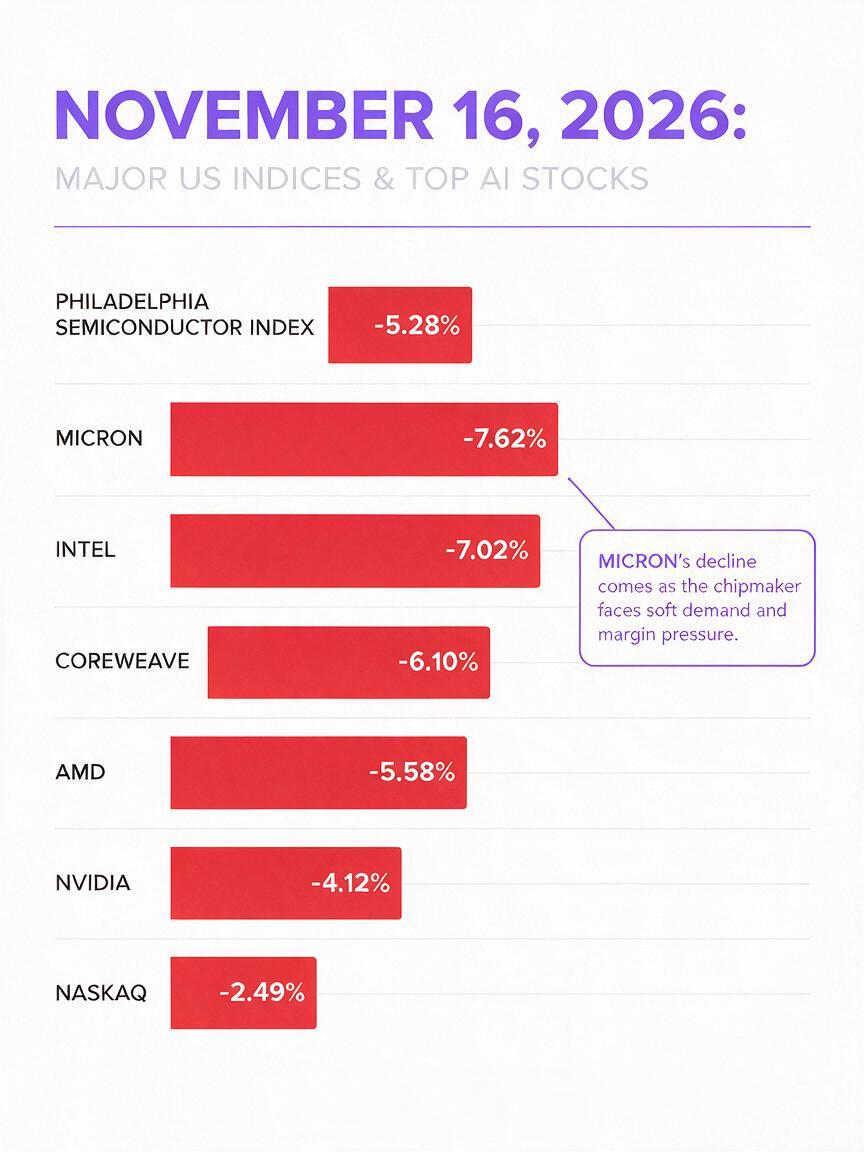
The selloff on November 16 hit AI and semiconductor names particularly hard, dragging major US indices sharply lower by the close. The tech-heavy Nasdaq Composite fell 2.49% to 24,509.76, putting it more than 10% below its October 6 closing high and meeting the standard definition of a market correction. The S&P 500 dropped 1.92%, while the Dow Jones Industrial Average fell 1.41%.
Semiconductor stocks bore the brunt of the selling: the Philadelphia Semiconductor Index slid 5.28%, with all 30 of its components closing in negative territory. Individual AI-related stocks posted steep declines:
- Nvidia fell 4.12% to $156.14, adding to losses triggered by co-founder Jensen Huang's recent resignation
- Micron Technology dropped 7.62%
- Intel fell 7.02%
- AMD slid 5.58%
- AI cloud provider CoreWeave lost 6.1%
Three Key Triggers Behind the Selloff
Analysts and reports point to three primary catalysts driving the November 16 downturn, all tied to the AI industry's regulatory, governance and earnings outlook:
New BIS Cloud Compute Chip Rule
The US Commerce Department's Bureau of Industry and Security issued an interim final rule on November 15 closing what officials called the "cloud compute backdoor." The rule requires licenses to export advanced AI chips to data centers in five countries and to provide restricted compute via remote access, aimed at stopping firms from routing Chinese access to advanced chips through third-country data centers. The rule hit Asian markets first before spilling over to US trading.
Lingering Fallout From Jensen Huang's Resignation
Investors continued to digest the unexpected November 12 resignation of Nvidia co-founder and CEO Jensen Huang, who stepped down immediately after 33 years at the helm amid a board investigation. The leadership transition at the world's largest AI chip maker has created uncertainty about the company's strategy and governance, contributing to ongoing volatility in Nvidia shares and the broader AI sector.
Pre-Earnings De-Risking Ahead of Nvidia's Q3 Report
Traders also reduced exposure to AI stocks ahead of Nvidia's fiscal Q3 earnings report, scheduled for after the close on November 17. The report was widely expected to set the tone for the AI infrastructure sector's near-term outlook, and many investors opted to lock in gains or reduce positions to avoid potential downside from a disappointing result or guidance.
What This Means for AI Content Creators
While stock market volatility may feel distant from day-to-day content creation work, it has real, tangible implications for creators who rely on AI tools for image, video and text production. The AI industry's capital expenditure cycles, chip supply and pricing are all tied to market conditions, and shifts in these areas can flow through to the cost and availability of the tools creators use every day.
For example, rising chip costs or supply constraints can push up the price of using an ai image generator or an ai video generator, making it harder for independent creators and small teams to manage ai video cost and image production budgets. Vendor instability can also disrupt workflows if a favorite tool suddenly changes pricing, limits access or shuts down entirely.
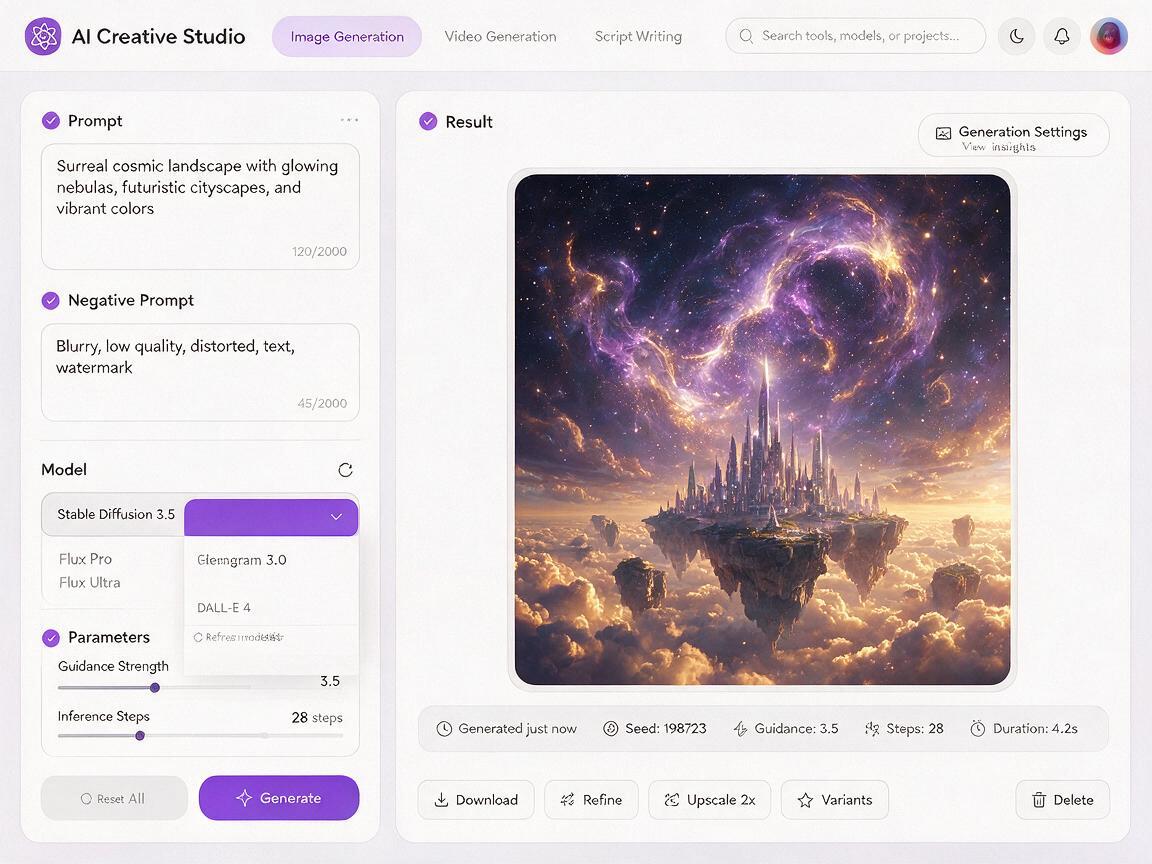
This is where a multi-model AI creative platform like MagicBoat adds value: by giving creators access to a wide range of AI models and tools under one account, it reduces reliance on any single vendor or model provider. If one model's pricing changes or availability fluctuates, creators can seamlessly switch to another option without overhauling their entire workflow or signing up for multiple new services.
Key Takeaways
- The Nasdaq entered correction territory on November 16, 2026, falling 2.49% to 24,509.76 amid a broad AI stock selloff
- The Philadelphia Semiconductor Index dropped 5.28% with all 30 components down, led by steep losses in Micron, Intel and CoreWeave
- Three main triggers drove the selloff: a new BIS cloud compute chip rule, lingering uncertainty from Jensen Huang's resignation, and pre-earnings de-risking ahead of Nvidia's Q3 report
- AI content creators can mitigate the impact of industry volatility by using multi-model platforms that offer flexibility across tools and providers

Get Started With Multi-Model AI Creation
Whether you're working on visual content, video projects or written materials, having access to a diverse set of AI tools helps you stay flexible and cost-effective even when market conditions shift. try these models for free to build a resilient, adaptable AI creation workflow.
Keywords
ai industry, ai stocks, nasdaq correction, ai capital expenditure, ai funding, ai video cost, ai image generator