47 Large US Data Center Projects Delayed or Blocked in 2026, FT Reports
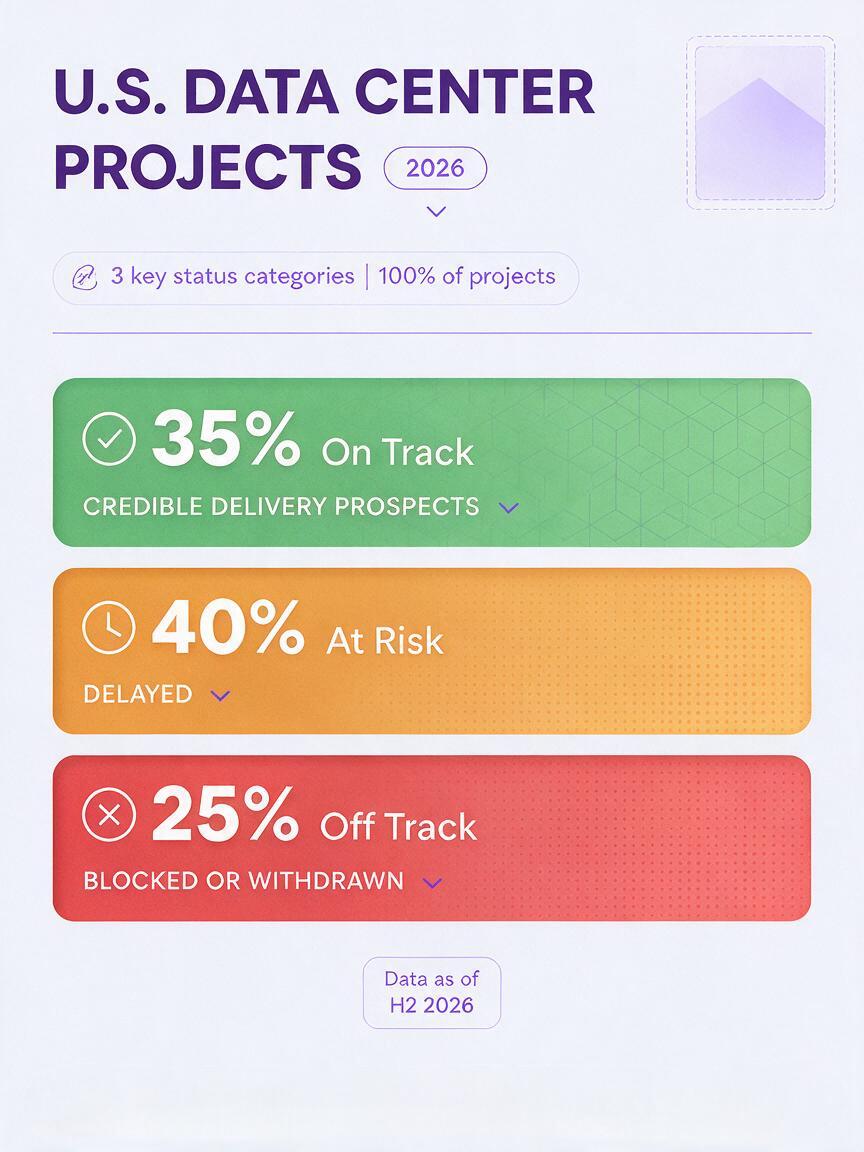
At least 47 large U.S. data center projects have been delayed, withdrawn, or blocked in 2026, according to the Financial Times, with Bernstein analysis estimating only 35% of planned projects have credible delivery prospects. The delays stem from financing, permitting, power access, and community opposition barriers, and could lead to higher AI service costs for content creators as infrastructure supply fails to keep up with surging demand.
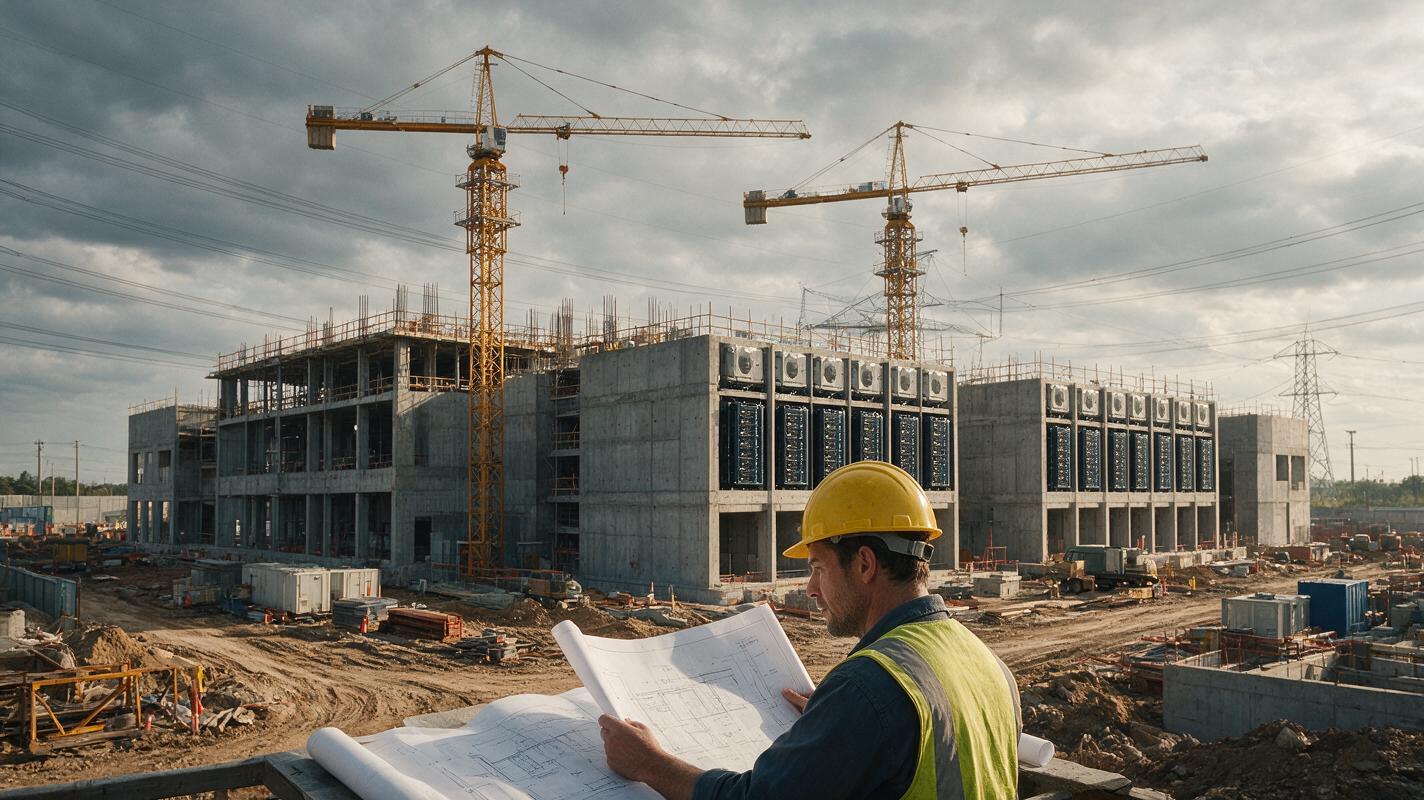
Table of contents
A new Financial Times report reveals widespread delays and cancellations across U.S. data center construction, threatening to slow the AI infrastructure buildout just as capital spending hits record levels.
What the 2026 US Data Center Delay Report Found
At least 47 large-scale U.S. data center projects have been delayed, withdrawn, or blocked entirely in 2026, according to reporting from the Financial Times. The figure covers a range of setbacks across the country, from projects facing multi-month permitting holdups to those scrapped entirely due to insurmountable barriers.
Independent analysis from Bernstein estimates the situation is even broader: only roughly 35% of all planned U.S. data center projects have credible delivery prospects, meaning nearly two-thirds of proposed capacity may never come online on schedule, or at all.
The report identifies four core barriers driving the wave of delays: financing challenges, permitting bottlenecks, limited power grid capacity, and growing community opposition to new data center developments.
Key Barriers Slowing Data Center Construction
Financing stands as one of the most immediate hurdles for new data center projects. Higher interest rates and growing uncertainty around long-term AI demand forecasts have made lenders more cautious about funding large-scale developments, which often require billions in upfront capital. Even with record levels of ai funding flowing to AI startups and cloud providers, the capital-intensive nature of data center construction means many well-conceived projects struggle to secure the debt financing needed to break ground.
Permitting bottlenecks have also emerged as a major source of delays. Local and state permitting processes frequently involve lengthy environmental reviews, zoning approvals, and land use negotiations that can stretch timelines by months or even years. Many jurisdictions have not updated their permitting frameworks to account for the rapid surge in data center proposals over the past two years, leading to administrative backlogs that delay even fully funded projects.
Power grid capacity is perhaps the most structural constraint on new data center construction. Modern AI data centers require massive amounts of electricity to run high-density GPU servers and cooling systems, and many local power grids do not have the spare capacity to support new large-scale facilities. Utility companies often face multi-year lead times to upgrade transmission lines, build new substations, and secure additional power generation, making access to reliable, low-cost power one of the most critical factors in a project's success.
Finally, growing community opposition is blocking an increasing number of data center projects. Local residents have raised concerns about noise pollution from cooling systems, excessive water use, visual blight from large server buildings, and strain on local roads and infrastructure. In some cases, community pushback has led to zoning changes, ballot measures, or legal challenges that halt data center development entirely.

What Delays Mean for the AI Industry and AI Capital Expenditure
The data center bottleneck comes at a time when ai capital expenditure is surging across the global tech industry. A late-September 2026 estimate from Goldman Sachs projected that five major cloud giants will increase their AI capex by more than 50% to $1.2 trillion next year, as companies race to build capacity for AI model training and inference workloads.
But the FT report suggests that much of that planned spending may not translate into usable capacity as quickly as investors and AI companies expect. If only 35% of planned projects deliver on schedule, the AI industry could face a significant supply-demand mismatch in the coming 12 to 24 months, with too few data centers to support the rapidly growing volume of AI workloads from consumers and businesses.
That mismatch could have ripple effects across the entire ai industry. Cloud providers may raise prices for GPU instances and AI services to ration limited capacity, while AI model developers may face longer wait times to train new models or deploy them at scale. Even fast-growing AI players like DeepSeek, which is reportedly raising $7.5 billion in ai funding at a $74 billion valuation, rely on access to affordable, scalable data center capacity to expand their service offerings and keep up with user demand.
The delays also highlight a growing gap between the hype around AI growth and the physical infrastructure needed to support it. While AI funding and capital expenditure plans have grown exponentially in recent years, the real-world process of building data centers, upgrading power grids, and securing community buy-in has not kept pace, creating a potential bottleneck that could slow AI adoption across multiple sectors.
Implications for AI Content Creators
For content creators and content teams that rely on cloud-based AI tools, data center delays could translate directly to higher costs and less reliable service. ai video cost, in particular, is sensitive to infrastructure capacity, as video generation workloads require significant GPU power and memory. If cloud providers raise prices to account for limited capacity, creators who use ai video generator tools to produce social media content, marketing videos, or short films could see their per-project costs rise significantly.
Similarly, creators using an ai image generator for design work, concept art, or content assets may face slower generation times or higher per-image costs as demand outpaces available GPU supply. For small teams and independent creators operating on tight budgets, those cost increases could make it harder to scale their content production or experiment with new AI tools and techniques.
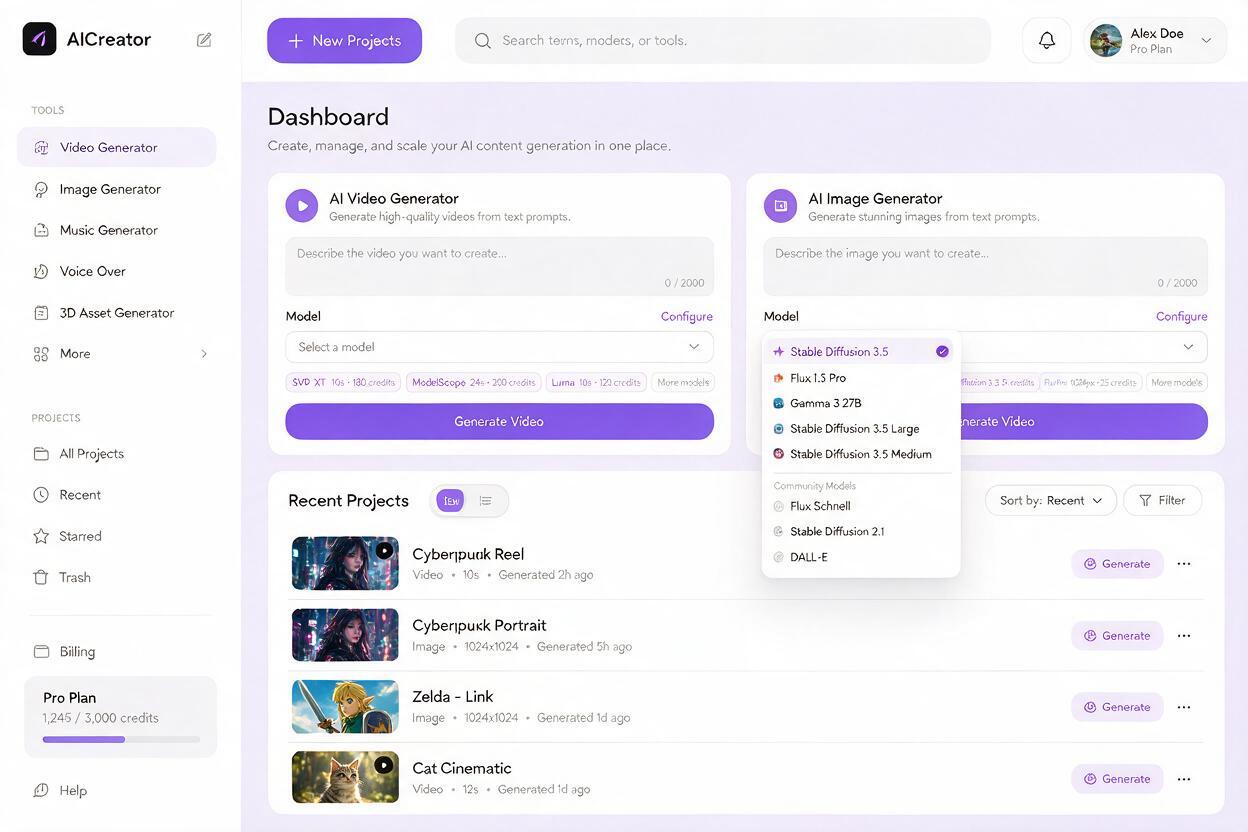
This is where a multi-model AI platform like MagicBoat can help creators navigate potential supply and price volatility. By aggregating a wide range of AI tools from multiple providers in one unified interface, MagicBoat gives creators the flexibility to switch between models and services based on cost, availability, and performance, rather than being locked into a single provider that may be hit harder by infrastructure constraints.
Content teams can also use multi-model platforms to optimize their ai video cost by choosing the most cost-effective tool for each specific task, rather than paying a premium for a single provider's all-in-one package. For example, a creator might use one model for quick draft videos and another for high-quality final renders, adjusting their approach based on current pricing and generation speed.
While data center delays are a broader industry challenge that individual creators cannot solve, building flexible, multi-tool workflows can help insulate content production from sudden price hikes or service disruptions. You can try these models for free to see how a multi-model approach fits your content workflow and budget.
Key Takeaways
- At least 47 large U.S. data center projects have been delayed, withdrawn, or blocked in 2026, with Bernstein estimating only 35% of planned projects have credible delivery prospects.
- Financing challenges, permitting bottlenecks, power grid constraints, and community opposition are the four main barriers driving the data center construction slowdown.
- The delays come as ai capital expenditure is set to surge 50% to $1.2 trillion next year, creating a potential supply-demand mismatch for AI infrastructure capacity.
- AI content creators may face higher ai video cost and slower generation times as capacity constraints push up cloud AI service prices.
- Multi-model AI platforms like MagicBoat help creators mitigate risk by providing access to multiple tools and providers in one place, enabling more flexible and cost-effective workflows.
Keywords
ai capital expenditure, ai industry, data center delays, ai infrastructure, ai video cost, ai image generator, ai funding