47 US Data-Center Projects Delayed or Blocked in 2026, FT Reports
At least 47 large U.S. data-center projects have been delayed, withdrawn, or blocked in 2026, with Bernstein estimating only ~35% of planned projects have credible delivery prospects. The slowdown — driven by financing, permitting, power, and community barriers — has significant implications for AI capital expenditure and content creators relying on cloud-based AI tools.
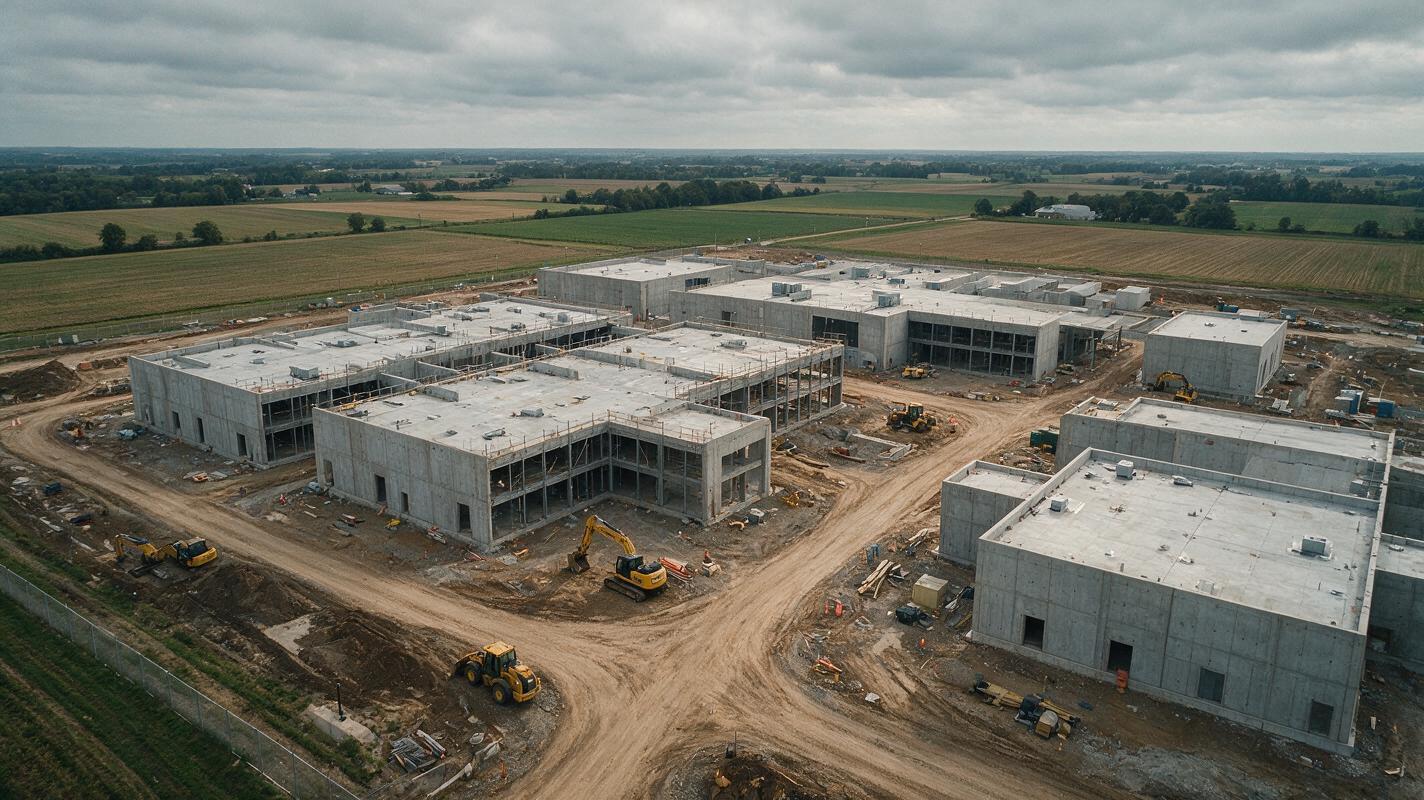
Table of contents
47 US Data-Center Projects Delayed or Blocked in 2026
A wave of setbacks is hitting the U.S. data-center construction pipeline, with at least 47 large projects delayed, withdrawn, or blocked so far in 2026, according to a Financial Times report. Analyst firm Bernstein estimates that only roughly 35% of planned U.S. data-center projects have credible delivery prospects, as a combination of financing constraints, permitting hurdles, power availability limits, and community opposition slows the buildout of AI infrastructure across the country.
The findings carry significant weight for the broader AI industry, which has been counting on massive data-center expansion to support the rollout of next-generation models and services. With AI capital expenditure already projected to surge across major cloud providers, any bottleneck in physical infrastructure could ripple through everything from model training timelines to inference pricing for end users.
What's Driving the Data-Center Slowdown
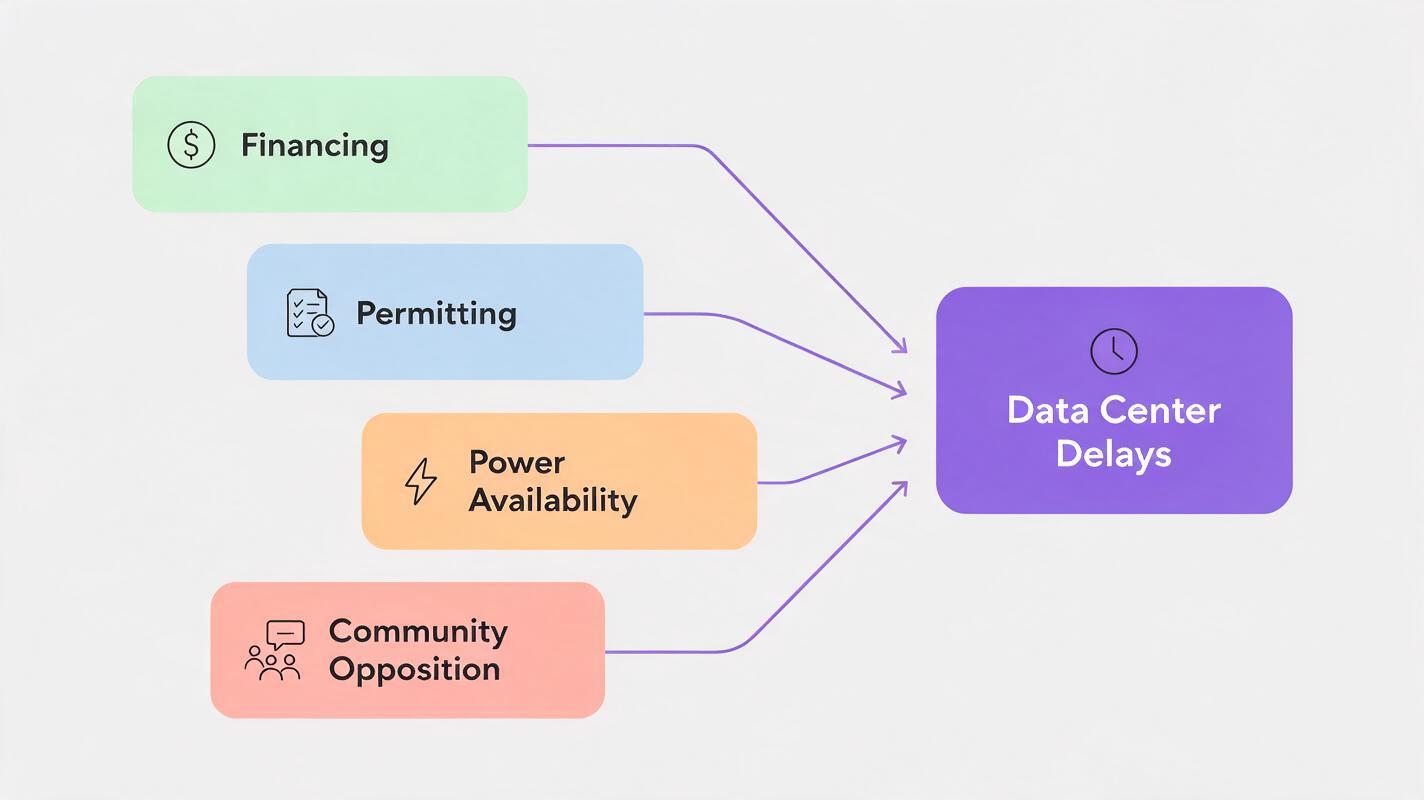
The FT report identifies four primary barriers derailing data-center projects across the United States. Each factor operates differently depending on the region and project scale, but together they are creating a tighter, more uncertain pipeline than many AI industry observers expected heading into 2026.
Financing Pressures
Rising interest rates and tighter credit conditions have made it more expensive for developers to fund large-scale data-center builds. Projects that penciled out financially a year or two ago may no longer meet return thresholds when borrowing costs are factored in, leading some sponsors to pause or cancel plans entirely. The AI funding environment has also shifted, with investors becoming more selective about which infrastructure projects receive backing.
Permitting Delays
Local and state permitting processes have become a major bottleneck, with many jurisdictions struggling to keep pace with the volume of data-center applications. Environmental reviews, zoning changes, and infrastructure impact studies can stretch on for months or years, pushing project timelines well beyond initial projections. In some states, legislative efforts to streamline data-center permitting have stalled, adding further uncertainty.
Power Availability
Data centers are among the most power-hungry facilities in the world, and many regions simply do not have the available electrical capacity to support the scale of proposed builds. Securing grid interconnections and power purchase agreements has become one of the most critical — and time-consuming — stages in the development process. Utilities in some areas have imposed moratoriums on new large-power connections until grid upgrades are completed.
Community Opposition
Local residents and community groups are increasingly pushing back against data-center projects over concerns about water usage, noise, visual blight, and strain on local infrastructure. In some cases, organized opposition has led to outright project rejections or moratoriums on new data-center development. The trend reflects growing public awareness of the environmental footprint of AI infrastructure.
What This Means for AI Capital Expenditure
The data-center slowdown is unfolding against a backdrop of unprecedented AI capital expenditure. Major cloud and technology companies have been ramping up spending on AI infrastructure at a furious pace, betting that demand for AI compute will continue to grow rapidly in the years ahead.
But if 65% or more of planned U.S. data-center projects fail to materialize on schedule, the industry could face a significant supply-demand imbalance for AI compute capacity. That would likely put upward pressure on pricing for AI services — from model inference to training runs — and could slow the pace of innovation as companies compete for limited infrastructure.
For AI content creators, these infrastructure constraints could translate directly into higher ai video generator costs and longer wait times for compute-intensive tasks. As data-center capacity tightens, providers may need to pass along higher costs or implement rate limiting to manage demand across their user bases.
Implications for AI Content Creators
Content teams relying on AI tools for video production, image generation, and other creative work should be paying close attention to these infrastructure trends. The quality, speed, and affordability of AI services all depend on the underlying data-center capacity that powers them.
When data-center builds are delayed, the ripple effects can show up in several ways for creators: higher API pricing for popular models, slower generation times during peak hours, and reduced availability of the newest and most capable models. Teams that are locked into a single vendor or model may find themselves particularly exposed if that provider faces capacity constraints or passes through infrastructure cost increases.
An ai image generator that runs quickly and cheaply today might become slower or more expensive tomorrow if its underlying infrastructure hits limits. The same applies to video generation tools, which are even more compute-intensive and therefore more vulnerable to capacity shortages and price volatility.

Navigating Infrastructure Uncertainty With Multi-Model Platforms
One of the most effective strategies for content creators to hedge against infrastructure uncertainty is to use a multi-model AI platform that provides access to a wide range of models from different providers. By spreading workloads across multiple models and infrastructure backends, teams can reduce their exposure to any single provider's capacity issues or price increases.
MagicBoat offers access to dozens of AI models for video generation, image creation, script writing, voiceover, and more — all through a single account and interface. If one model experiences slowdowns or price changes, creators can easily switch to alternatives without rebuilding their entire workflow or renegotiating contracts.
This flexibility is especially valuable as the AI industry navigates the current data-center construction slowdown. Rather than betting on a single provider's infrastructure roadmap, content teams can maintain optionality and choose the best tool for each specific task based on current availability, cost, and output quality.
You can try these models for free and experience the benefits of a multi-model platform firsthand.
Key Takeaways
- At least 47 large U.S. data-center projects have been delayed, withdrawn, or blocked in 2026, with only about 35% of planned projects considered likely to deliver on schedule.
- Four key barriers are driving the slowdown: financing pressures, permitting delays, power availability limits, and community opposition.
- The infrastructure bottleneck could push AI capital expenditure even higher in the short term and lead to higher pricing and slower performance for AI services.
- AI content creators may face higher ai video cost and reduced model availability as capacity tightens across the industry.
- Multi-model platforms like MagicBoat help creators navigate uncertainty by providing access to multiple models and providers through a single account.
Keywords
ai capital expenditure, ai industry, data center projects, ai infrastructure, ai funding, ai video cost, ai image generator