47 Large US Data-Center Projects Delayed, Withdrawn or Blocked
At least 47 large US data-center projects were delayed, withdrawn or blocked in 2026, while Bernstein estimates only about 35% of planned projects have credible delivery prospects.
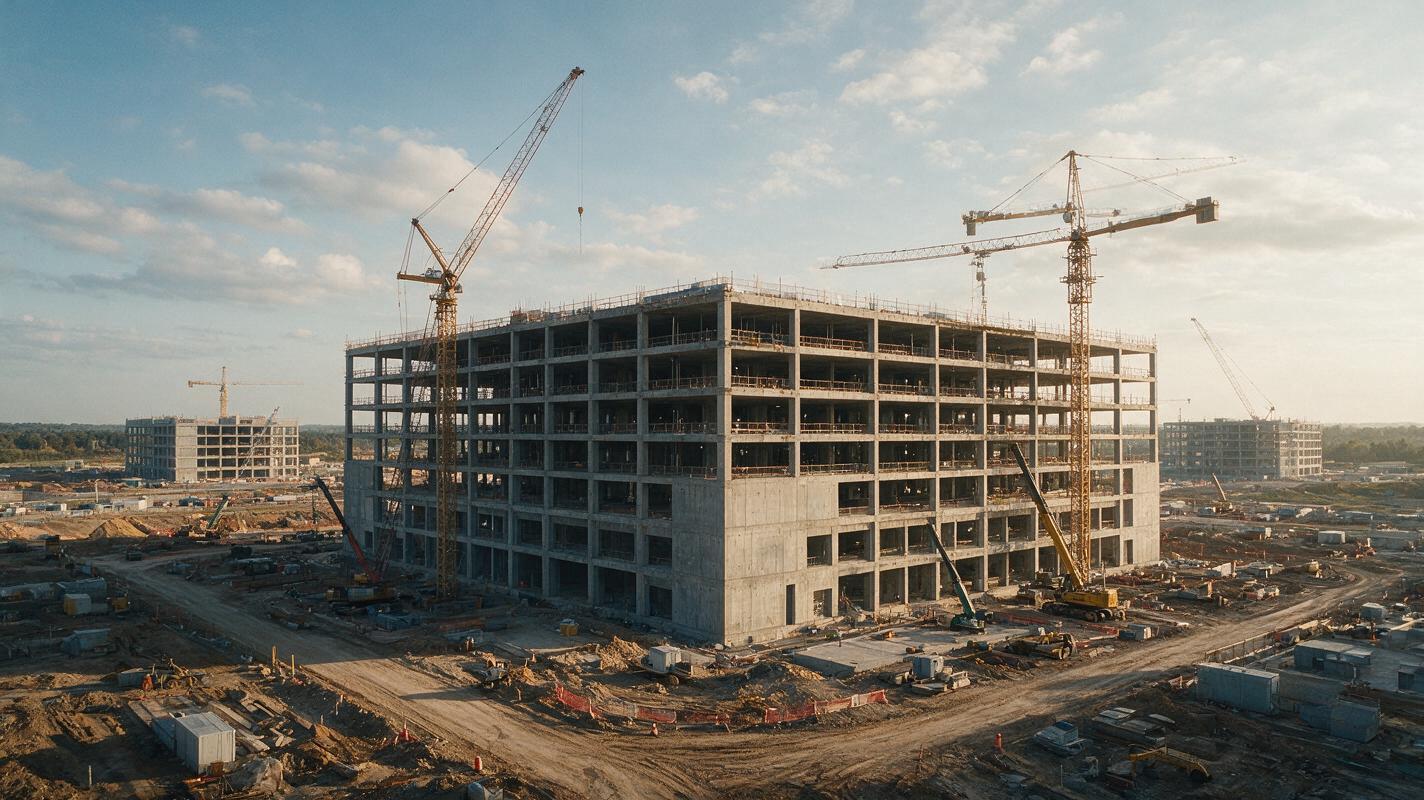
Table of contents
AI Infrastructure News
47 Large US Data-Center Projects Delayed, Withdrawn or BlockedA Financial Times report points to a widening gap between announced US data-center ambitions and projects with credible prospects of being completed.
A Major AI Infrastructure Pipeline Is Running Into Real-World Barriers
At least 47 large data-center projects in the United States were delayed, withdrawn or blocked during 2026, according to reporting by the Financial Times. The affected developments face a combination of financing constraints, permitting difficulties, limited power availability and community opposition.
The headline number is significant, but Bernstein’s estimate provides an even sharper view of the delivery problem. The firm calculates that only about 35% of planned US data-center projects have credible prospects of being delivered. In other words, a large announced pipeline does not necessarily translate into operating computing capacity.
The report lands as the AI industry continues to depend on data centers for model development, inference and cloud services. It also adds a practical counterweight to the scale of announced AI capital expenditure: money is essential, but projects still require approvals, financing, electricity and local support before servers can come online.
For content teams, this is not merely an infrastructure story. Constraints on future computing capacity can influence model availability, service reliability and AI video cost, making flexible production systems more valuable than workflows built around a single provider.
The Central Findings
- At least 47 projects: Large US data-center developments were delayed, withdrawn or blocked in 2026.
- About 35%: Bernstein estimates that only roughly this share of planned US projects has credible delivery prospects.
- Four recurring barriers: Financing, permitting, power and community opposition are limiting delivery.
- A credibility gap: Announced construction plans should not automatically be treated as future operational capacity.
Why Announced Capacity and Delivered Capacity Are Different
Data-center announcements often express strategic intent. Delivery requires several independent conditions to align, and the Financial Times report identifies where that alignment is breaking down.
Financing Must Remain Viable
Large infrastructure projects depend on access to capital throughout planning and construction. The inclusion of financing among the reported barriers shows that ambitious AI funding narratives do not remove project-level economic constraints. Capital commitments and finished facilities are different milestones.
Permitting Can Reshape the Schedule
Planned facilities must move through approval processes before construction and operation. When permitting becomes difficult, expected delivery schedules become less reliable. That matters to AI vendors whose expansion plans assume additional infrastructure will become available at a particular time.
Power Is a Binding Requirement
Electricity availability is another barrier cited in the report. A project location and financing package cannot compensate for inadequate power access. This makes energy capacity a core factor in whether proposed data centers can move from plans to operating facilities.
Community Opposition Can Block Development
Local resistance also appears among the reasons projects have stalled or disappeared. The finding emphasizes that data-center expansion takes place in communities rather than in an abstract cloud. Local concerns can affect whether a development proceeds, changes or stops.
| Reported barrier | Infrastructure implication | Potential relevance to AI users |
|---|---|---|
| Financing | Planned construction may not secure viable capital | Expected capacity may arrive later or not at all |
| Permitting | Approvals can delay or prevent delivery | Vendor expansion schedules become less certain |
| Power | Facilities require sufficient electricity access | Compute supply can remain constrained despite demand |
| Community opposition | Local resistance can alter or block projects | Regional capacity forecasts may prove unreliable |
What the 35% Estimate Says About AI Capital Expenditure
Bernstein’s estimate that only about 35% of planned US projects have credible delivery prospects is not a forecast that every remaining project will fail. It is a warning against treating the entire proposal pipeline as dependable capacity.
This distinction matters when evaluating AI capital expenditure. Spending plans can signal strong demand and strategic commitment, yet the final result depends on whether individual facilities clear the barriers identified in the report. The distance between a proposal and an operational data center remains substantial.
The infrastructure race is no longer only about who announces the largest investment. It is also about which projects can actually secure capital, permission, electricity and local acceptance.
That delivery risk may encourage closer scrutiny of AI industry growth forecasts. It may also shift attention toward execution quality: credible sites, dependable energy access and realistic development schedules become as important as the size of a headline investment.
What This Means for AI Content Production
Creative teams do not build data centers, but they consume the services those facilities support. Image and video generation rely on remote computing capacity, so infrastructure constraints can become an operational concern when teams plan deadlines, campaign volumes and production budgets.
The report does not establish that a specific creative model will become unavailable or that a particular service will change its prices. It does, however, reinforce a broader planning principle: future compute supply should not be assumed simply because projects have been announced.
For teams using an ai video generator or ai image generator, resilience comes from keeping the workflow adaptable. If access, performance or economics change at one vendor, a production process that can accommodate other models is easier to maintain than one built around a single endpoint.
Reliability Belongs in the Tool-Selection Conversation
Creative evaluation often begins with output quality, visual style or speed. The data-center news adds availability and infrastructure exposure to that discussion. A model may suit a campaign aesthetically, but the surrounding service must also remain accessible when production demand peaks.
AI Video Cost Has an Infrastructure Component
Video generation is compute-intensive, which makes infrastructure conditions relevant to budgeting. The reported project delays do not provide a direct price forecast, but they show why content teams should monitor cost rather than assume continually expanding capacity will make every workload cheaper.
Multi-Model Access Reduces Workflow Concentration
A stable one-account, multi-model platform can help teams avoid tying every creative process to one provider. MagicBoat connects the news to a practical production response: maintain a consistent creative environment while retaining the flexibility to explore different models for scripts, images and video.
Practical Priorities for Content Teams
- Track availability as well as quality. A strong result is useful only when the service is accessible on schedule.
- Review production costs regularly. Avoid treating current AI video cost as a permanent baseline.
- Keep project assets portable. Organized prompts, scripts, reference images and storyboards make it easier to adapt a campaign.
- Avoid single-vendor dependence. Model diversity can provide options when access or economics change.
- Separate announced investment from delivered capacity. Infrastructure proposals are not the same as operational compute.
The Bigger Signal for the AI Industry
The 47 affected projects show that the physical expansion behind AI services is facing constraints on several fronts at once. Bernstein’s estimate suggests that credible delivery may be limited to about one-third of the planned US pipeline, placing execution at the center of the next phase of AI infrastructure growth.
For creators and content businesses, the sensible response is not to predict a specific shortage or price movement that the report does not establish. It is to build adaptable workflows, evaluate reliability alongside creative quality and retain access to more than one model path.
Keep Your Creative Workflow Flexible
Explore image, video and storytelling options through one creative platform instead of anchoring every project to a single model provider.
try these models for freeKey Takeaways
- At least 47 large US data-center projects were delayed, withdrawn or blocked in 2026.
- Bernstein estimates that only about 35% of planned US projects have credible delivery prospects.
- Financing, permitting, power and community opposition are the reported barriers.
- The findings highlight a gap between announced AI infrastructure and delivered computing capacity.
- Content teams can respond by prioritizing adaptable, multi-model production workflows.
Keywords: US data-center projects, AI capital expenditure, AI infrastructure, data-center delays, AI industry, AI video cost, AI funding