What Is the Nov. 19 US Stock Plunge? AI Industry Impact and Key Facts | MagicBoat
On November 19, 2026, U.S. stocks plunged sharply despite Anthropic's record IPO, pushing the Dow below 50,000 and the S&P 500 to its sixth straight loss amid growing Federal Reserve rate hike expectations. The selloff has significant implications for the AI industry, including higher capital expenditure costs, tighter funding conditions, and potential trickle-down pricing pressure on creative AI tools for content creators.
Table of contents
What the November 19 Stock Selloff Means for AI Creators
On November 19, 2026, U.S. stocks suffered a sharp, broad-based selloff even as Anthropic made its highly anticipated record public debut, pushing the Dow Jones Industrial Average below the psychologically important 50,000 mark and into technical correction territory. The downturn, driven by soaring expectations of further Federal Reserve rate hikes, sends ripples far beyond Wall Street — directly impacting the ai industry, from capital expenditure plans for AI infrastructure to the cost and availability of the creative tools content teams rely on every day.
For creators using AI to produce video, images, and other content, the selloff is a reminder that relying on a single provider or tool can expose workflows to unexpected price hikes or service disruptions. Flexible, multi-model platforms that aggregate top tools in one place offer a practical way to hedge against that volatility.
Key Market Figures From the Nov. 19 Session
The November 19 session delivered widespread losses across all major U.S. indexes, marking one of the worst single-day performances of the year. According to reporting from Reuters, CNBC, and Straits Times, the key numbers include:
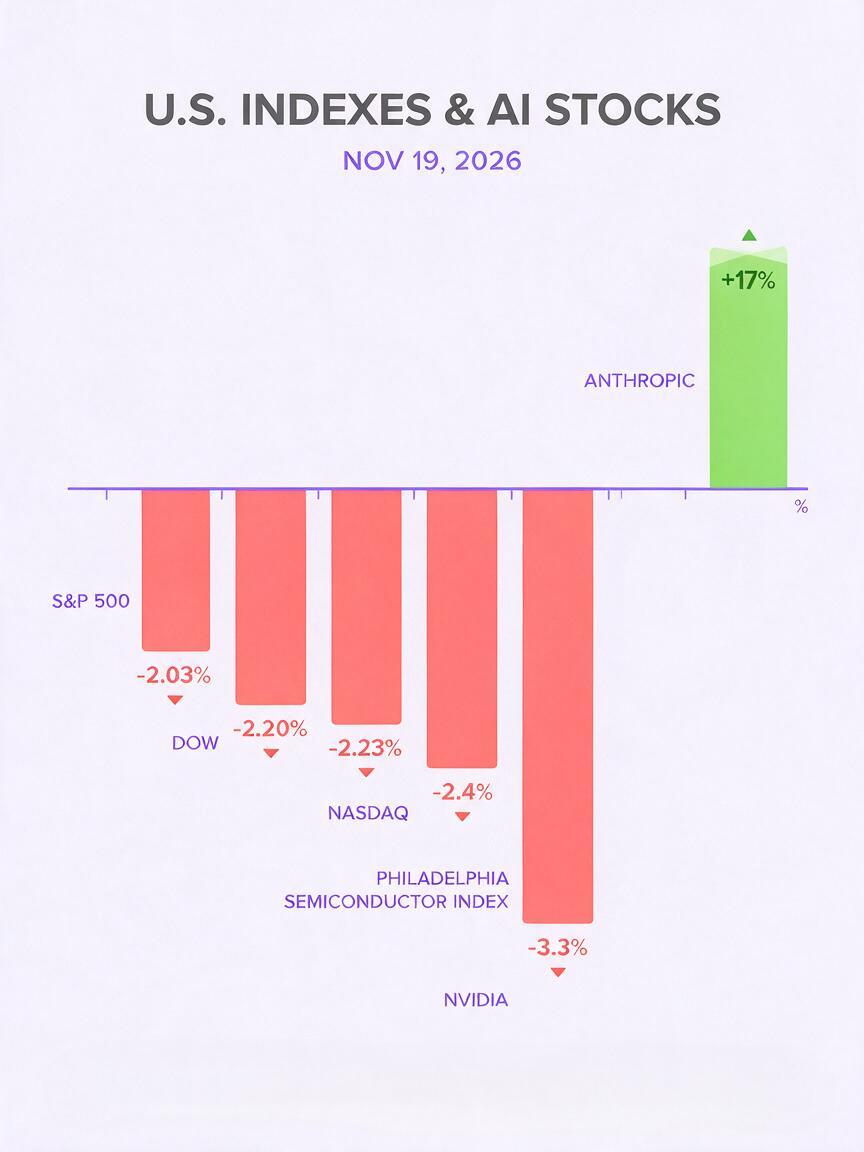
- Dow Jones Industrial Average: Fell 1,102.71 points, or 2.20%, to close at 49,095.46 — dropping below the 50,000 level and entering intraday technical correction after a four-day slide totaling roughly 3,250 points.
- S&P 500: Dropped 2.03% to 7,175.24, marking its sixth consecutive loss and its worst weekly performance since April 2025.
- Nasdaq Composite: Fell 2.23% to 23,885.88, extending its recent downward trend.
- Philadelphia Semiconductor Index: Slid roughly 2.4%, as chip stocks continued to face pressure.
- VIX (Volatility Index): Topped 29, its highest level since March, reflecting sharply elevated market fear and uncertainty.
The one bright spot in the AI sector was Anthropic, which closed its first day of trading up 17% in its record IPO. But the gain was overshadowed by widespread losses across the rest of the AI and tech ecosystem:
- Nvidia fell 3.3%, marking its sixth straight daily loss.
- Neocloud providers CoreWeave and Nebius slumped sharply, as investors grew more cautious about leveraged AI infrastructure plays.
Markets are currently pricing in a 94% chance of a 25-basis-point rate hike at the Federal Reserve's December meeting, according to CME FedWatch data, with core PCE inflation expected to come in at 3.2% year over year.
Why Stocks Plunged Despite Anthropic's IPO Debut
Anthropic's strong first-day performance, which would typically lift sentiment across the AI sector, was not enough to offset broader macroeconomic fears driving the selloff. The primary catalyst is the growing consensus that the Federal Reserve will continue raising interest rates to bring inflation back down to its 2% target.
Higher interest rates increase the cost of borrowing for companies across the economy, but they hit capital-intensive industries like AI infrastructure particularly hard. Many neocloud providers and AI startups rely heavily on debt to fund data center builds, GPU purchases, and expansion plans — so when rates rise, their financing costs jump sharply, eroding profitability and making future growth more expensive to pursue.
The ongoing slump in Nvidia shares, now down for six straight sessions, has also weighed on broader AI sentiment. As the dominant supplier of AI accelerators, Nvidia's performance is widely seen as a barometer for AI industry demand. Its recent decline reflects investor concerns about both governance uncertainty and the impact of higher rates on future AI capital expenditure plans.
What This Means for the AI Industry
The November 19 selloff highlights a growing divide in the AI industry between cash-rich, profitable players and more leveraged, growth-focused firms. For large, well-capitalized companies like Google, Microsoft, and Amazon, higher rates are a headwind but not an existential threat — they can fund AI expansion from operating cash flow rather than relying on debt markets.
For smaller neoclouds, AI startups, and infrastructure providers, however, the current rate environment creates significant pressure. Tighter financial conditions make it harder to raise ai funding, refinance existing debt, and fund new data center projects. This could slow the pace of AI infrastructure expansion over the next 12 to 18 months, potentially constraining compute supply and putting upward pressure on API pricing for end users.
We are already seeing signs of this dynamic in the market: SemiAnalysis recently cut its 2028 global AI accelerator capex forecast by 28%, reflecting expectations that higher financing costs will delay or scale back many planned projects. If rates continue to rise as expected, we could see further downward revisions to ai capital expenditure forecasts in the coming quarters.
Even fast-growing players like DeepSeek, which recently hit $1 billion in annualized revenue and is raising $7.5 billion in new funding, may face higher costs and more stringent terms from investors as risk appetite cools. This could trickle down to the pricing of their API services, which many creators and small teams rely on for affordable AI tools.
How This Affects AI Content Creators
For AI content creators and small production teams, the market selloff and rising rate environment may feel distant — but the effects can show up directly in your workflow and bottom line, particularly when it comes to pricing for ai video generator and image tools.
When AI infrastructure providers face higher financing costs and tighter compute supply, they often pass at least some of those costs on to end users in the form of higher API prices, reduced free tiers, or slower service. For creators who rely on a single ai image generator or video tool, this can mean sudden, unplanned increases in production costs that eat into margins — especially if you are running large volumes of generations or long video projects.
There is also a reliability risk: if a smaller provider runs into financial trouble or has to scale back its infrastructure, you could face service outages or lost access to tools you have built your workflow around. This can delay projects, force you to spend time learning new tools, and potentially lose clients if you miss deadlines.
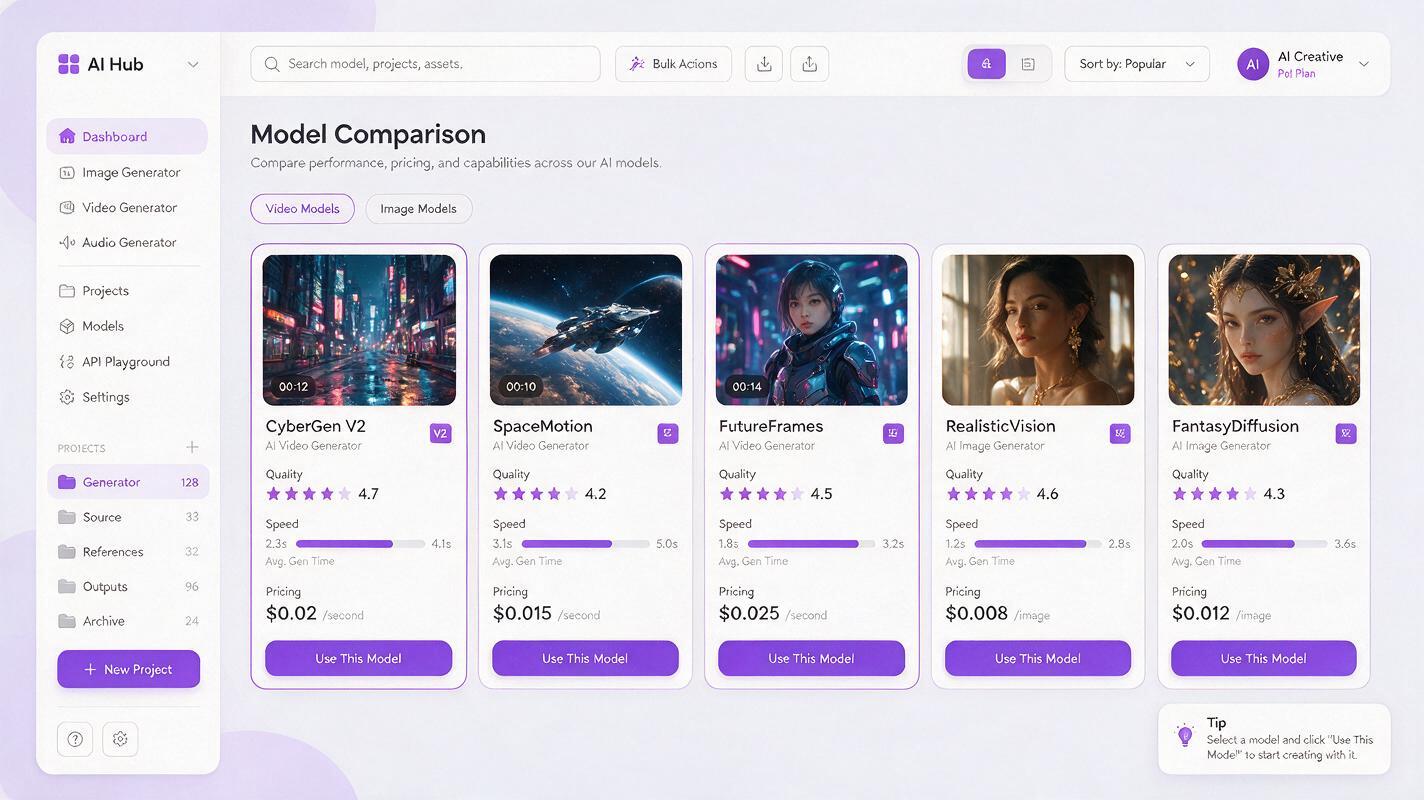
The good news is that creators can mitigate these risks by building flexible, multi-model workflows that use a range of tools from different providers. Instead of locking into a single platform, you can compare pricing, quality, and speed across multiple tools for each project, and switch seamlessly if one provider raises prices or experiences downtime.
Platforms like MagicBoat make this easy by bringing together dozens of top AI video, image, audio, and writing tools in a single, unified interface. You can test different models for each project, compare costs side by side, and never have to worry about being locked into a single provider. You can try these models for free to find the best fit for your workflow and budget.
Key Takeaways
- The November 19, 2026 U.S. stock selloff pushed the Dow below 50,000 and into correction territory, driven by 94% odds of a December Fed rate hike.
- AI infrastructure players like Nvidia, CoreWeave, and Nebius led declines, as higher rates raise the cost of funding ai capital expenditure projects.
- Tighter financial conditions could slow AI infrastructure expansion, leading to higher ai video cost and image generator pricing for creators over time.
- Creators can hedge against price hikes and service disruptions by using multi-model platforms that offer access to multiple tools in one place.
- Anthropic's 17% first-day IPO gain was a rare bright spot, but it was not enough to offset broader market weakness.
- Even fast-growing firms like DeepSeek may face higher funding costs, which could trickle down to API pricing for end users.
Keywords
ai industry, ai capital expenditure, ai funding, ai video cost, ai image generator, us stock plunge, anthropic ipo, deepseek