US Stocks Rebound on Meta Muse and Apple AI China Approval
U.S. stock indexes closed higher on October 16, 2026, lifted by positive sentiment around Meta's Muse Spark Open launch and Apple's approval to roll out Apple Intelligence beta in China. The rebound follows a sharp sell-off one day earlier and underscores growing investor confidence in consumer AI monetization. For content creators, the market shift highlights the value of flexible, multi-model production workflows that adapt to the fast-evolving AI landscape.

Table of contents
What the October 16 Stock Rebound Means for AI
U.S. stock markets closed sharply higher on October 16, 2026, with all three major indexes notching gains driven by dual AI industry catalysts. The rebound came on the heels of a sharp sell-off just one day earlier, as investors reacted positively to two key announcements from Meta and Apple that signal continued momentum for consumer AI adoption.
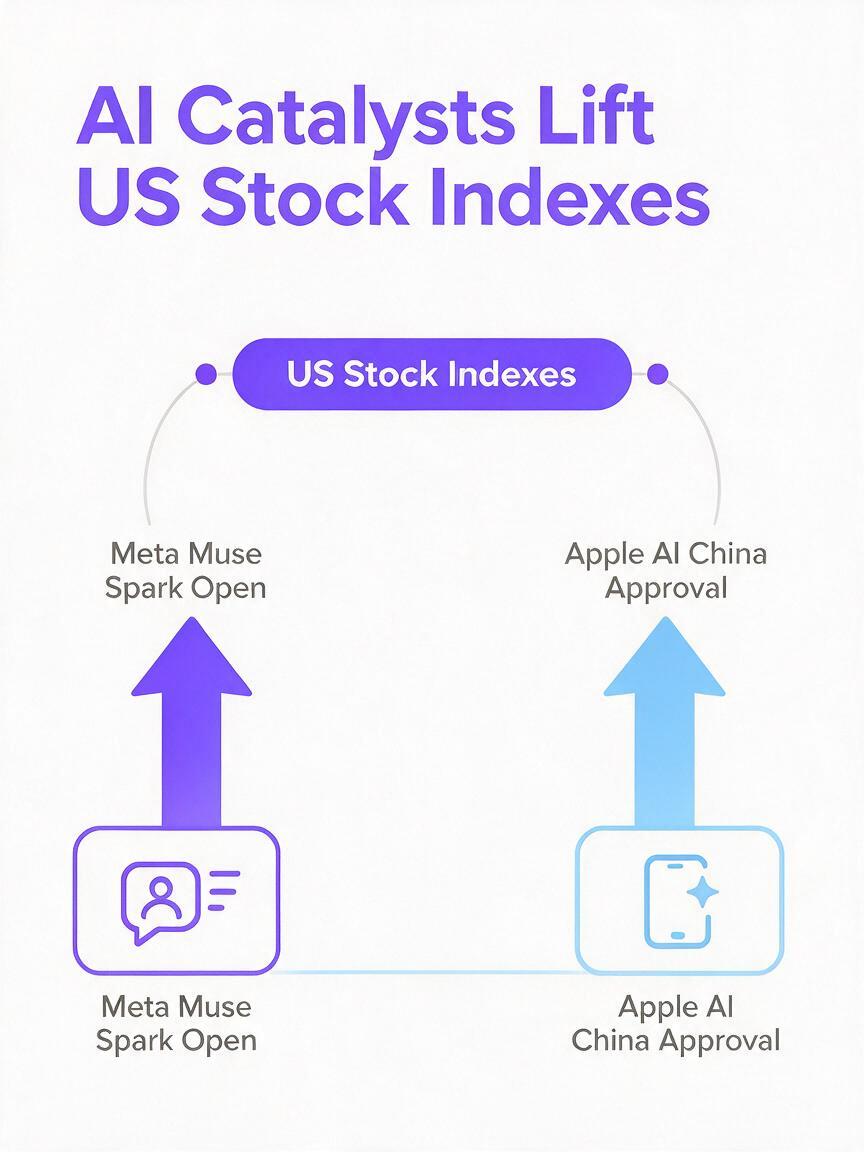
According to reports, the rally was fueled by the launch of Meta's Muse Spark Open and official approval for Apple to roll out its Apple Intelligence beta in China. Both developments are seen as major milestones for commercial AI deployment, easing near-term concerns about the ability of big tech firms to monetize their massive AI investments.
Why Two AI News Items Moved the Entire Market
The scale of the market reaction may seem surprising for two individual product announcements, but each catalyst addresses a core question hanging over the AI industry in 2026: can consumer AI tools deliver real, scalable revenue?
Meta Muse Spark Open: Validating the Personal Agent Market
Meta's Muse Spark Open launch marks a major expansion of the company's AI assistant offering, which has already drawn significant user interest. Industry analysts have previously projected that Muse could become a dominant player in the personal agent space, with one estimate placing its potential revenue at over $27 billion by 2030 as a leading "front door" to the internet for consumers.
The Spark Open rollout signals Meta is moving quickly to turn Muse from a niche feature into a mainstream product, with implications for everything from e-commerce to content discovery. For investors, this adds confidence that Meta's heavy AI spending will translate into tangible top-line growth over the next several years.
Apple Intelligence China Approval: Unlocking a Massive Market
The second catalyst, Apple's regulatory approval to launch Apple Intelligence beta in China, removes a major uncertainty for the company's AI roadmap. China is one of Apple's largest and most important markets, and the ability to roll out its native AI features there is seen as critical to maintaining iPhone upgrade momentum and expanding its services ecosystem.
The China beta of Apple Intelligence is built on Alibaba's Qwen model and will include features like live translation, writing tools, and photo cleanup when it rolls out later in October. The approval follows months of speculation about whether Apple would be able to navigate local regulatory requirements for AI services, making the green light a significant positive surprise for investors.
What This Tells Us About the AI Industry Right Now
The October 16 rebound is more than just a one-day market move — it reflects a broader shift in how investors are evaluating the AI industry. After a year of massive spending on model training and data center infrastructure, the market is increasingly focused on real-world deployment and monetization milestones.
This shift comes as ai capital expenditure continues to surge across the tech sector. Industry estimates project that the five largest cloud giants will see their AI capex grow by more than 50% to $1.2 trillion next year, as companies race to build out the infrastructure needed to support widespread AI adoption. At the same time, ai funding remains robust for both established players and startups, with firms like DeepSeek raising multi-billion-dollar rounds to scale their models and commercial offerings.
What makes the Meta and Apple announcements particularly meaningful is that they represent consumer-facing AI rollouts, not just backend infrastructure investments. For years, critics have questioned whether AI would ever move beyond enterprise use cases and experimental features to become a core part of everyday consumer technology. These two announcements — and the market's reaction to them — suggest that transition is now well underway.

What This Means for Content Creators
For content creators and content teams, the accelerating rollout of consumer AI tools and the ongoing growth of the ai industry bring both opportunities and challenges. On one hand, new platforms and features create new avenues for reaching audiences and monetizing content. On the other hand, the rapid pace of change means creators need flexible workflows that can adapt to new tools and platforms without being locked into a single vendor's ecosystem.
Rather than relying on the built-in tools of any one tech giant, many creators are turning to multi-model platforms that give them access to a wide range of AI tools in one place. For example, an ai image generator from one provider might be best for social media graphics, while a text to video tool from another might deliver better results for short-form video content. A unified platform lets creators pick the best tool for each task, compare outputs, and manage their entire workflow in one place.
This approach also helps creators manage ai video cost and other production expenses, as they can choose models that fit their budget and performance needs for each project instead of paying for a bundled suite of tools they may not fully use. As the AI industry continues to evolve and new models and features launch at a rapid pace, having a flexible, multi-model workflow ensures creators can take advantage of new innovations without having to rebuild their entire production stack every few months.
try these models for free to see how a multi-model platform can streamline your content production workflow.
Key Takeaways
- U.S. stock indexes closed higher on October 16, 2026, with all three major benchmarks lifted by dual AI catalysts from Meta and Apple.
- The rally was driven by Meta's Muse Spark Open launch, which validates the growing personal AI agent market, and Apple's approval to roll out Apple Intelligence beta in China, unlocking a massive consumer market.
- The market reaction underscores growing investor confidence in consumer AI monetization, even as ai capital expenditure and ai funding continue to surge across the sector.
- Content creators benefit from flexible, multi-model AI workflows that avoid vendor lock-in, help manage ai video cost, and let them adapt quickly to new tools and platform updates.
Keywords
ai industry, ai funding, ai capital expenditure, meta muse, apple intelligence, us stocks, ai market