US Stocks Rebound Higher on Meta Muse Spark Open, Apple AI China Approval
US stocks closed higher on October 16, 2026, with all three major indexes advancing, as Meta’s Muse Spark Open launch and Apple’s AI beta approval in China lifted tech sector sentiment. The rebound underscores the growing market weight of consumer AI tools and platform expansions. This article explores what the market move means for AI content creators and how diversified AI workflows can help creators navigate rapid platform shifts.

Table of contents
The October 16 US Stock Rebound: Full Details
On October 16, 2026, US stocks rebounded to close higher, with all three major indexes notching gains after a period of recent tech sector volatility. The rally was driven by positive investor sentiment around two key AI industry developments: Meta’s Muse Spark Open launch and Apple’s AI beta approval in China. The news lifted large-cap tech shares broadly, pulling the broader market higher following declines earlier in the week.
The rebound follows a stretch of uneven trading for tech stocks, including a lower close on October 12 as Apple’s new smart-home product lineup failed to impress investors, and a sharper sell-off on October 15 that saw Meta and Nvidia fall roughly 3% and Oracle drop 8.8% amid broader sector concerns. The October 16 gains reversed much of that week’s earlier losses, signaling ongoing investor confidence in AI as a long-term growth driver.
Why Meta Muse Spark Open and Apple AI China Approval Moved the Market
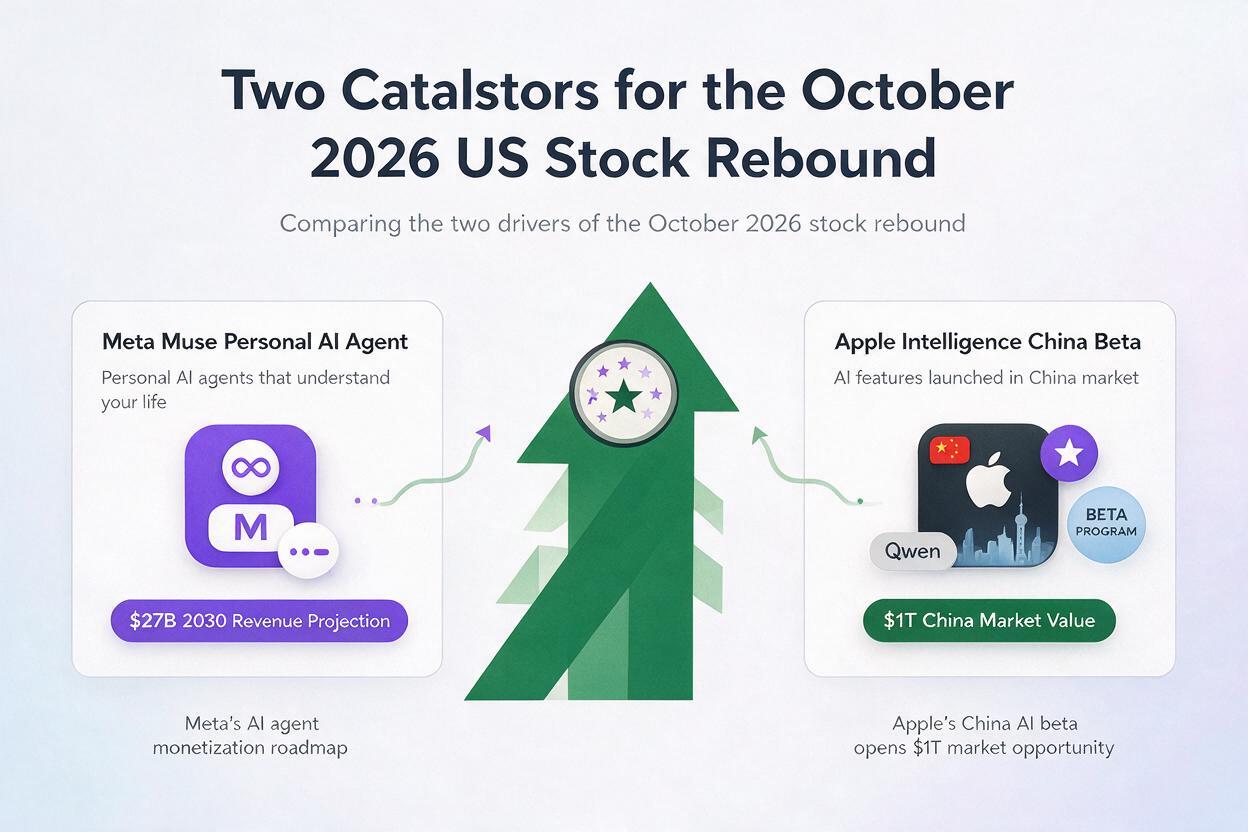
The two catalysts behind the October 16 rally both center on consumer AI expansion, a theme that has become increasingly influential on tech sector valuations over the past year. Each announcement addressed a key area of investor focus for two of the world’s largest public companies.
Meta’s Muse Spark Open news builds on momentum for the company’s flagship personal AI assistant, which Citi analysts project could generate over $27 billion in annual revenue by 2030 as the leading “front door” to the internet in the personal-agent market. The Spark Open expansion signals continued investment in the Muse ecosystem, which investors see as a critical new channel for Meta’s advertising and commerce businesses. As Muse gains more users and features, it has the potential to reshape how people discover content, shop, and interact with online services — all of which tie directly to Meta’s core revenue streams.
Apple’s approval to launch its Apple Intelligence beta in China removes a significant regulatory hurdle for the company, which has been working to roll out its AI features across its global device lineup. The beta, built on Alibaba’s Qwen model, is set to roll out later in October with tools including live translation, writing assistance, and photo cleanup, though Siri AI will not be included in the first batch. For Apple, access to the Chinese market for AI features is critical to driving device upgrades and maintaining its market share in one of its largest regional markets, making the approval a major positive for long-term growth prospects.
Together, the two announcements reinforced investor confidence that consumer AI tools will continue to drive revenue growth across the tech sector, even amid ongoing regulatory scrutiny and competitive pressures. Because Meta and Apple carry such heavy weight in the major US stock indexes, their gains were enough to lift all three benchmarks into positive territory for the day.
What This Means for AI Content Creators
While stock market rallies may seem distant from day-to-day creative work, the same AI platform shifts that drive market moves have direct, tangible impacts on content creators. The rapid pace of AI innovation that pushes stock prices higher also means the tools and platforms creators rely on can change quickly, sometimes with little warning.
Creators who build their entire workflow around a single AI tool or platform face the risk of disruption if that platform changes its pricing, removes features, or shifts its focus. For example, a creator who relies exclusively on one AI assistant for scripting and research could face setbacks if the assistant’s capabilities are updated in a way that reduces its usefulness for their specific use case. Similarly, creators who build their audience on a single social platform are vulnerable to algorithm changes that can reduce reach overnight.
This is where flexible, diversified ai video generator workflows and multi-tool setups add real value. By building an ai workflow that incorporates multiple models and tools, creators can pick the best option for each specific task, and switch quickly if a new tool launches or an existing one changes. This approach also reduces the risk of downtime or lost productivity if a single platform experiences outages or policy changes.
AI automation can help streamline these diversified workflows even further, letting creators automate repetitive tasks like captioning, asset resizing, and content scheduling across multiple platforms. The end result is a more resilient creative practice that can adapt to industry shifts without losing momentum.
Building Resilient Creative Workflows With Multi-Model AI
A multi-model AI platform like MagicBoat is designed to solve exactly these challenges, by bringing a wide range of AI creative tools together in a single, unified interface. Instead of managing separate subscriptions, logins, and file formats for a dozen different AI tools, creators can access everything they need through one account, with consistent pricing and a shared workspace for all their projects.
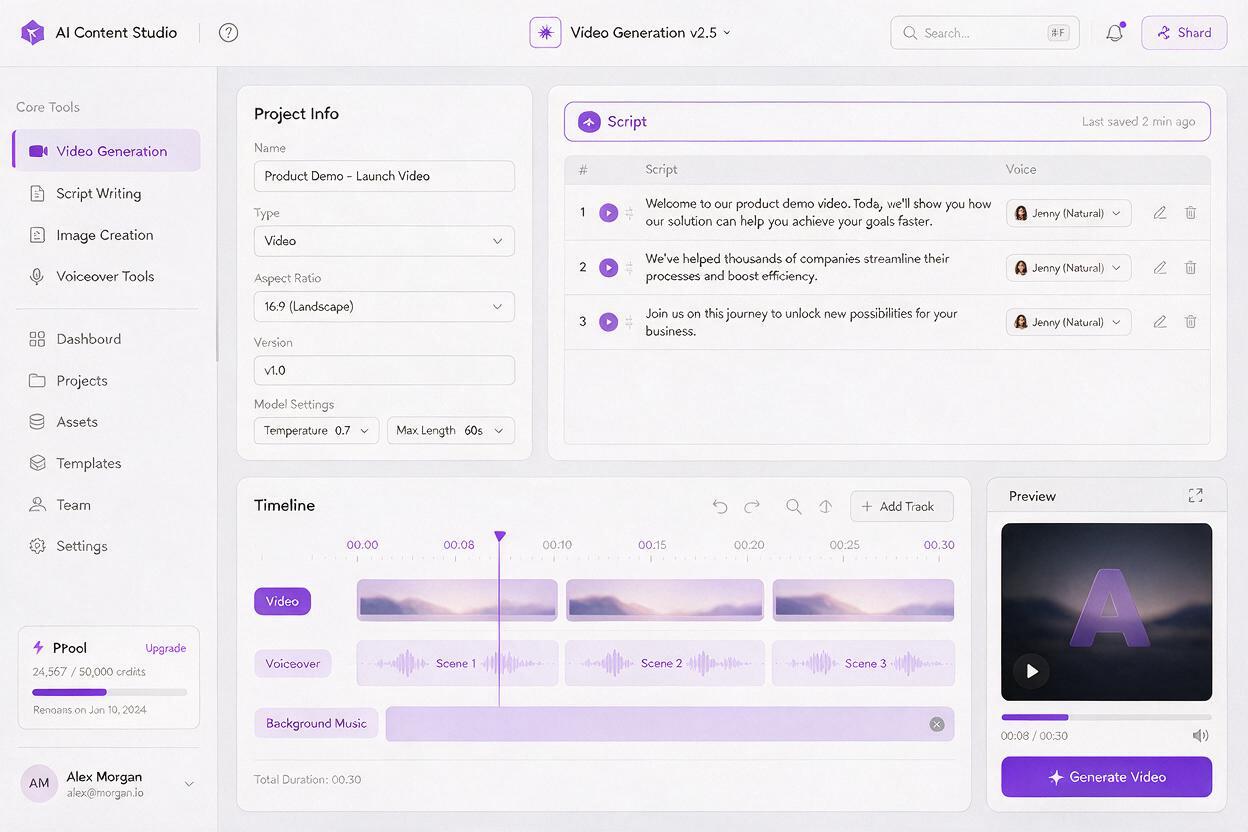
For video creators, this means access to an ai script writer to draft and refine narratives, AI art tools to create custom visuals and storyboards, and video generation tools to turn scripts into polished clips — all without leaving the platform. For social media creators, it means being able to generate content optimized for multiple platforms in minutes, and adapt quickly as algorithm trends change. For writers and podcasters, it means access to AI voice tools, research assistants, and editing support to speed up production.
One of the biggest advantages of a centralized platform is that it evolves with the AI industry. As new models launch and existing tools improve, they’re added to the platform without requiring creators to learn new software or migrate their existing work. This means creators can take advantage of the latest AI innovations as soon as they’re available, without the hassle of testing and integrating new tools on their own.
This kind of flexibility is increasingly valuable as the AI landscape continues to shift at a rapid pace. The same factors that make AI such a powerful growth driver for big tech companies — constant innovation, expanding capabilities, and new market opportunities — also make it a challenging space for creators to navigate alone. A multi-model platform takes that burden off creators, so they can focus on what they do best: making great content. If you’re ready to build a more resilient, flexible AI content workflow, you can try these models for free and explore how multi-model access can streamline your creative process.
Key Takeaways
- US stocks closed higher on October 16, 2026, with all three major indexes advancing, lifted by positive AI news from Meta and Apple.
- The rally was driven by two key catalysts: Meta’s Muse Spark Open launch and Apple’s approval to launch its Apple Intelligence beta in China.
- The market reaction highlights how AI product launches and regulatory milestones now have an outsized impact on tech sector valuations and broader market sentiment.
- For AI content creators, the same rapid pace of AI innovation that drives stock gains makes diversified, multi-model workflows essential for long-term stability.
- A centralized AI platform like MagicBoat gives creators flexible access to a range of tools, reducing reliance on any single provider and making it easier to adapt to industry changes.
Keywords
us stocks rebound, meta muse spark open, apple ai china approval, ai assistant, ai platform, ai content creation, tech sector sentiment