US Tech Stocks Plunge; ASML Posts Record Backlog Through 2030
US tech stocks sold off sharply, with Meta and Nvidia down 3% and Oracle dropping 8.8%, even as ASML reported a stronger-than-expected Q3 and a record order backlog extending through 2030. The mixed signals reflect tension between short-term market volatility and long-term growth in ai capital expenditure, which Goldman Sachs projects will rise 50%+ to $1.2 trillion next year across five major cloud giants. For AI content creators, the trends highlight the need for flexible, multi-model workflows to avoid pricing and reliability disruptions.
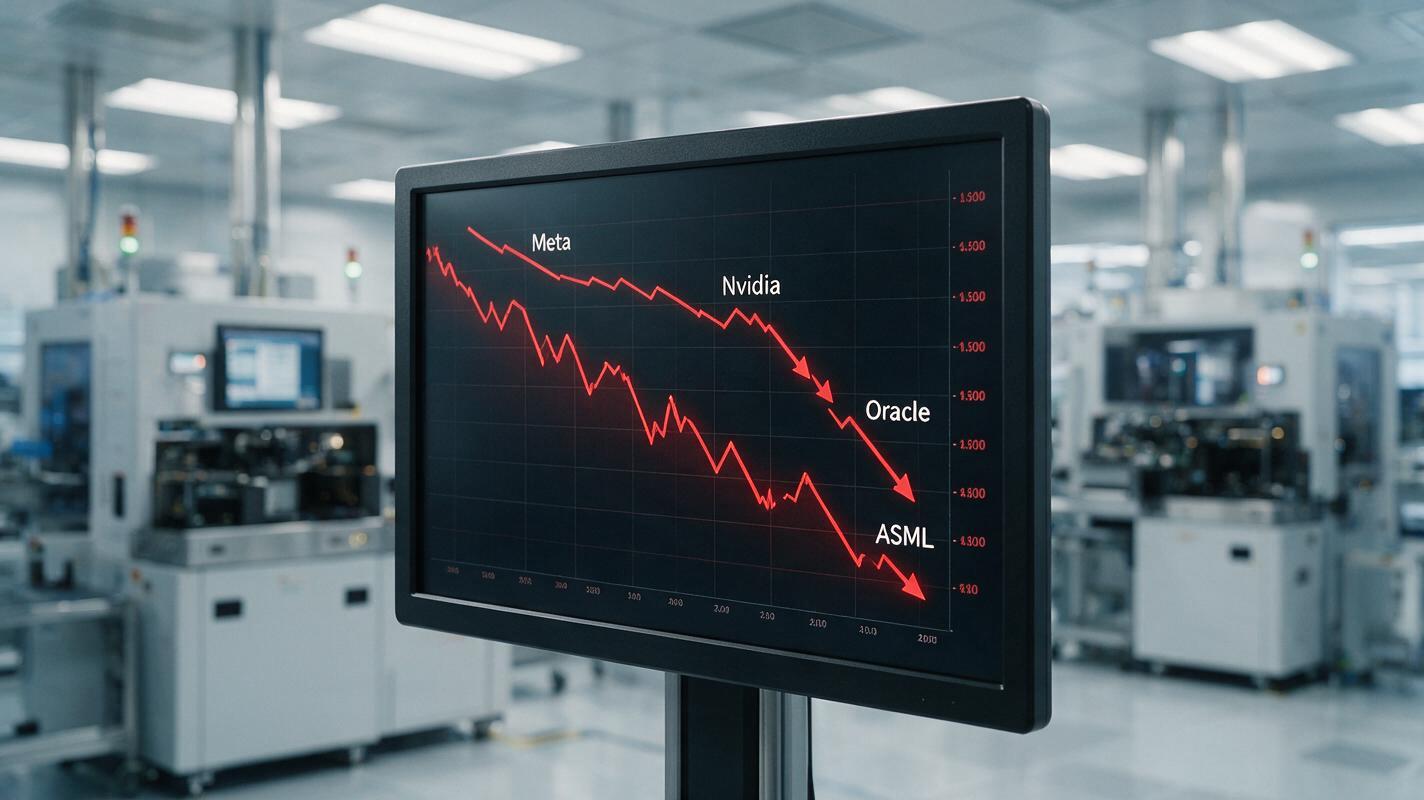
Table of contents
US Tech Stocks Drop Sharply While ASML Posts Record Q3 Results
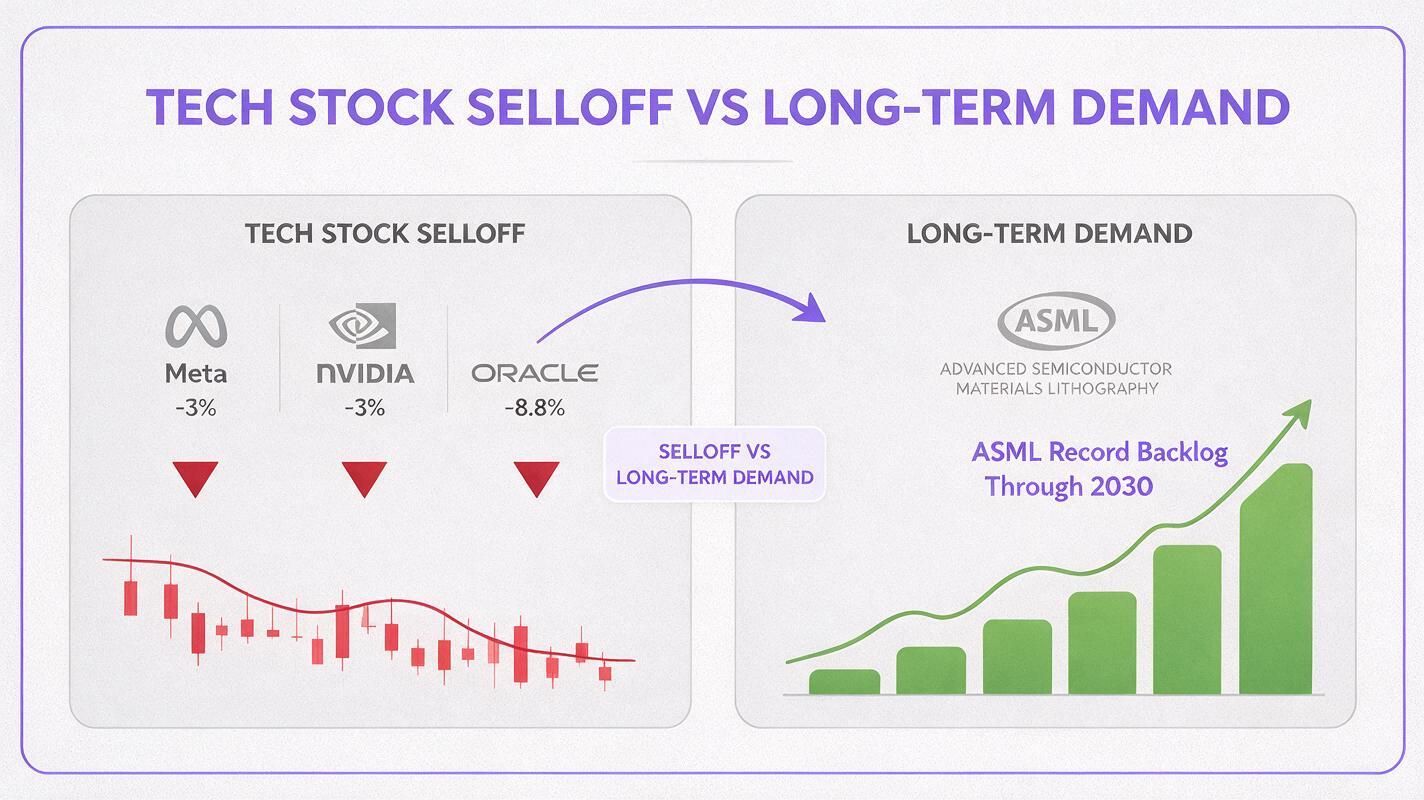
US technology stocks suffered a sharp selloff in recent trading, with major AI and cloud-related names posting notable declines. Meta and Nvidia each fell roughly 3%, while Oracle dropped 8.8% in the same session, marking one of the steeper single-day drops for the enterprise software and cloud giant in recent months.
The selloff came alongside contrasting news from ASML, which reported third-quarter results that beat analyst expectations. Most notably, ASML confirmed a record order backlog that extends all the way through 2030, signaling sustained, long-term demand for its chip manufacturing equipment.
The mixed signals highlight a growing tension in the ai industry: short-term market volatility and investor jitters are pushing tech stock prices down, even as long-term investment in AI-related infrastructure continues to accelerate at a historic pace.
Why ASML’s Backlog Matters for the AI Industry
While the immediate stock selloff has grabbed headlines, ASML’s multi-year backlog offers a clearer picture of long-term demand dynamics in the ai industry. Chip manufacturing equipment is a critical bottleneck for expanding the global supply of advanced processors that power AI data centers, consumer devices, and cloud services.
Goldman Sachs’ recent projection of 50%+ growth in ai capital expenditure to $1.2 trillion next year across five major cloud giants underscores just how much investment is flowing into AI infrastructure right now. That spending includes everything from data center construction to chip purchases, all of which rely on a steady supply of semiconductor manufacturing equipment.
A backlog stretching to 2030 suggests that chipmakers are locking in equipment purchases years in advance to meet expected AI demand. For the ai industry as a whole, this is a signal that the current wave of investment is not a short-term trend, but a multi-year shift in how technology companies allocate capital.
What This Means for AI Content Creators
For content creators and creative teams that rely on AI tools, the mix of stock market volatility and long-term infrastructure investment has tangible implications for both pricing and reliability of the services they use every day.
On one hand, the multi-year expansion of chip manufacturing capacity suggested by ASML’s backlog could eventually lead to more stable AI service pricing and wider access to high-powered models. As more AI chips come online, providers may be able to lower per-use costs for tools like ai image generator platforms and text to video services, reducing overall ai video cost for small teams and independent creators who operate on tight budgets.
On the other hand, near-term market volatility can create unexpected disruptions that catch creators off guard. Stock selloffs often push AI vendors to adjust pricing models, cut lower-priority features, or throttle free-tier access as they shift focus to profitability and meet investor expectations. Tight semiconductor supply in the short term can also lead to longer wait times for AI-generated outputs, reduced speed for premium models, or sudden price hikes for high-volume usage plans.
For creators who rely on AI tools to meet client deadlines or maintain consistent content schedules, these shifts can throw off production timelines and blow through carefully planned budgets. Even small changes in per-image or per-video pricing can add up quickly for teams that produce dozens of assets each month.

How to Insulate Your Creative Workflow From Market Swings
The best way to protect your content production from AI industry volatility, pricing changes, and supply chain shifts is to avoid locking into a single AI tool or vendor. A multi-model platform gives you the flexibility to switch between tools if one provider raises prices, changes its feature set, or experiences service disruptions.
MagicBoat brings dozens of leading AI creative tools together in a single, unified platform, so you can access the models you need without managing multiple accounts or tracking separate billing plans. Whether you’re working with ai image generator tools for social media assets or text to video services for short-form content, you can compare outputs, adjust your workflow, and keep production on track even when the broader AI market shifts.
You don’t have to commit to a single vendor or worry about sudden price hikes derailing your content budget. try these models for free today and build a more resilient creative workflow.
Key Takeaways
- US tech stocks sold off sharply, with Meta and Nvidia down 3% and Oracle down 8.8% in a single session.
- ASML reported better-than-expected Q3 results and a record order backlog extending through 2030.
- The backlog aligns with broader projections of 50%+ growth in AI capital expenditure to $1.2 trillion next year across five major cloud giants.
- Long-term chip capacity expansion may eventually lower AI tool costs, but near-term volatility could lead to pricing shifts and service disruptions.
- Creative teams can reduce risk by using a multi-model AI platform that offers access to multiple tools under one account.
Keywords
ai industry, ai capital expenditure, ai video cost, nvidia, asml, tech stocks, semiconductor supply