VisionQuest Finale Streams on Disney+, Closing Marvel’s Vision Trilogy
Marvel Television’s VisionQuest finale premiered November 10 at 6pm PT on Disney+, wrapping the three-part Vision trilogy that launched with WandaVision. The finale was accompanied by a New York screening and official companion podcast, with cast and crew highlighting the series’ father-son thematic core and teasing major narrative swings. For independent AI content creators, the trilogy’s character-driven connected structure offers a blueprint for building high-retention serialized ai video and short drama content.
Table of contents
VisionQuest Finale Wraps Marvel’s Vision Trilogy on Disney+
Marvel Television’s VisionQuest finale has arrived, capping off a character-driven trilogy that redefined one of the MCU’s most beloved synthezoid heroes for streaming audiences.
Marvel Television’s VisionQuest finale streamed November 10 at 6pm PT on Disney+, marking the official close of the three-part Vision trilogy that launched with 2021’s WandaVision. The debut was accompanied by a New York finale screening featuring key cast and crew, including Paul Bettany (Vision), James Spader (Ultron), Emily Hampshire (E.D.I.T.H.), and series showrunner Terry Matalas.
At the screening, Bettany shared that he and Matalas built the entire series around the theme of fathers and sons: Vision confronts his father-figure Ultron, reunites with his son Tommy Shepherd, and continues his ongoing search for his own humanity. Matalas teased that the finale contains “a couple of really big swings,” noting that all good endings touch the beginning of the story they conclude.
An official companion podcast launched the same day as the finale, featuring Bettany, Spader, cast member Ruaridh Mollica, and Matalas, hosted by Iman Vellani and Frank Alvarez. The podcast offers behind-the-scenes insight into the trilogy’s creative process and the finale’s major narrative beats.
For independent content creators working with AI tools, the trilogy’s tight, character-focused structure and cross-format rollout offer a useful blueprint for building connected, audience-retaining content pipelines.
The Vision Trilogy’s Narrative Blueprint
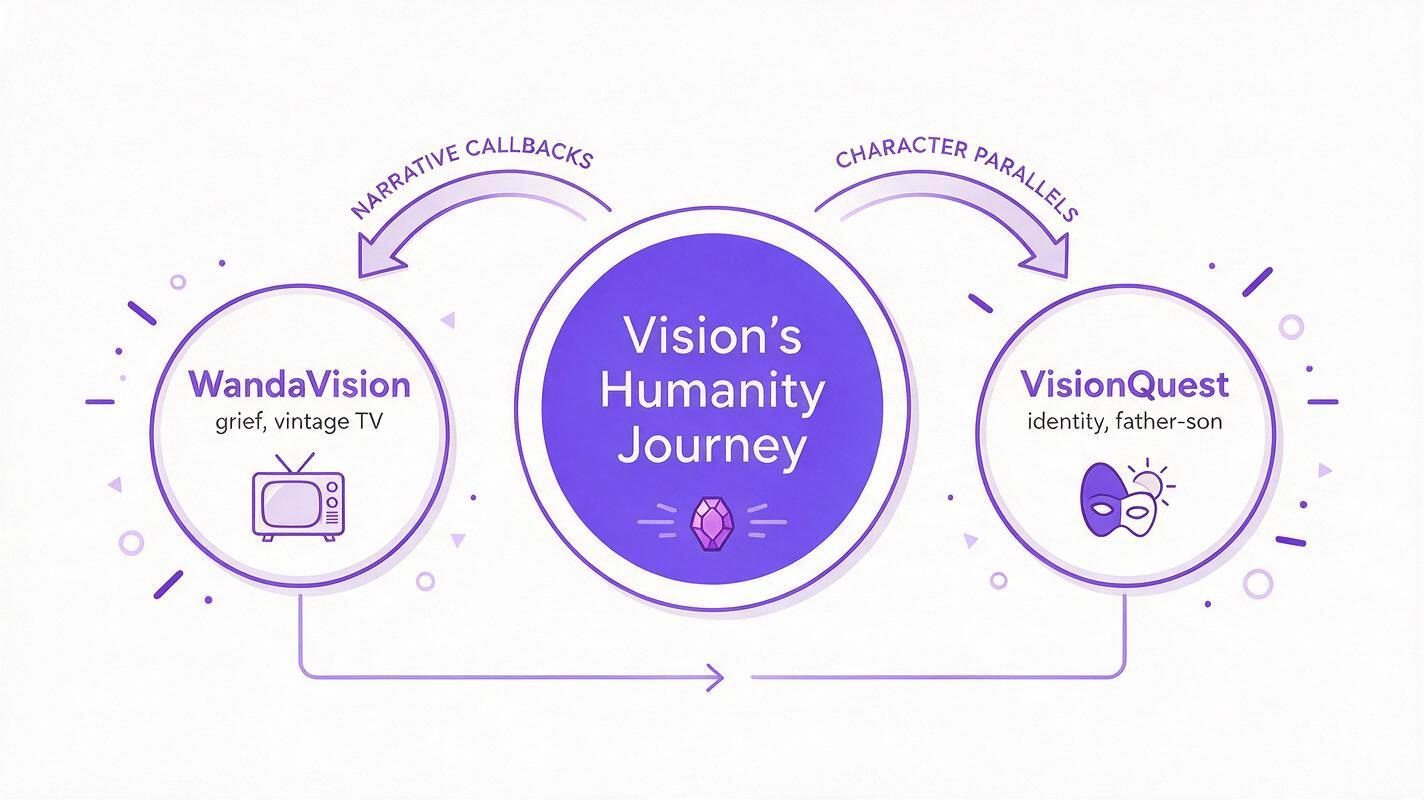
Across three installments, the Vision saga has leaned into intimate, character-driven storytelling rather than large-scale crossover spectacle — a choice that has helped it stand out in Marvel’s sprawling streaming slate. WandaVision first framed Vision’s story through the lens of grief and vintage television, VisionQuest expands that focus to identity and family, and the trilogy as a whole follows a clear three-act structure that gives viewers a complete, satisfying arc.
Matalas’ comment about endings touching the beginning highlights a classic narrative technique that drives rewatch value: callbacks, thematic mirrors, and circular character journeys give audiences reason to revisit earlier installments after finishing the finale. The companion podcast extends that engagement beyond the show itself, turning a single series finale into a multi-day, cross-format event.
Why Connected Character Trilogies Resonate With Streaming Audiences
The Vision trilogy’s success fits a broader streaming trend: tight, character-led limited series and multi-part stories often outperform sprawling, crossover-heavy slates in audience retention and word-of-mouth. By focusing on a single character’s emotional journey across three distinct chapters, Marvel gives viewers a clear, low-stakes entry point — no required viewing of 10+ films and shows to follow the plot.
This approach also reduces production risk. Each chapter can be greenlit based on the performance of the last, and the connected structure means every new installment drives viewership of the prior ones. For Disney+, this creates a feedback loop of engagement that keeps subscribers returning between major MCU event releases.
Lessons for AI Content Creators
The Vision trilogy’s structure is surprisingly actionable for independent creators working with ai video tools, especially those building short-form or micro-series content. You don’t need a Marvel-sized budget to build a connected, emotionally resonant franchise — you just need a clear core character, a three-act arc, and a consistent tone.
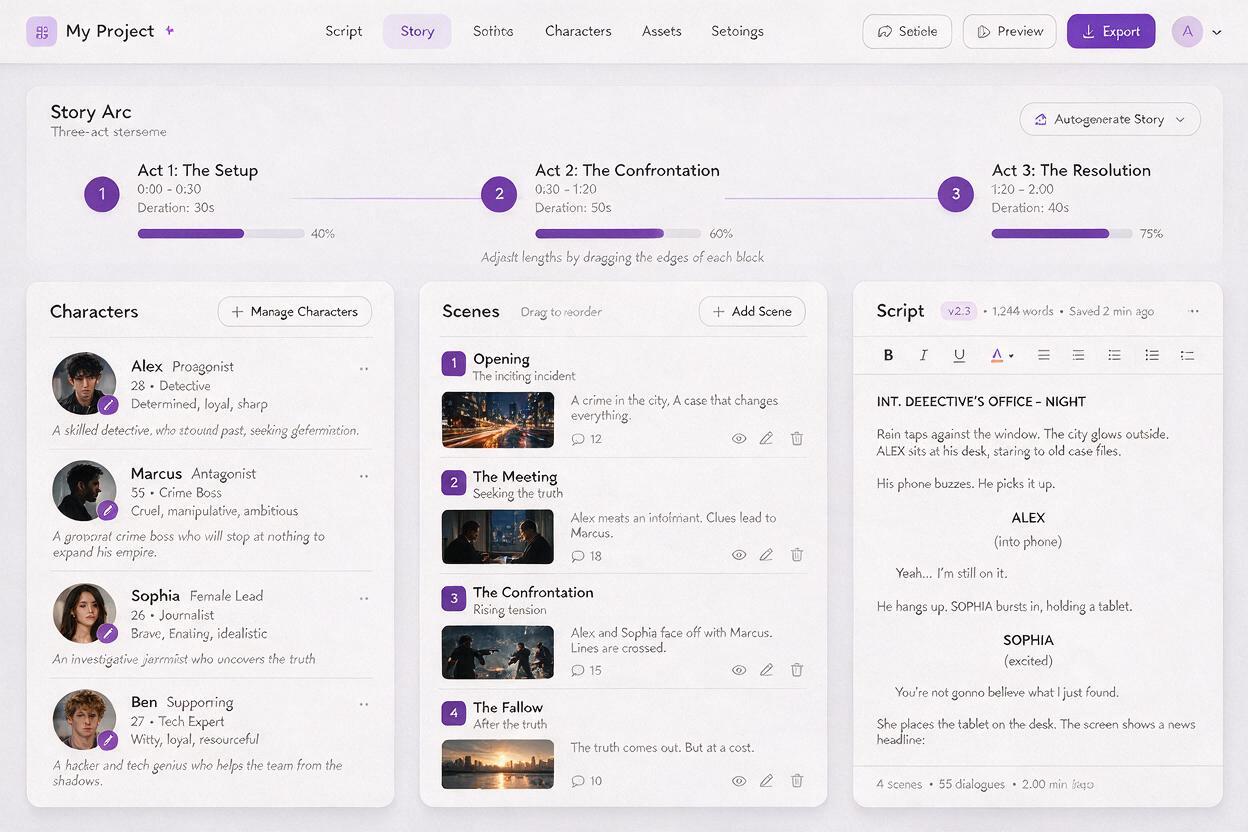
For creators building serialized short-form content, ai short drama tools make it easy to prototype and produce multiple episodes of a connected series quickly, without the overhead of a full production team. You can test a first chapter, refine your approach based on audience feedback, and roll out subsequent chapters at a pace that keeps viewers engaged — just like Marvel’s staggered trilogy rollout.
For longer-form projects, an ai film generator can help you map out a three-part character arc, draft scene breakdowns, and generate storyboards to visualize your trilogy before you commit to full production. This lets you iterate on your core concept fast, ensuring your story has the emotional core that keeps audiences coming back for each installment.
The biggest takeaway? Spectacle and IP recognition help, but the most enduring streaming content is built around relatable character journeys. AI tools lower the barrier to building those journeys, letting independent creators compete on storytelling quality rather than budget size when producing ai video content.
Ready to build your own connected character-driven series? try these models for free and start drafting your first chapter today.
Key Takeaways
- Marvel Television’s VisionQuest finale streamed November 10 on Disney+, closing the three-part Vision trilogy that began with WandaVision.
- The series is built around a fathers-and-sons thematic core, with Vision confronting Ultron, reuniting with Tommy Shepherd, and exploring his own humanity.
- Connected, character-driven trilogies drive strong streaming engagement by creating clear entry points and boosting rewatch value of prior installments.
- Independent AI creators can adapt this three-part structure using AI short drama and AI film tools to build low-cost, high-retention serialized content.
- Cross-format extensions like companion podcasts can turn a single finale into a multi-day engagement event for your audience.
Keywords
visionquest finale, marvel television, disney+, vision trilogy, ai film, ai content creation, ai short drama, character-driven storytelling