Willow Quantum Chip Revives Bitcoin Crack Debate
As of October 17, 2026, the Willow quantum chip has revived longstanding debate over whether quantum computing will soon be powerful enough to crack Bitcoin’s cryptographic security. The discussion highlights broader uncertainties around quantum computing’s real-world timeline and implications for digital security, including the protection of AI creators’ intellectual property and digital assets. This article breaks down the revived debate, draws parallels to the frontier AI race, and explains how diversified multi-model platforms help creators build secure, resilient workflows.

Table of contents
The Return of the Bitcoin Quantum Crack Debate
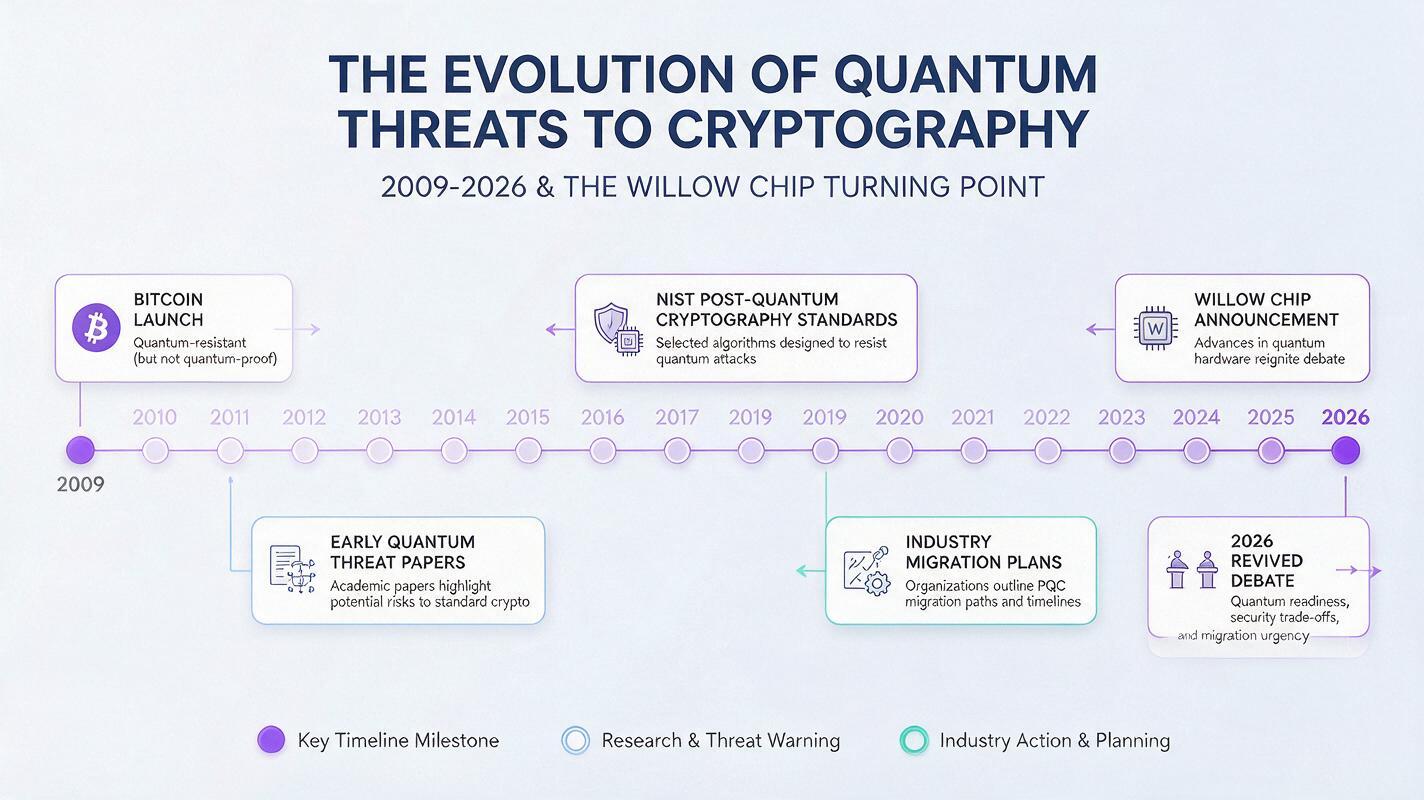
On October 17, 2026, reports of the Willow quantum chip reignited a long-running industry and mainstream debate over whether quantum computing will soon achieve the scale needed to crack Bitcoin’s underlying cryptographic security. The discussion, which has simmered among security researchers for more than a decade, has resurfaced with renewed intensity as advances in quantum hardware continue to outpace earlier timeline projections in some areas.
The core of the debate centers on Shor’s algorithm, a quantum algorithm that can theoretically break the public-key cryptography that secures Bitcoin wallets and most of the modern internet. For years, experts have debated when — or if — a large enough, error-corrected quantum computer will exist to run the algorithm at the scale required to compromise Bitcoin’s elliptic curve cryptography.
Available reports do not include confirmed details about the Willow chip’s developer, qubit count, error correction capabilities, or demonstrated computational performance. This lack of verified specifications has led to a split in expert opinion, with some framing the chip as a meaningful milestone and others cautioning that the announcement may be overstated for marketing or investment purposes.
What the Debate Means for Digital Security Broadly
While the conversation has centered on Bitcoin, the implications of a functional quantum computing breakthrough extend far beyond cryptocurrency. Bitcoin relies on the same public-key encryption infrastructure that underpins nearly every secure digital system, from HTTPS web traffic and email to cloud storage, financial transactions, and digital rights management for creative content.
If a large-scale, error-corrected quantum computer capable of breaking current public-key cryptography were to become widely available, it would not only threaten Bitcoin holdings but also compromise the security of personal data, intellectual property, and digital assets across every industry. The transition to post-quantum cryptography — new encryption standards designed to resist quantum attacks — is already underway, but full adoption across global systems is expected to take years.
For AI content creators, this raises tangible, practical concerns. The creative assets you produce — from original video projects and custom AI prompts to digital artwork, royalty tracking records, and client contracts — are often protected by the same cryptographic systems at the center of this debate. A breakthrough that weakens these systems could put your work, your revenue streams, and your personal data at risk.

Parallels to the AI Frontier Race
The revived Bitcoin quantum crack debate mirrors many of the dynamics playing out in the fast-moving frontier AI space. Both fields are defined by rapid technical progress, high-stakes competitive pressure, and a frequent blurring of real breakthroughs and hype-driven announcements.
Just as with AI model launches, separating verified technological progress from marketing claims is critical for anyone relying on these systems for their livelihood. For creators, this means evaluating AI tools and platforms based on confirmed capabilities, not press release promises — a lesson that applies equally to quantum computing discussions.
The same competitive forces pushing AI labs to release more powerful models at a faster pace are also driving investment and progress in quantum computing research. This creates a landscape of continuous, unpredictable change, where the tools and infrastructure you rely on today may look very different in just a few years.
How Creators Can Build Resilient Workflows
While the timeline for a practical quantum threat to current encryption remains uncertain — most experts estimate it is still years, if not decades, away — there are concrete steps creators can take now to build more secure, resilient workflows that can adapt to whatever technological shifts come next.
Diversifying your toolchain is one of the most effective ways to reduce risk. Relying on a single provider for all your AI creation needs leaves you vulnerable not just to potential security breaches, but also to sudden model retirements, pricing changes, and regulatory shifts that can disrupt your workflow overnight. A multi-model platform gives you access to a range of tools under one roof, so you can switch between providers and models as needed without rebuilding your entire process.
MagicBoat offers a secure, unified platform for AI content creation, with access to ai video generator capabilities, ai image generator tools, script writing, voiceover, and more — all from a single account. The platform’s multi-provider architecture means you’re never locked into one model or vendor, giving you the flexibility to adapt to changes in the AI landscape while keeping your creative assets secure.
Prioritizing platforms with strong security practices, regular updates, and clear data ownership policies also helps protect your work against both current and future threats. As the quantum computing debate shows, the digital security landscape is always evolving, and working with providers that stay ahead of these changes gives you an extra layer of protection.
You can try these models for free to explore how a diversified, multi-model AI platform can fit into your creative workflow.

Key Takeaways
- The Willow quantum chip has revived longstanding debate over quantum computing's ability to break Bitcoin's cryptographic security, as of October 17, 2026.
- A functional quantum computer capable of cracking current public-key encryption would have far-reaching impacts beyond cryptocurrency, including threats to digital content security and intellectual property protection.
- The debate mirrors hype vs. reality dynamics in the frontier AI race, where separating verified progress from marketing claims is critical for creators.
- Building diversified, security-focused creative workflows helps creators adapt to rapid technological change and reduce reliance on any single provider.
- Multi-model AI platforms like MagicBoat give creators flexible access to a range of creation tools while supporting more resilient, secure workflows.
Keywords
willow quantum chip, bitcoin crack debate, quantum computing, ai security, digital asset protection, ai news, ai tools