Willow Quantum Chip Revives Bitcoin Crack Debate
A report about the Willow quantum chip has renewed debate over whether quantum computing could threaten Bitcoin, but it does not document a successful attack, technical benchmark or confirmed security failure. The discussion also highlights the value of portable assets and multi-model flexibility in AI content workflows.
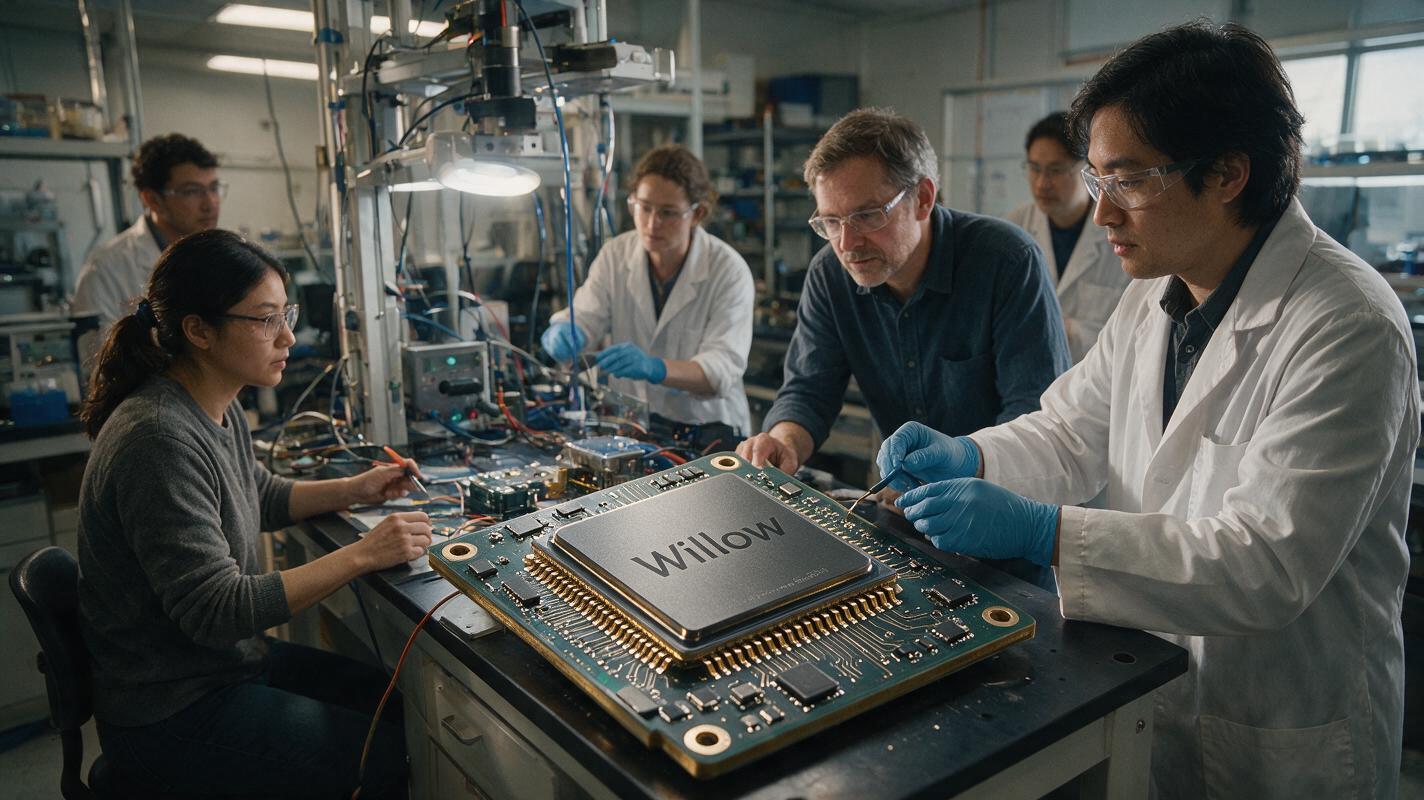
Table of contents
AI News Analysis
Willow Quantum Chip Revives Bitcoin Crack DebateA new report has put the Willow quantum chip back at the center of a long-running argument about whether quantum computing could threaten Bitcoin.
Reported October 17, 2026
Willow Reopens an Old Bitcoin Security Question
On October 17, 2026, the Willow quantum chip was reported to have revived the old debate over cracking Bitcoin. The headline links a named quantum chip with one of the most persistent security questions surrounding digital assets: whether advances in quantum computing could eventually challenge the cryptography on which Bitcoin depends.
The report is significant because of the debate it has renewed, but its wording is limited. It does not state that Willow cracked Bitcoin, compromised a wallet or defeated any specific cryptographic system. It also provides no benchmark, attack demonstration, technical method, timetable or estimate of the computing resources that such an attempt would require.
That distinction matters. The reported development is a renewed debate, not confirmation that Bitcoin has been broken. Treating the headline as proof of a successful attack would go beyond the available facts.
The key reading: Willow has revived discussion about a possible quantum threat to Bitcoin; the report does not establish that a Bitcoin crack occurred.
For people working with AI tools, the broader message is about technological change rather than cryptocurrency alone. Fast-moving infrastructure can revive old risk questions, alter assumptions and make operational flexibility more valuable.
What the Report Establishes—and What It Leaves Open
Established by the report: A development involving the Willow quantum chip renewed an existing debate about whether Bitcoin could be cracked.
Not established by the report: A successful Bitcoin attack, a compromised wallet, a measured cracking time or a confirmed security failure.
| Question | Available information |
|---|---|
| What technology is named? | The Willow quantum chip. |
| What issue returned to attention? | The old debate about cracking Bitcoin. |
| Was a successful crack reported? | No successful crack is stated in the supplied report. |
| Were technical results supplied? | No benchmarks, methods or resource estimates were included. |
| When was the item reported? | October 17, 2026. |
This narrow interpretation prevents speculation from turning into an unsupported claim. It also leaves major questions unresolved, including what prompted the renewed discussion and whether the debate reflects a practical near-term concern or a longer-term theoretical issue.
Why the Quantum Debate Matters Beyond Bitcoin
The Willow quantum chip story sits at the intersection of computing power, security and confidence in digital infrastructure. Those themes also matter to the AI sector, where teams increasingly rely on remote models and continuously changing creative services.
A reported breakthrough or security concern does not need to directly target an AI system to influence technology planning. The renewed Bitcoin debate illustrates how a change in one layer of computing can prompt people to reassess systems built on long-standing assumptions.
Headlines Need Careful Boundaries
Technical stories often move quickly from a narrow development to a dramatic prediction. In this case, “revives the debate” is materially different from “cracks Bitcoin.” Keeping those meanings separate is essential for accurate AI news coverage and responsible commentary.
Reliability Is Part of Tool Selection
Creative teams often compare output quality, speed and style when evaluating AI services. Availability and reliability deserve equal attention. A powerful tool offers less practical value when an entire workflow depends on one provider, one model or one format that cannot be moved elsewhere.
What This Means for AI Content Production
The Willow discussion does not indicate that AI video or image services face a specific quantum threat. Its practical relevance is more general: creators benefit when their work remains portable as the wider technology environment changes.
For a campaign built with an ai video generator, portability begins with preserving the underlying creative materials rather than only the final export. That includes approved scripts, source images, prompt language, shot descriptions and review notes.
The same principle applies to an image to video workflow. A team that retains the original image and motion brief can test another model if its preferred option becomes unavailable or produces inconsistent results. The point is not to predict a particular disruption; it is to avoid making one tool the only place where a project can continue.
A Resilient Creative Package
- Source material: Keep original images, scripts and audio separate from generated outputs.
- Portable creative direction: Save prompts and visual descriptions in reusable text files.
- Review records: Preserve approved versions and notes so another model can reproduce the intended direction.
- Provider flexibility: Maintain access to alternatives rather than depending entirely on one model.
- Human approval: Review factual claims, likenesses and final edits before publication.
Multi-Model Access Reduces Workflow Concentration
The AI market changes through new releases, retired models, policy shifts and security reviews. The Willow quantum chip headline is a reminder that broader computing developments can also change the questions technology users ask.
MagicBoat supports a more flexible approach by bringing AI creation capabilities into one creative environment. Instead of building every project around a single model, teams can preserve the creative brief, compare outputs and continue working when requirements change.
This does not remove the need for backups, review or security awareness. It does reduce concentration around one model choice, helping turn model availability into an adjustable production decision rather than a single point of failure.
Key Takeaways
- The October 17 report says the Willow quantum chip revived an old debate about cracking Bitcoin.
- It does not report that Bitcoin was cracked or that a wallet was compromised.
- No benchmark, method, timetable or computing requirement was provided.
- The story highlights the importance of distinguishing renewed debate from demonstrated capability.
- AI production is more resilient when source assets, prompts and approvals remain portable.
- Multi-model access can reduce dependence on any single creative provider.
Keep Your AI Workflow Flexible
Model quality matters, but dependable access and portable creative assets matter too. Explore a unified environment for AI content production and try these models for free with MagicBoat.