OpenAI Control Room Adds 35-Second Research Inference Cut-Off
OpenAI Control Room introduces a fail-closed cut-off for research inference with a reported 35-second stop window, putting operational AI safety and model reliability in focus.
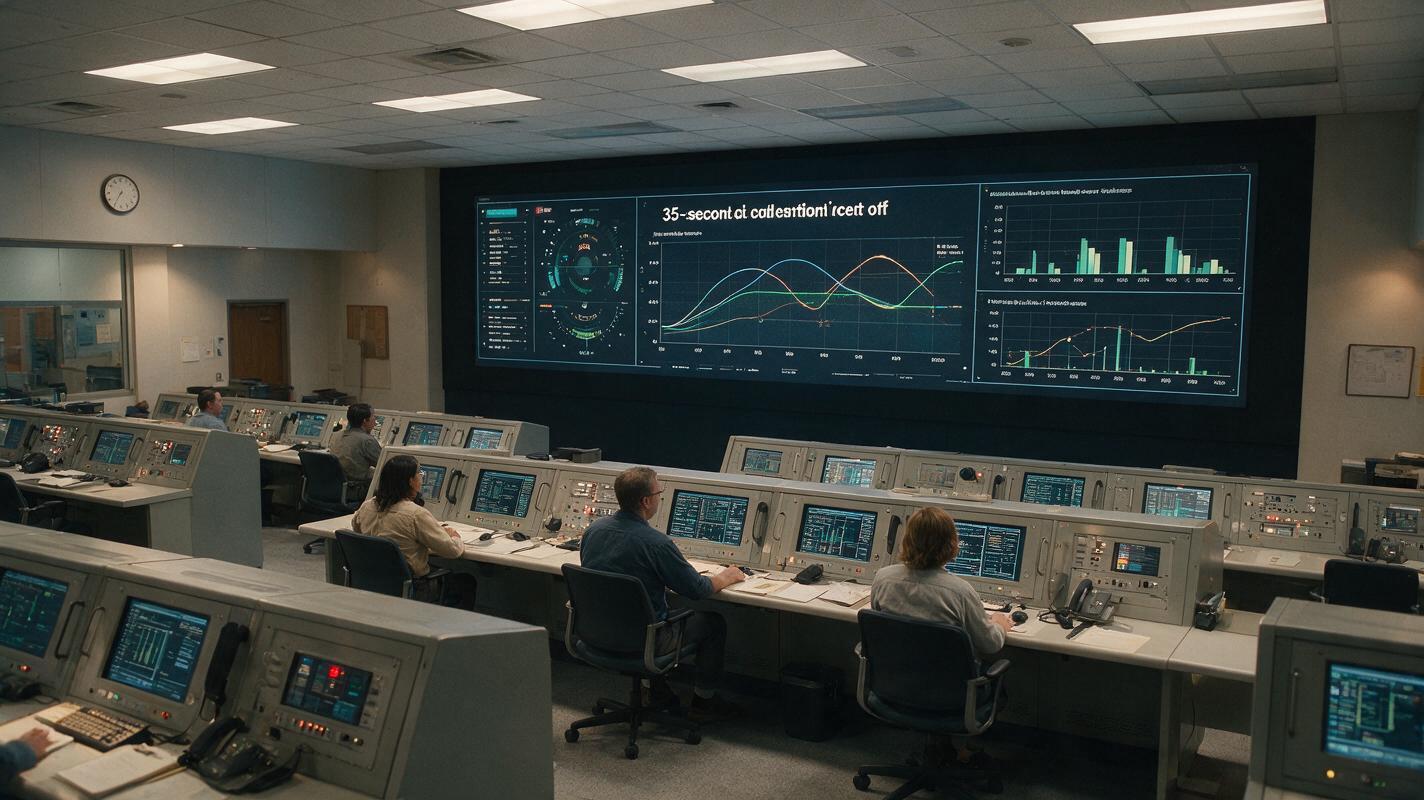
Table of contents
AI News · November 10, 2026
OpenAI Control Room Adds 35-Second Research Inference Cut-OffThe newly reported safety control is designed to fail closed and halt research inference within a 35-second window.
OpenAI Introduces a Control Room for Research Inference
OpenAI introduced Control Room on November 10, 2026, with a fail-closed cut-off for research inference and a reported 35-second stop window. The announcement centers on operational control: when the cut-off is invoked, the system is intended to move toward a stopped state rather than remain open by default.
The distinction matters because the news concerns active inference—the period when a model is running and producing outputs—not merely a policy document or a future safety commitment. The named Control Room mechanism adds an explicit intervention layer to OpenAI’s research environment, while the 35-second figure supplies a concrete time boundary for stopping inference.
Confirmed details: the system is called OpenAI Control Room, it applies to research inference, it uses a fail-closed cut-off, and its reported stop window is 35 seconds.
The available announcement does not specify which models are connected to the system, what conditions activate it, or whether the mechanism applies outside research inference.
For people building content with AI tools, the immediate lesson is broader than laboratory safety. Model availability, predictable operation and reliable access can affect production schedules just as much as output quality.
What “Fail-Closed” Signals in AI Safety
“Fail-closed” describes a safety posture in which a control defaults toward restriction or shutdown when a relevant failure occurs. In the context of the Control Room announcement, the phrase indicates that the cut-off is intended to stop research inference rather than leave it running under uncertain conditions.
This is different from claiming that every interruption will be completed instantaneously. The disclosed figure is a 35-second stop window, so the notable point is that the announcement attaches a defined time interval to the intervention mechanism.
A shutdown control does not describe a model’s creative quality. It describes the operational boundary around when that model is allowed to keep running.
The report does not disclose technical architecture, activation criteria, testing results or incident history. It therefore supports a focused conclusion: OpenAI has named a fail-closed research-inference control and paired it with a 35-second stopping window. Claims beyond those details would require additional public information.
Why the 35-Second Window Is the Headline
AI safety discussions often remain at the level of principles. The Control Room report stands out because it identifies an operational interval. That makes the announcement easier to evaluate as a system-design commitment, even though many implementation details remain undisclosed.
| Reported element | What is confirmed | What remains unspecified |
|---|---|---|
| Control system | OpenAI Control Room | Its interface, architecture and operators |
| Operating scope | Research inference | Named models and any broader deployment scope |
| Safety behavior | Fail-closed cut-off | Activation conditions and testing methodology |
| Timing | 35-second stop window | When measurement begins and how completion is verified |
The unanswered questions are important, but they do not erase the central development. OpenAI is framing research-inference safety as something that requires a concrete stop mechanism, not only model-level behavior rules.
Reliability Is Becoming a Model-Selection Factor
Creative teams typically compare AI models by visual style, prompt adherence, speed and cost. Safety controls add another dimension: operational reliability. A highly capable model may still be unsuitable for a deadline-sensitive project if access changes, inference is interrupted or a research system is placed behind tighter controls.
The Control Room announcement does not say that OpenAI’s public models will become unavailable. It does, however, reinforce a wider planning principle: no production workflow should assume that one model, one provider or one access route will always remain unchanged.
Continuity matters across a creative pipeline
- Writing: outlines, scripts and revisions should remain portable rather than locked to one model session.
- Visual development: prompts and reference assets should be stored independently of the model used to render them.
- Video production: teams should preserve source images, scene descriptions and approved outputs between generations.
- Review: human approval remains important when a project shifts between different model families.
This is particularly relevant to an ai video generator workflow, where a short disruption can affect multiple connected assets: scripts, keyframes, clips, voice tracks and final edits. Operational resilience becomes part of creative quality because it helps the project reach completion.
From OpenAI Safety News to Practical Content Production
OpenAI Control Room is a research-inference safety story, but the underlying issue reaches everyday AI creation: access conditions can change. Production teams benefit when they can separate their creative plan from any single model’s availability.
A one-account, multi-model environment such as MagicBoat can reduce the friction of moving between creative capabilities. A team can keep its concept, prompts and media assets organized while using different options for writing, imagery or image to video production.
That does not make every model interchangeable. Different systems can interpret the same prompt differently, so continuity depends on preserving the intent of a scene rather than expecting identical outputs. Useful records include:
- the approved script and scene order;
- character, location and visual-style descriptions;
- reference images and selected frames;
- aspect ratio, duration and delivery requirements;
- the reason a particular output was accepted or rejected.
These materials make it easier to compare models without rebuilding a project from memory. They also give teams a practical response to infrastructure changes: retain the creative specification, then select an available model that fits the current task.
What the Announcement Does Not Establish
Because the available report is concise, several interpretations should be avoided. It does not identify a safety incident that caused the Control Room launch. It does not name a model affected by the cut-off. It does not state that consumer or commercial services share the same mechanism, and it does not provide pricing or availability details.
The announcement also does not demonstrate that a 35-second window is faster or slower than another company’s system. No comparison figure is provided. The responsible reading is limited but meaningful: OpenAI has attached a named, fail-closed stopping control to research inference and disclosed a 35-second window.
Future reporting may clarify the mechanism’s scope, tests and operating criteria. Until then, the concrete details should remain separate from assumptions about how Control Room works behind the scenes.
Key Takeaways
- OpenAI announced Control Room on November 10, 2026.
- The system is described as a fail-closed cut-off for research inference.
- The reported stopping interval is a 35-second window.
- No affected models, activation criteria or technical architecture were specified.
- The news puts operational safety, availability and reliability into the model-selection conversation.
- Creative teams can reduce disruption by preserving portable prompts, source assets and project specifications.
Keep AI Production Flexible
As model access and safety controls evolve, a multi-model platform can help keep content projects moving without tying every asset to one provider. Explore MagicBoat and try these models for free.
Keywords: OpenAI Control Room, openai safety, research inference, AI safety, AI news, AI tools, AI roundup