Musk Pledges One SpaceX Share Per US Child ($10.5B) After Anthropic Benefit Fund
Elon Musk has pledged one SpaceX share to every US child—an estimated $10.5 billion commitment—announced October 20, 2026, just one day after Anthropic unveiled its tiered Public Benefit Fund structure. The back-to-back announcements reflect a growing trend of tech and AI companies exploring public benefit models amid increasing regulatory scrutiny. For AI creators, these industry shifts underscore the value of multi-model platforms that provide workflow stability and flexibility.
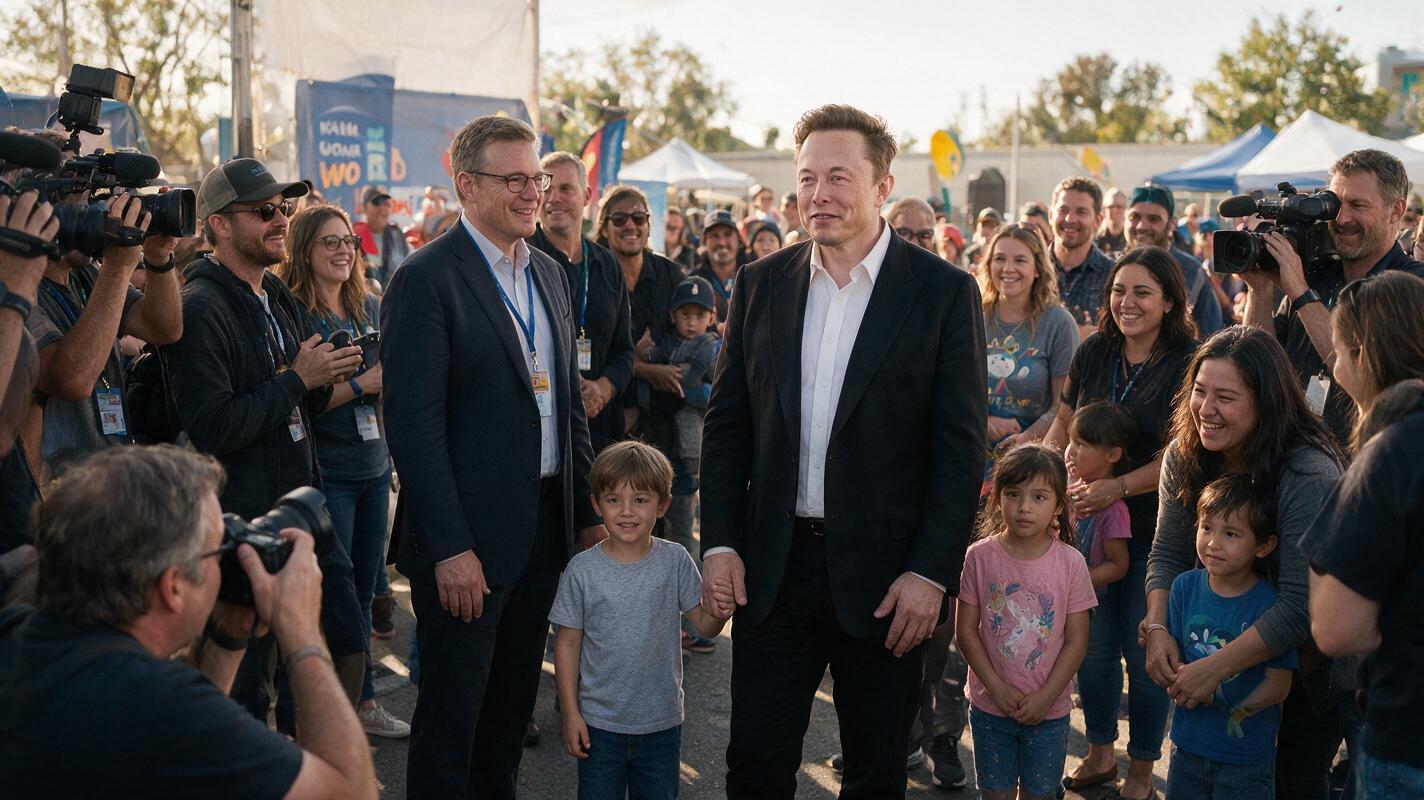
Table of contents
Musk Pledges SpaceX Shares to US Children: What We Know
Elon Musk has pledged one SpaceX share to every child in the United States, an estimated commitment valued at approximately $10.5 billion. The pledge was announced on October 20, 2026, and comes on the heels of Anthropic's public-benefit-fund gift, signaling a growing trend of technology leaders and AI companies adopting public benefit structures alongside their commercial operations.
The announcement follows closely after Anthropic unveiled its own Public Benefit Fund structure on October 19, which allocates 5% of the company's shares upfront plus an additional 2% for every 50% increase in valuation. Musk's pledge takes a different approach—direct asset distribution to individual beneficiaries rather than a structured fund—but it arrives in the same context of increasing scrutiny and expectations around how major tech and AI companies contribute to public welfare.
The $10.5 billion estimated value places the pledge among the largest individual philanthropic commitments in recent tech history, though key details about eligibility, distribution mechanics, and timeline have not been publicly specified. The pledge ties SpaceX's private market value directly to public benefit, creating a unique link between one of the world's most valuable private companies and the broader US population.
The timing is notable not just for its proximity to Anthropic's announcement, but also for landing on the same day that the FTC opened a sweeping probe of Anthropic, OpenAI, and other AI labs. This convergence of public benefit commitments and regulatory action paints a picture of an industry at an inflection point, where the relationship between commercial AI development and broader societal impact is being actively renegotiated.
The Anthropic Public Benefit Fund Precedent
To understand the significance of Musk's pledge, it helps to look at the Anthropic Public Benefit Fund announcement that preceded it by one day. Anthropic, the AI company behind the Claude model family, announced a tiered public benefit structure on October 19, 2026, that commits a growing portion of the company's equity to public benefit purposes as its valuation increases.
Under Anthropic's structure, 5% of shares are allocated to the Public Benefit Fund from the start. For every 50% increase in the company's valuation, an additional 2% of shares flow into the fund. This growth-linked design means the fund's value scales automatically as the company succeeds, aligning commercial success with public benefit in a mechanism that differs from traditional corporate philanthropy or one-time donations.
The structure also carries implications for Anthropic's upcoming IPO, which reports suggest could top a $1 trillion valuation following a 45% year-over-year Q3 revenue jump to $16.8 billion. At a trillion-dollar valuation, the Public Benefit Fund's stake would be worth tens of billions of dollars, making it one of the largest dedicated public benefit vehicles in the technology sector.
The timing of Musk's announcement—coming one day after Anthropic's—suggests a broader competitive and cultural shift in how major technology figures and companies position themselves around public benefit. As AI companies face increasing regulatory scrutiny and public attention, commitments to public benefit structures are becoming more prominent signals of corporate responsibility and long-term legitimacy.
Key Details and Open Questions
While the headline commitment is substantial, several important details about Musk's SpaceX share pledge remain unspecified in available reports. The pledge structure differs from traditional foundation-based philanthropy and from Anthropic's structured fund model, raising questions about how it will operate in practice.
Eligibility criteria for receiving a share—including age requirements, citizenship verification, and whether the pledge applies to all children or specific groups—have not been detailed. The distribution mechanism, including how shares would be held, managed, and eventually accessible to recipients, is also unclear. Given that SpaceX remains a private company, the liquidity and transferability of shares add another layer of complexity to the pledge's implementation.
The $10.5 billion estimate appears to be based on current SpaceX valuation multiplied by the number of eligible children, but the exact methodology behind the figure has not been confirmed. Without additional details on timing, vesting, or governance, the pledge should be understood as a high-level commitment rather than a fully structured program with defined operations and timelines.
What is clear is that the pledge represents a significant gesture from one of the world's wealthiest individuals, and it arrives at a moment when the AI industry is facing mounting questions about wealth concentration, power dynamics, and the distribution of benefits from technological advancement. Whether this pledge sparks similar commitments from other tech leaders or remains an isolated announcement remains to be seen.
Public Benefit Trends Across the AI Industry
The back-to-back announcements from Anthropic and Musk reflect a broader shift in the AI and technology landscape toward more explicit public benefit commitments. This trend is unfolding alongside increasing regulatory activity, including the FTC's sweeping probe of Anthropic, OpenAI, and other AI labs announced the same day, and growing public attention to AI's societal impacts.
Across the industry, AI companies are exploring different models for balancing commercial growth with public responsibility. Some, like Anthropic, are building public benefit directly into their corporate structure through equity allocation. Others are pursuing academic partnerships, open-weight model releases, and safety-focused initiatives as ways to demonstrate broader value beyond commercial products.
OpenAI's Rosalind Academic Plan, announced October 16, provides sponsored GPT-Rosalind access to academic research labs, representing one approach to sharing AI capabilities with the research community. Meta's release of open-weight models like Muse Spark Open, an 81.6B-parameter mixture-of-experts model, represents another path—making model weights publicly available for researchers and developers to use and adapt.
For the ai tools ecosystem, these structural shifts have practical implications. Public benefit commitments can influence how companies approach model access, pricing, safety standards, and platform policies. They can also affect regulatory trajectories, potentially shaping the environment in which AI development and deployment occurs. As the industry matures, the relationship between commercial AI products and public benefit frameworks will likely become an increasingly important factor in how platforms operate and how users access their capabilities.
What This Means for AI Creators
While high-level public benefit pledges and corporate structural decisions might seem distant from day-to-day creative work, they have tangible implications for creators who rely on AI tools for their work. The pace of change in the AI industry—from model launches and retirements to regulatory actions and corporate restructurings—means that creators building workflows around any single platform or model face ongoing uncertainty.
For creators using an ai video generator as a core part of their creative pipeline, the stability and accessibility of their tools matter enormously. Public benefit commitments and regulatory developments can affect model availability, pricing structures, and feature sets over time. Creators who depend on a single provider for their ai tooling may find their workflows disrupted by changes that have little to do with their specific needs.
Recent developments underscore this volatility. GitHub Copilot retired six underlying models on October 19, phasing out GPT-5.5, Grok 4.5, and Gemini 3.7 Flash in favor of newer versions. For creators who built workflows around those specific models, this kind of rapid iteration—while often beneficial in terms of capability—can introduce unexpected friction and require workflow adjustments.
This is where multi-model platforms provide tangible value. By giving creators access to a range of AI models and tools through a single account, platforms like MagicBoat reduce dependence on any single company's business decisions, regulatory status, or structural changes. Whether you're working with text to video generation, an ai image generator, or script development, having multiple options within one platform means your creative workflow isn't tied to the fate of any individual model or company.
As the AI industry continues to evolve rapidly—with new public benefit structures, regulatory actions, and competitive dynamics unfolding on a near-daily basis—creators benefit from building flexible, resilient workflows that can adapt to change. Multi-model access isn't just about having more options; it's about ensuring creative continuity regardless of what happens in the broader industry. try these models for free to experience how a multi-model platform can support your creative work.
Key Takeaways
- Elon Musk pledged one SpaceX share to every US child on October 20, 2026, with an estimated total value of approximately $10.5 billion.
- The pledge comes one day after Anthropic announced its Public Benefit Fund structure, which allocates 5% of shares upfront plus 2% more for every 50% valuation increase.
- Key details about the SpaceX share pledge—including eligibility, distribution mechanics, and timeline—remain unspecified in available reports.
- Both announcements reflect a broader industry trend of AI and tech companies exploring public benefit structures amid increasing regulatory scrutiny.
- Rapid model iteration and industry changes mean creators face ongoing workflow uncertainty when relying on single providers.
- Multi-model AI platforms help creators build flexible, resilient creative workflows that aren't dependent on any single company or model.
Keywords
ai news, ai tools, ai roundup, ai video generator, text to video, image to video