iPhone Duo vs Galaxy Z Fold8 vs Pixel 11 Pro Fold: Which Foldable Wins in 2026?
Apple has finally entered the foldable market. But the $1,999 iPhone Duo arrives against Samsung’s eighth-generation Fold and Google’s biggest Pixel Fold yet. Here is where each one actually wins.
文章目录
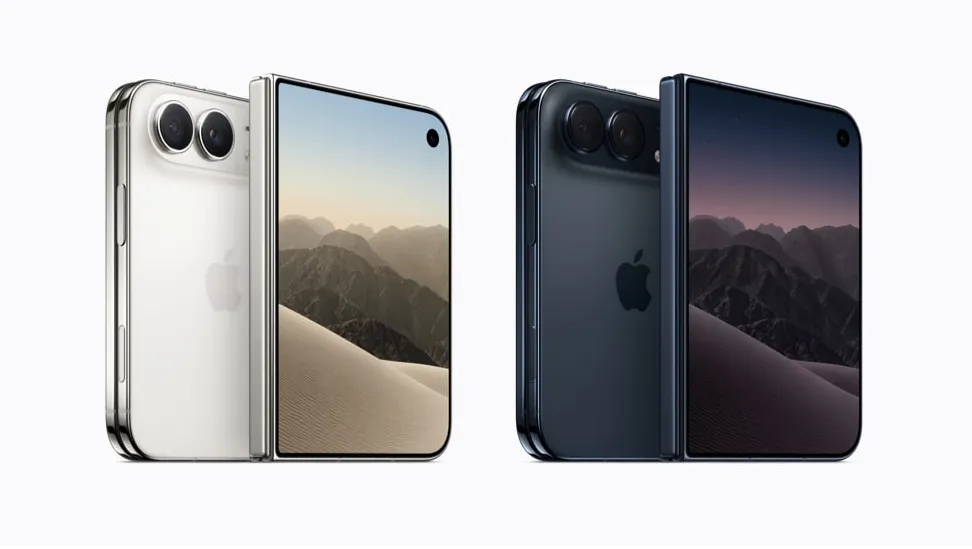
Apple’s first foldable iPhone arrives in star white and night sky. Source: Apple Newsroom.
Apple did not invent the foldable phone. It waited until 2026, then entered the category with iPhone Duo, a compact book-style foldable that opens into a 7.6-inch screen. Its timing is interesting because the market is no longer experimental: Samsung has Galaxy Z Fold8, and Google has Pixel 11 Pro Fold with an 8-inch inner display and Tensor G6.
So which foldable is actually better?
Quick comparison
| Feature | iPhone Duo | Galaxy Z Fold8 | Pixel 11 Pro Fold |
|---|---|---|---|
| Starting price (U.S.) | $1,999 | $1,899.99 | $1,899 list price |
| Outer display | 5.4 in | 5.5 in | 6.5 in |
| Inner display | 7.6 in | 7.6 in | 8.0 in |
| Processor | A20 Pro | Snapdragon 8 Elite Gen 5 for Galaxy | Tensor G6 |
| Rear camera emphasis | 48MP main + 48MP ultra wide; 2x optical-quality crop | Dual 50MP wide + ultra wide | 48MP wide + 10.5MP ultra wide + 10.8MP 5x telephoto |
| OS | iOS 27 | Android / One UI | Android 17 |
| Main advantage | Apple ecosystem + foldable iOS continuity | Mature foldable multitasking | Largest screen + Google AI + 5x telephoto |
Specs and prices are based on manufacturer pages available September 11, 2026.
Design: Apple goes compact while Google goes big
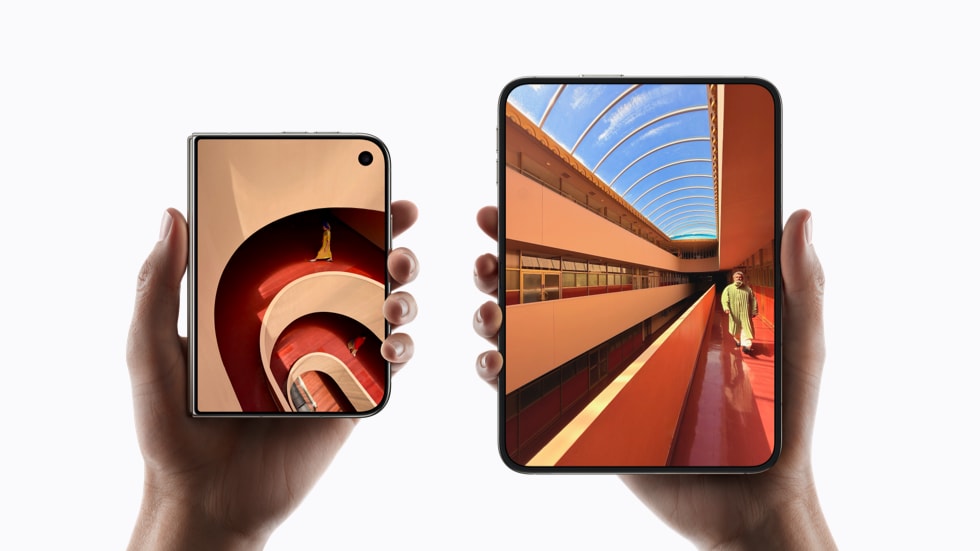
The iPhone Duo expands from a compact 5.4-inch outer display to a 7.6-inch inner display. Source: Apple Newsroom.
The iPhone Duo and Galaxy Z Fold8 are surprisingly close in display size. Apple uses a 5.4-inch outer screen and 7.6-inch inner screen; Samsung uses roughly 5.5 inches outside and 7.6 inches inside.
Google goes bigger. The Pixel 11 Pro Fold uses a 6.5-inch outer screen and 8-inch inner folding display. That gives Pixel more room for reading, media and side-by-side apps, but also changes how compact the device feels when closed.
Winner by use case:
- Most compact: iPhone Duo / Galaxy Z Fold8
- Most screen: Pixel 11 Pro Fold
- Most familiar to existing iPhone users: iPhone Duo
Multitasking: Samsung still has the experience advantage
Apple has redesigned parts of iOS 27 for Duo, including Split View, dual app windows and interfaces that adapt as the device folds. That is a major change for iPhone.
Samsung, however, has had years to refine foldable multitasking, window management, side-by-side apps and DeX. The Fold8 therefore remains the safer choice for users who already know they want a mini-workstation rather than simply a larger phone.
Google sits between the two, with Android’s large-screen foundation and deep Gemini integration, but Samsung’s foldable software remains the most mature of the three.
Winner for power multitasking: Galaxy Z Fold8.
Cameras: Pixel has the zoom advantage, iPhone 18 Pro still has Apple’s best camera system
The iPhone Duo has a 48MP Fusion Main camera and 48MP Fusion Ultra Wide, with an optical-quality 2x option from the main sensor. That is capable, but it is important not to confuse Duo with the iPhone 18 Pro.
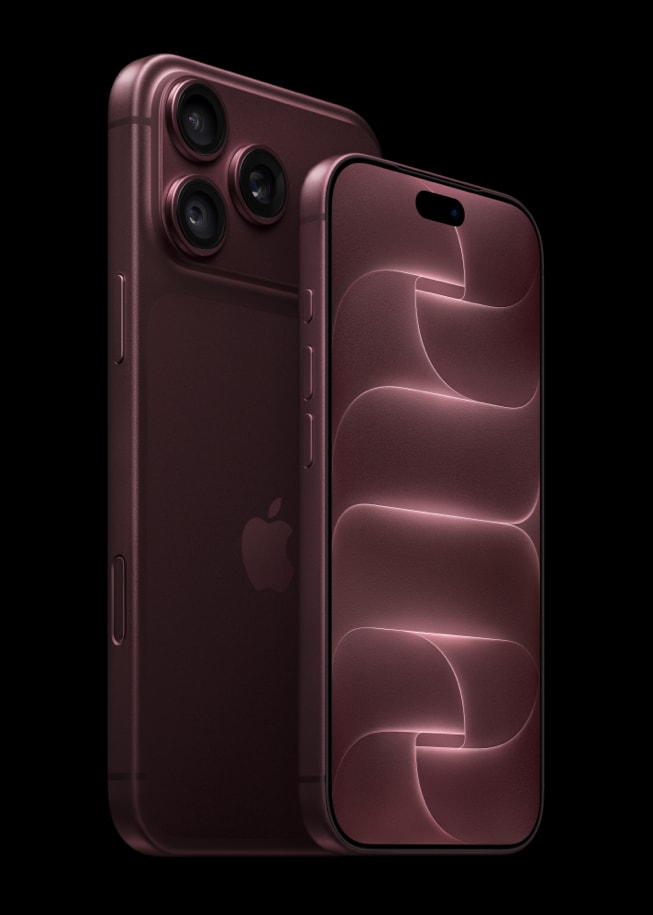
The iPhone 18 Pro line adds variable aperture, A20 Pro and Siri AI. Source: Apple Newsroom.
Apple reserved its variable-aperture 48MP main camera and expanded manual controls for the iPhone 18 Pro line. In other words, buyers choosing Duo are trading some Pro-camera ambition for the folding form factor.
Samsung’s Z Fold8 focuses on a dual 50MP wide and ultra-wide setup. Google’s Pixel 11 Pro Fold has the clearest zoom advantage because it includes a dedicated 5x telephoto lens.
Winner by camera priority:
- Zoom: Pixel 11 Pro Fold
- Foldable camera + iOS ecosystem: iPhone Duo
- Apple’s strongest pro-camera controls overall: iPhone 18 Pro, not Duo
AI: three different philosophies
Google is the most explicit about AI as an assistant layer, with Tensor G6 and Gemini woven into Pixel experiences. Samsung combines Galaxy AI with a multitasking-first foldable UI. Apple integrates Siri AI and Apple Intelligence across iOS 27 while emphasizing personal context and privacy architecture.
The difference is less about whether each phone “has AI” and more about where it lives:
- Google: AI-forward services and Gemini-centered assistance.
- Samsung: AI inside a productivity-heavy foldable experience.
- Apple: AI blended into personal-device context across iPhone, Watch, AirPods and Mac.
No one wins every AI category. Ecosystem preference matters more than a single benchmark.
Price: Apple charges the highest entry price
At $1,999, iPhone Duo starts $100 above the U.S. list price of Galaxy Z Fold8 and Pixel 11 Pro Fold. That premium is difficult to justify on hardware specs alone.
Apple’s real value proposition is migration cost: for users already invested in iMessage, iCloud, Apple Watch, AirPods, Mac and Apple services, Duo is the first major foldable that does not require an ecosystem switch.
That means its $100 hardware premium may feel smaller than the practical cost of leaving the Apple ecosystem.
So which foldable should you buy?
Choose iPhone Duo if: you want a foldable but do not want to leave Apple’s ecosystem, and you care more about software continuity than having the biggest screen or deepest foldable multitasking system.
Choose Galaxy Z Fold8 if: you want the most mature foldable productivity experience and use split-screen, windowing and desktop-style workflows heavily.
Choose Pixel 11 Pro Fold if: you want the largest display, a dedicated 5x telephoto camera and Google’s AI stack in a foldable.
There is no universal winner. The strongest choice depends on the workflow around the phone.
The creator question is now bigger than the phone
For years, “best phone for creators” mostly meant “best camera.” In 2026, that is incomplete.
A modern workflow can look like this:
Capture → generate missing shots → maintain character/style → assemble scenes → edit → publish
The smartphone still controls capture, but AI video platforms increasingly shape everything after the idea.
MagicBoat vs Runway vs Higgsfield vs Kling: which workflow fits after capture?
| Platform | Best fit | Why you might choose it | Where another tool may be stronger |
|---|---|---|---|
| Runway | Advanced individual shots | Strong Gen-4.5 text/image-to-video controls and model access | A longer narrative can require more assembly decisions |
| Higgsfield | Cinematic, stylized generation | Strong visual language and camera-driven creative experimentation | Less centered on a full script-to-story pipeline |
| Kling | High-quality standalone generations | Useful when the generation itself is the main priority | Project planning and multi-scene consistency may live outside the model |
| **MagicBoat AI** | End-to-end story/video workflow | Connects ideas or scripts with storyboards, characters, scenes and generated video | Not necessarily the first pick if you only need one highly tuned isolated shot |
The comparison should stay neutral: Runway, Higgsfield and Kling can be better choices for particular shot-level needs. MagicBoat becomes the stronger option when the real job is not “generate one clip,” but “turn this idea into a coherent multi-scene piece without rebuilding the workflow around every shot.”
That is the same lesson as the foldable comparison. The best product is often the one that creates the fewest workflow breaks.
FAQ
Is iPhone Duo Apple’s first foldable iPhone?
Yes. Apple announced iPhone Duo on September 9, 2026.
How much does iPhone Duo cost?
It starts at $1,999 in the U.S.
Is iPhone Duo bigger than Galaxy Z Fold8?
Their inner displays are both 7.6 inches. Google’s Pixel 11 Pro Fold is larger at 8 inches inside.
Which is better, iPhone Duo or Galaxy Z Fold8?
For Apple ecosystem continuity, iPhone Duo is stronger. For mature foldable multitasking, Galaxy Z Fold8 has the advantage.
Which foldable has the best zoom camera?
Of these three, Pixel 11 Pro Fold has the clearest optical zoom advantage with a dedicated 5x telephoto camera.
Is iPhone Duo better for video than iPhone 18 Pro?
Not automatically. Duo adds foldable shooting options and a larger canvas, but iPhone 18 Pro has Apple’s more advanced variable-aperture main camera and expanded Pro controls.
Which AI video tool is best after shooting on iPhone?
It depends on the job. Runway, Higgsfield and Kling are strong for generation-focused workflows. MagicBoat is better suited when you want to structure a complete multi-scene story from idea or script through storyboard, characters, scenes and video.
Sources
1. Apple — iPhone Duo: https://www.apple.com/newsroom/2026/09/apple-unveils-iphone-duo/
2. Apple — iPhone 18 Pro and Pro Max: https://www.apple.com/newsroom/2026/09/apple-debuts-iphone-18-pro-and-iphone-18-pro-max/
3. Samsung — Galaxy Z Fold8: https://www.samsung.com/us/smartphones/galaxy-z-fold8/
4. Google — Pixel 11 Pro Fold specs: https://store.google.com/product/pixel_11_pro_fold_specs?hl=en-US
5. Runway — Gen-4.5: https://help.runwayml.com/hc/en-us/articles/46974685288467-Creating-with-Gen-4-5
6. MagicBoat — consistent character workflow: https://www.magicboat.net/mobile/en/blog/how-to-make-consistent-character-ai-videos
Keywords
Primary: iPhone Duo vs Galaxy Z Fold8, iPhone Duo vs Pixel 11 Pro Fold, best foldable phone 2026
Secondary: iPhone Duo price, Apple foldable phone, Galaxy Z Fold8, Pixel 11 Pro Fold, foldable phone comparison, iPhone Duo review
AI / competitor product: AI video generator, AI video creation platform, Runway AI, Higgsfield AI, Kling AI, MagicBoat AI, script to video, consistent character AI video, AI filmmaking workflow